
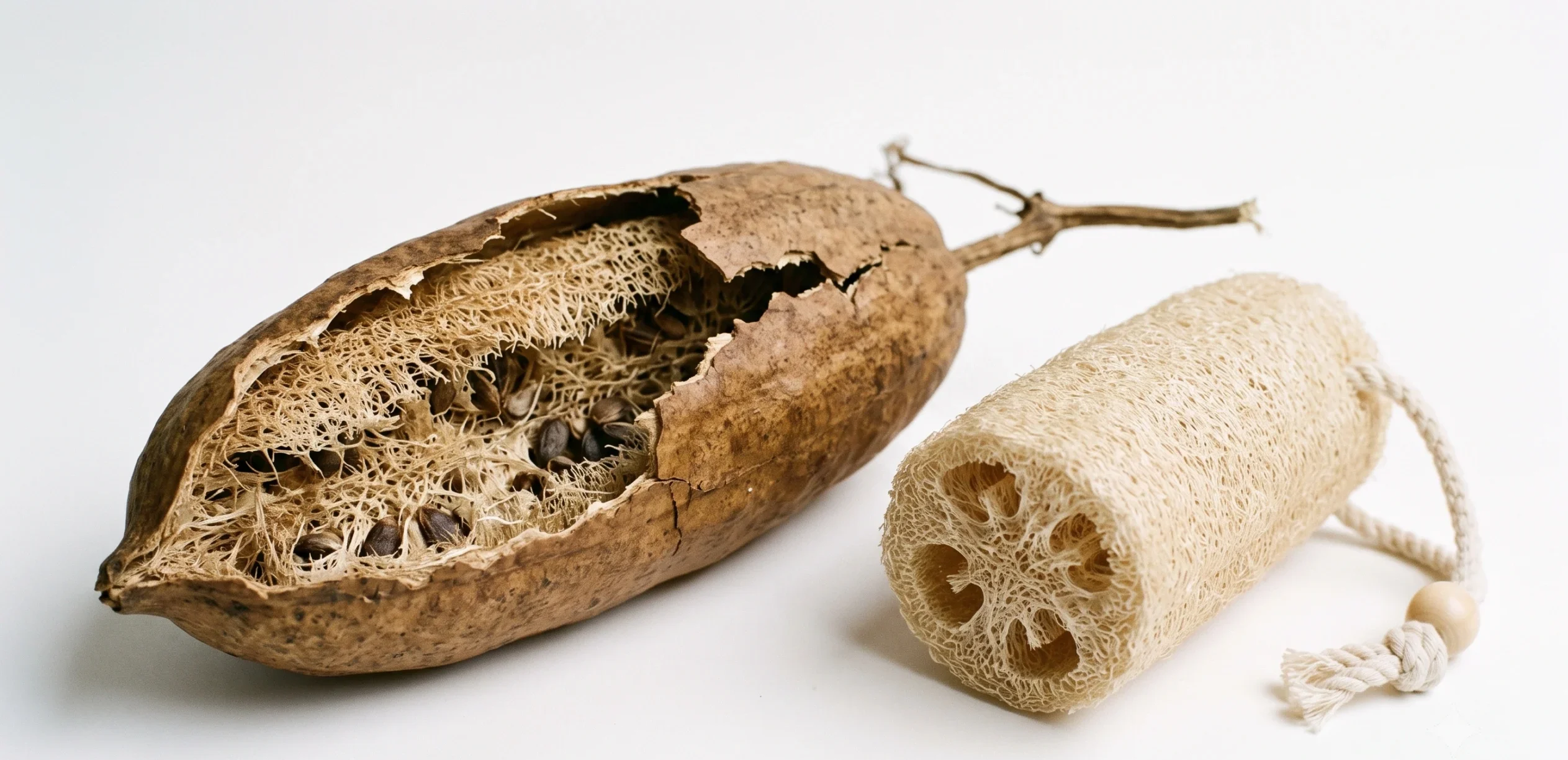
Quick Answer A loofah is not a sea creature — it is the dried, fibrous interior of the fruit of the Luffa plant, a member of the cucumber and gourd family (Cucurbitaceae). When the gourd matures and dries on the vine, its flesh breaks down into a dense, spongy network of cellulose fibers. Once peeled and cleaned, this fiber network becomes the loofah sponge used for skin exfoliation, dishwashing, and household scrubbing. Two species — Luffa aegyptiaca (smooth loofah) and Luffa acutangula (ridged loofah) — account for nearly all commercial loofah products.
1. What Is a Loofah? Definition and Common Misconceptions
If you search “what is a loofah,” the honest answer surprises most people: it’s a vegetable, not an ocean organism. The word “loofah” gets confused with “sea sponge” so often that it has become one of the internet’s most persistent bathroom myths.
A loofah is the mature, dried fruit of a fast-growing vine in the gourd family. While it’s growing, a loofah looks almost identical to a zucchini or cucumber — smooth-skinned, green, and edible when picked young. Left on the vine to fully ripen, the same fruit dries out, its skin turns brown and papery, and its interior transforms into the tough, netted fiber structure we recognize as a bath or kitchen sponge.
So when someone asks “is a loofah a plant, a vegetable, or a sponge?” — the accurate answer is all three, depending on its life stage. Young and green, it’s a vegetable eaten in Asian, African, and Middle Eastern cuisines. Mature and dried, it becomes the fibrous sponge sold in stores. Botanically, throughout its entire life cycle, it is a plant.
Where the Sea Sponge Confusion Comes From
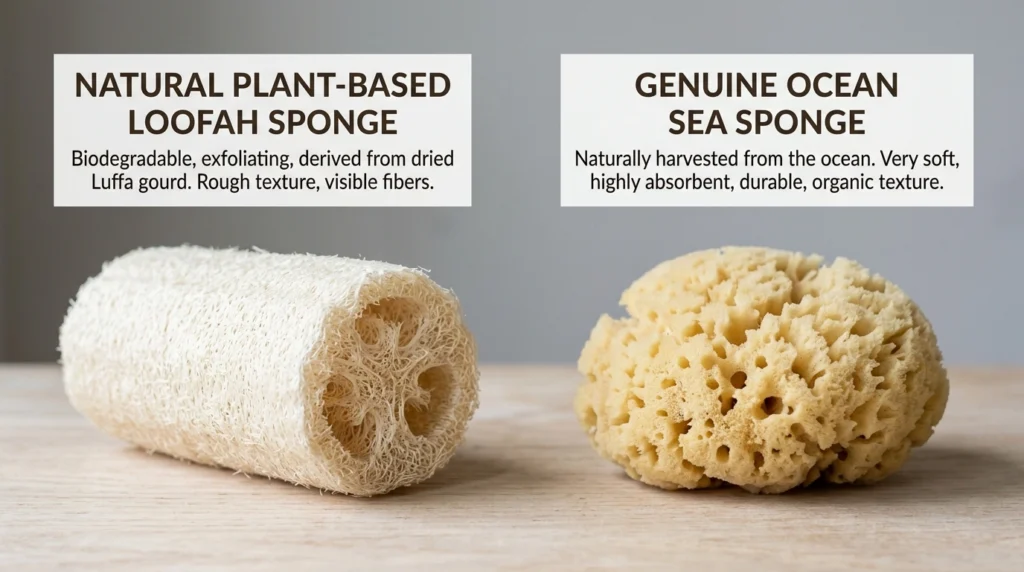
Sea sponges are marine animals (phylum Porifera) harvested from ocean beds, while loofahs are grown in soil like any other garden vegetable. The confusion likely persists because both products serve the same bathing purpose and share a similar rough, porous texture. Retailers haven’t helped — many bath product aisles place natural loofahs next to genuine sea sponges under generic “natural sponge” signage, reinforcing the mix-up.
2. Loofah vs. Luffa: A Definitive Spelling Guide
“Loofah,” “luffa,” “loofa,” and “lufa” all refer to the same plant and the same product — the spelling differences come down to transliteration history, not botany.
- Luffa is the scientific genus name and the spelling most commonly used in horticultural and botanical contexts (seed packets, gardening guides).
- Loofah is the more common consumer-facing spelling in English-speaking retail markets, especially in the US and UK.
- Loofa and lufa are informal variants that show up frequently in search queries but are not standard dictionary spellings.
For SEO and content purposes, both “loofah” and “luffa” carry meaningful search volume and should be treated as near-synonyms rather than distinct topics — but botanical and gardening content typically favors “luffa,” while skincare and bath product content favors “loofah.”
3. The Anatomy of a Loofah Gourd
Understanding loofah anatomy explains why it works so well as a scrubbing tool. Beneath the smooth outer skin of a maturing gourd is a three-layer structure:
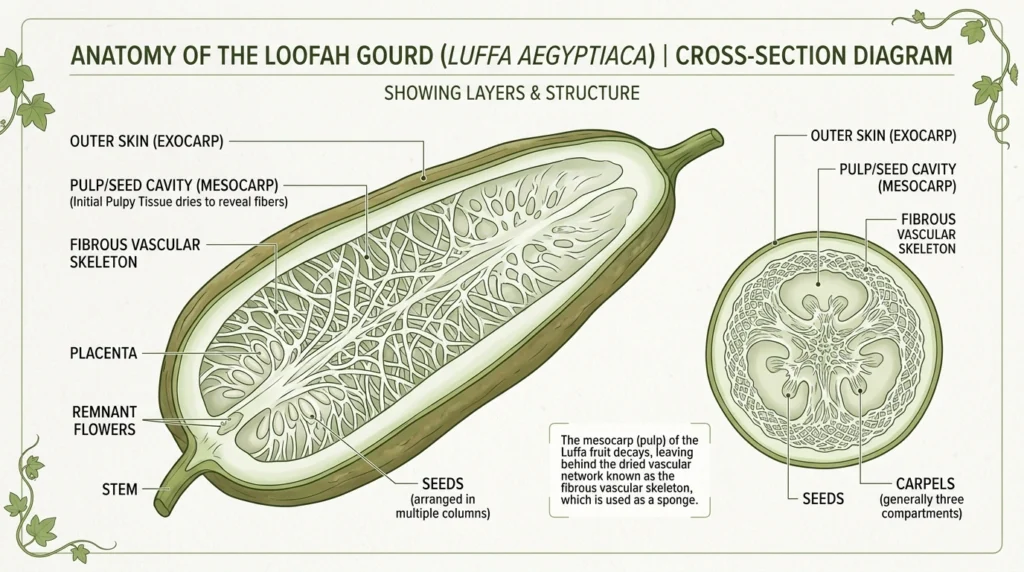
- The outer skin (exocarp) — thin, waxy, and removed entirely during processing.
- The pulp and seed cavity (mesocarp) — a soft, moisture-rich layer that breaks down as the gourd dries; this is what gets rinsed and shaken out to reveal the fiber network.
- The vascular fiber skeleton (the “loofah” itself) — an interlocking lattice of cellulose fibers that formed to carry water and nutrients through the growing fruit. Once dried, this lattice is remarkably strong, absorbent, and slightly abrasive, which is exactly what makes it effective for exfoliation and scrubbing.
The density of this fiber lattice varies by species and growing conditions. Gourds grown in nutrient-poor soil or drought stress tend to produce a coarser, more rigid sponge, while well-watered, fast-growing gourds typically yield a softer, more flexible sponge — a detail worth knowing if you’re comparing “soft loofah” versus “coarse loofah” product lines.
4. A Brief History of the Luffa Gourd
Luffa cultivation traces back thousands of years across Asia, with strong historical use in China, India, and Southeast Asia both as a food crop and a utility fiber. Ancient Egyptian and Middle Eastern communities are also credited with early adoption of the dried gourd as a bathing and cleaning tool — a usage pattern that eventually spread along trade routes into the Mediterranean and later into Western Europe and the Americas.
Historically, the plant served dual purposes in almost every culture that grew it: eaten young as a vegetable (still common today in Chinese, Vietnamese, Indian, and Filipino cooking, where it appears in stir-fries and soups), and left to mature for its fiber, which was repurposed as everything from sandal padding to industrial air-filter material during the early 20th century, before synthetic foams replaced it in most industrial applications. That agricultural dual-purpose history is why so many searchers land on “loofah” while actually looking for cooking information, and vice versa — the content opportunity here is significant, since almost no competing sites address both use cases in one place.
5. How Loofah Is Grown: From Seed to Shower

Growing Conditions
Luffa is a warm-season annual vine that needs a long frost-free growing period — generally 90 to 150 days depending on the variety — along with full sun, well-drained soil, and consistent moisture. Because it’s a vigorous climber, it performs best with a trellis, fence, or arbor structure; without vertical support, the vines sprawl and the developing gourds are prone to rot from soil contact.
Seed to Seedling
Loofah seeds germinate best in warm soil (above 70°F), which is why most growers start seeds indoors 4–6 weeks before the last frost or direct-sow only after soil has warmed in late spring. Seed coats are notably hard, and many growers soak or lightly nick them before planting to improve germination rates.
Harvesting Timelines
Knowing when to harvest depends entirely on what you’re harvesting for:
- For eating: pick young, at 4–6 inches long, while the skin is still tender and easily pierced with a fingernail.
- For sponges: leave the gourd on the vine until it fully matures — the skin turns yellow-brown, feels dry and brittle rather than firm, and the gourd feels noticeably lighter than it did at full size, since internal moisture has evaporated. A gentle shake will sometimes produce an audible rattle from the loosened seeds inside — a reliable sign that it’s ready.
The Processing Method: Vine to Sponge
Turning a mature, dried gourd into a usable sponge is a straightforward but multi-step process:
- Peel the dried, papery outer skin away by hand or by soaking the gourd briefly to loosen it.
- Shake and rinse out the seeds, which can be saved for next season’s planting.
- Wash the fiber skeleton thoroughly under running water to remove remaining pulp residue.
- Sun-dry completely before use or storage, since any retained moisture invites mold.
- Optional bleaching or trimming for commercial products, though unbleached loofah is increasingly marketed as the more natural, skin-friendly option.
Commercial vs. Backyard Sourcing
When shopping for loofah products rather than growing your own, look for terms like “unbleached,” “organic,” and “chemical-free processing.” Bleached loofahs are often whiter and more uniform in appearance, but the bleaching process can leave chemical residue and strip some of the fiber’s natural durability. Ethically sourced loofah — whether backyard-grown or purchased — should smell like dried plant material, not like chlorine.
6. Skin Care and Dermatological Benefits
The Science of Manual Exfoliation
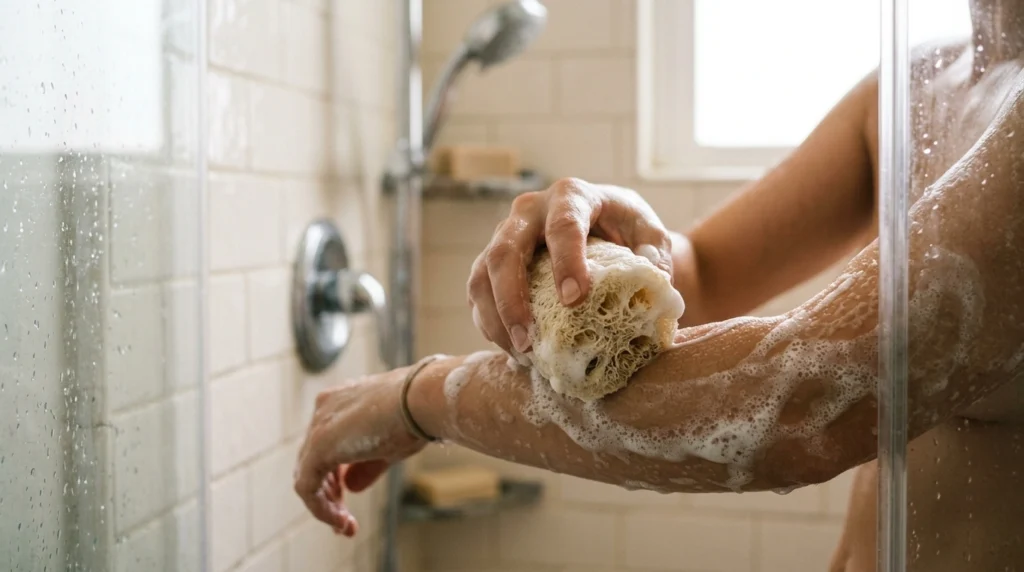
Exfoliation works by physically loosening and removing dead skin cells (corneocytes) from the outermost layer of skin, the stratum corneum. This encourages faster cellular turnover, can temporarily improve how skin reflects light (giving a “glow” effect), and helps unclog pores when combined with cleansing. A loofah’s textured fiber surface makes it one of the most accessible manual exfoliation tools available, requiring no additional products beyond soap or a body wash.
Documented Benefits of Loofah Exfoliation
- Circulation support — the mechanical friction of scrubbing increases localized blood flow to the skin’s surface.
- Smoother texture — regular use helps reduce the appearance of rough patches, particularly on elbows, knees, and heels.
- Improved product absorption — removing the dead-cell layer allows moisturizers and body oils to penetrate more effectively afterward.
- Radiance — many users report a visible brightening effect immediately after exfoliating, largely due to light reflecting more evenly off smoother skin.
Loofahs for Specific Skin Conditions
- Keratosis pilaris (“strawberry legs”) — the small, rough bumps associated with KP often respond well to gentle, regular loofah exfoliation combined with a moisturizing routine, since the condition involves excess keratin buildup around hair follicles.
- Ingrown hairs — light exfoliation before shaving can help lift trapped hairs and reduce the buildup of dead skin that traps new hair growth.
- Dry winter skin — a loofah can help slough off flaking skin, though it should be paired with heavier moisturizing during colder months since dry skin is more prone to irritation from friction.
When Not to Exfoliate With a Loofah
Exfoliation isn’t universally appropriate. Dermatologists generally advise against loofah use on:
- Active eczema flare-ups, where the skin barrier is already compromised
- Open wounds, cuts, or fresh sunburns, where friction can worsen tissue damage
- Very sensitive or reactive skin, where even gentle mechanical exfoliation can trigger inflammation
- Skin post-chemical peel or post-procedure, where the surface layer is intentionally thinned and vulnerable
For sensitive skin, a softer alternative like a konjac sponge or a plain washcloth may be a better daily-use option, with loofah reserved for occasional deeper exfoliation.
7. Sustainability and Environmental Impact
The Environmental Cost of Plastic Bath Poufs
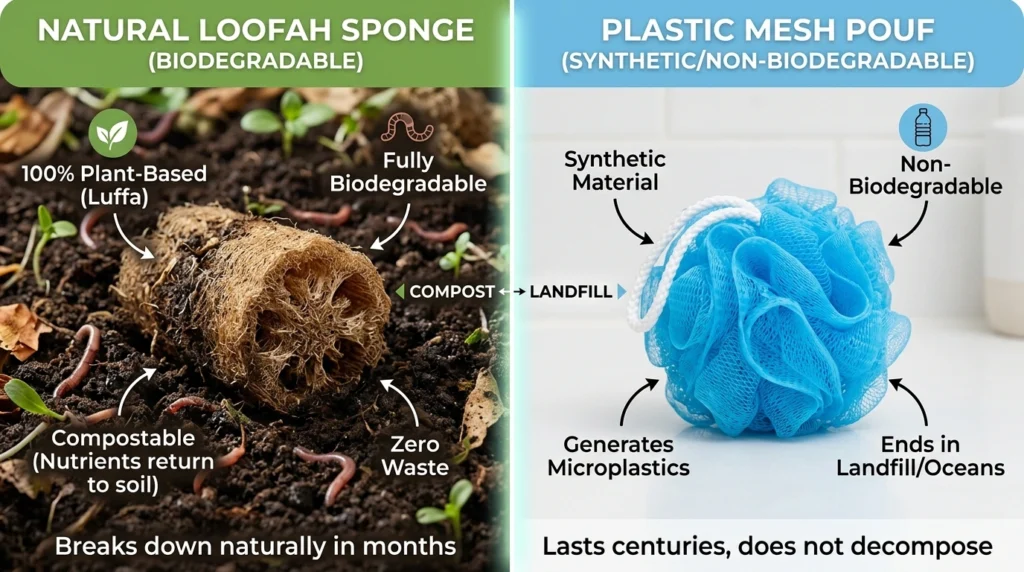
Synthetic mesh bath poufs — the plastic netted sponges sold in nearly every drugstore — are made primarily from nylon or polyethylene. These materials shed microplastic fibers with every use, fibers that wash down the drain and frequently bypass municipal wastewater filtration, eventually entering rivers and oceans. Many plastic poufs also incorporate low-grade plastics associated with chemical leaching, including compounds like BPA and phthalates in certain manufacturing processes.
Biodegradability and Composting
A natural loofah, by contrast, is 100% plant cellulose. Once it reaches the end of its usable life, it breaks down in a home compost system in a matter of weeks to a few months, depending on conditions — compared to synthetic poufs, which persist in landfills for decades or longer since standard plastics don’t biodegrade in any meaningful timeframe. This composting speed makes loofah one of the more genuinely “zero-waste” bathroom products on the market, rather than one relying on vague “eco-friendly” marketing language without material backing.
Building a Zero-Waste Bathroom Around Loofah
Loofah pairs naturally with other package-free or biodegradable bathroom staples: bar soap instead of bottled body wash, bamboo-handled brushes, and refillable glass containers. Because a loofah requires no plastic packaging when sold in bulk or from a garden, it’s frequently used as the anchor product in zero-waste bathroom starter kits.
The Water Pollution Angle
Beyond landfill concerns, synthetic pouf fibers are a measurable contributor to the broader microplastic pollution problem in wastewater systems. Because these microfibers are small enough to pass through most municipal filtration stages, switching from synthetic to plant-fiber alternatives is one of the more overlooked ways an individual household can reduce its microplastic footprint — a detail with strong content and search potential, since “loofah environmental impact” queries are underserved by most existing competitor content.
8. Maintenance, Hygiene, and Safety
The Hidden Bacteria Risk
Because loofah is an organic, moisture-retaining material, it is genuinely capable of harboring bacterial and fungal growth if it isn’t dried properly between uses. The risk isn’t unique to loofah — any damp bathroom material, including washcloths, faces the same issue — but the fiber’s dense, netted structure gives bacteria more surface area and hiding spots than a flat washcloth would. This is the honest, accurate answer to “does a loofah hold bacteria”: yes, if left wet and unventilated, though the risk is manageable with proper care.
Daily Care Practices
- Rinse thoroughly after every use to remove soap residue, which can otherwise feed bacterial growth.
- Squeeze out excess water firmly rather than leaving it saturated.
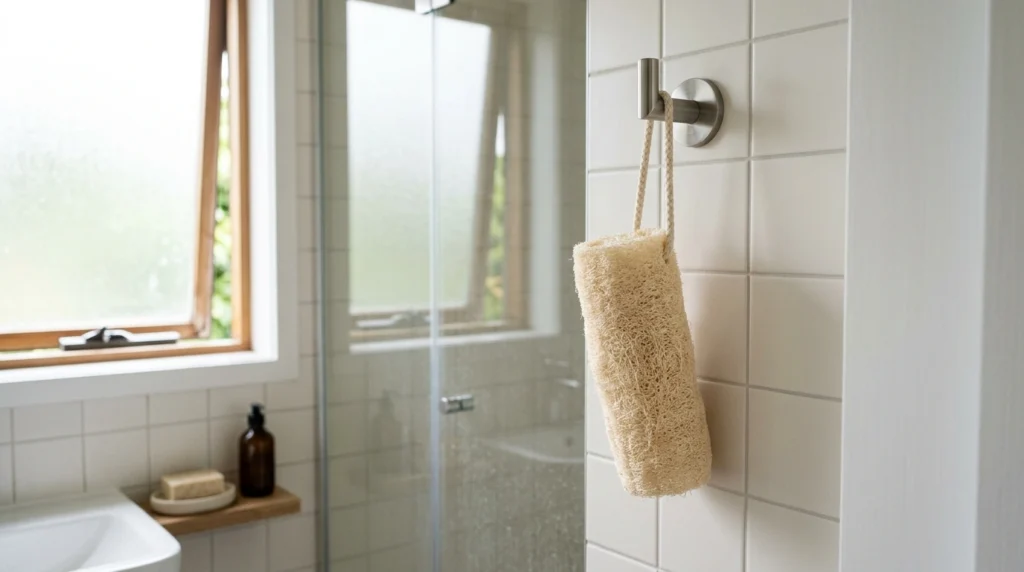
- Hang to dry in an open, ventilated spot rather than leaving it in a closed shower caddy or sitting in standing water on a shower floor or ledge.
Weekly Sanitization Methods
Several methods can meaningfully reduce microbial buildup on a natural loofah:
- Boiling water soak — submerging the loofah in boiling water for a few minutes is one of the simplest, most effective sanitizing methods.
- Microwave steam method — a damp loofah microwaved briefly can reach sanitizing temperatures, though this should be done cautiously and only when the sponge is thoroughly wet to avoid scorching.
- Diluted tea tree oil soak — tea tree oil has natural antimicrobial properties and is a popular non-heat sanitizing option.
- Dishwasher cycle — running a loofah through a hot dishwasher cycle (without detergent pods nearby) is an easy weekly reset for those already following a kitchen-sponge sanitizing routine.
The Replacement Timeline
Even with excellent care, a natural loofah isn’t a permanent product. Replace it when you notice:
- Texture breakdown — fibers becoming mushy, overly soft, or falling apart during use
- Discoloration — dark spots, unusual staining, or visible mold
- Persistent odor — a sour or musty smell that returns even after washing and full drying
As a general guideline, most natural loofahs should be replaced every three to four weeks with regular daily use, though lighter use can extend that window.
9. Household and Alternative Uses Beyond the Bath
Zero-Waste Kitchen Scrubbing
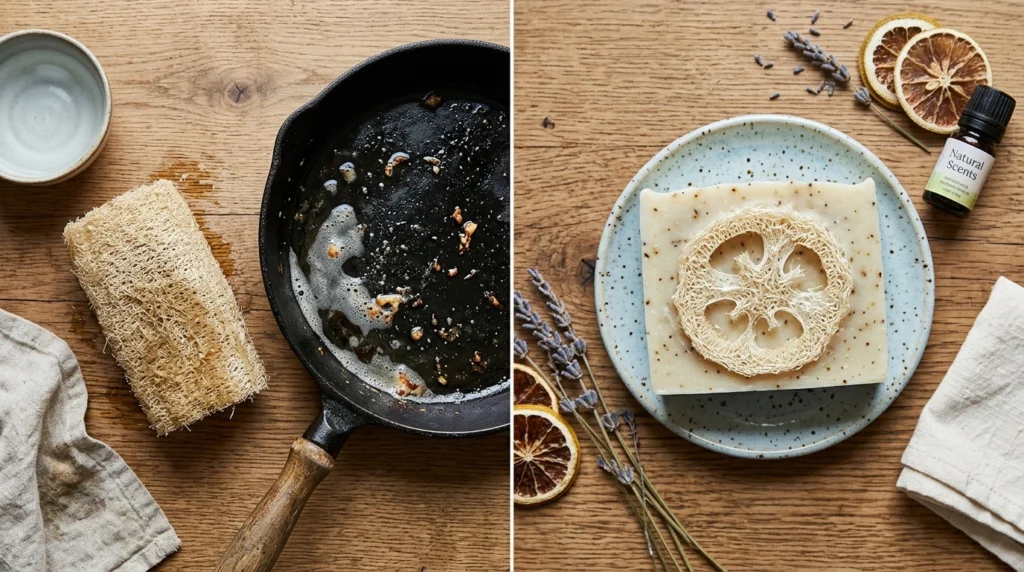
Loofah fiber makes an excellent heavy-duty, scratch-free scrubber for cast iron pans, non-stick cookware, and root vegetables like potatoes and carrots. Because the fiber is coarse enough to lift baked-on residue without being abrasive enough to damage seasoned cast iron or non-stick coatings, small loofah discs are increasingly sold as plastic-free dish sponge replacements.
Household and Industrial-Style Cleaning
Beyond dishes, coarser sections of loofah fiber are useful for scrubbing tile grout, cleaning soap residue from tubs, and general household surface cleaning where a firmer texture is helpful.
Natural Pet Toys
Small, untreated, unbleached loofah pieces are a popular natural chew toy for rabbits, guinea pigs, and other small rodents. The fibrous texture helps naturally wear down continuously growing teeth, and because it’s plant-based and digestible in small amounts, it’s considered a safer alternative to synthetic chew toys — provided the loofah hasn’t been chemically treated or bleached.
DIY Soap Crafting
Loofah slices are commonly embedded directly into melt-and-pour glycerin soap bases to create combination soap-and-scrubber bars. This is a popular small-business and craft-market product, and it pairs well with content around natural skincare gifting and homemade bath products.
10. Comparative Analysis: Loofah vs. Other Options
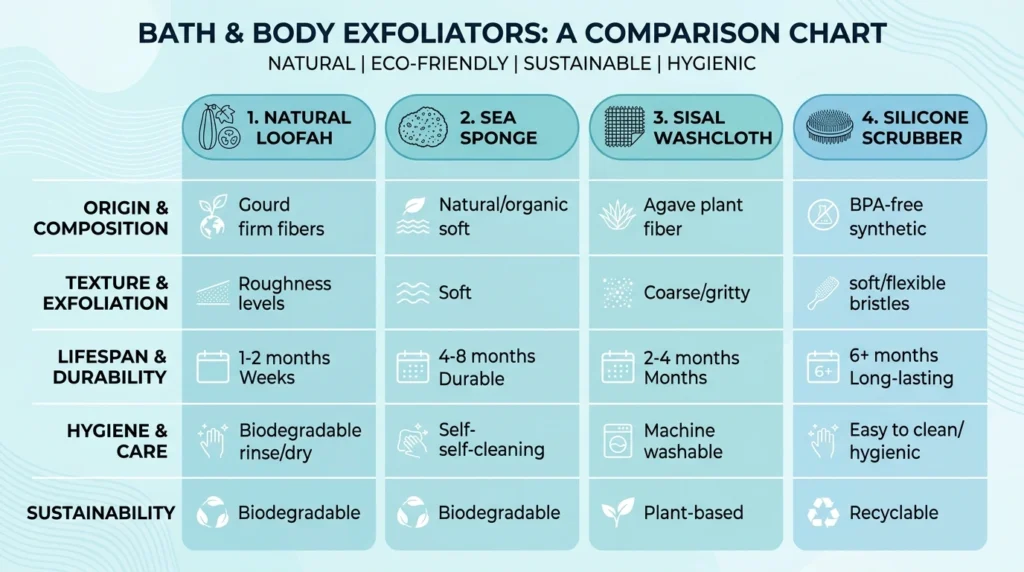
Natural Loofah vs. Sea Sponge
Sea sponges are marine animals harvested from ocean beds, which raises different ethical and sustainability questions than plant-based loofah farming. Sea sponges tend to be softer and more absorbent, making them gentler for facial use, while loofah’s firmer fiber structure is generally better suited to body exfoliation. Cost-wise, genuine sea sponges are usually more expensive than loofah due to harvesting logistics.
Natural Loofah vs. Sisal and Jute Washcloths
Sisal and jute are both plant fibers, like loofah, but are woven into flat washcloth or mitt forms rather than used in their natural gourd-fiber structure. Sisal in particular tends to be firmer and more abrasive than loofah, while jute is often blended with cotton for a gentler daily-use cloth. Loofah’s 3D fiber lattice generally provides more surface texture per square inch than a woven cloth.
Natural Loofah vs. Silicone Body Scrubbers
Silicone scrubbers have grown in popularity as a bacteria-resistant, quick-drying alternative to natural loofah, since silicone doesn’t retain moisture the way plant fiber does. However, silicone is a petroleum-derived synthetic material, which means it lacks loofah’s biodegradability, and many users report a less satisfying “scrub” sensation compared to natural fiber. The trade-off is essentially hygiene convenience versus sustainability and tactile experience — a distinction worth making explicit for anyone comparing “silicone loofah vs natural loofah.”
11. Loofah Colors, Edibility, and Other Frequently Searched Details
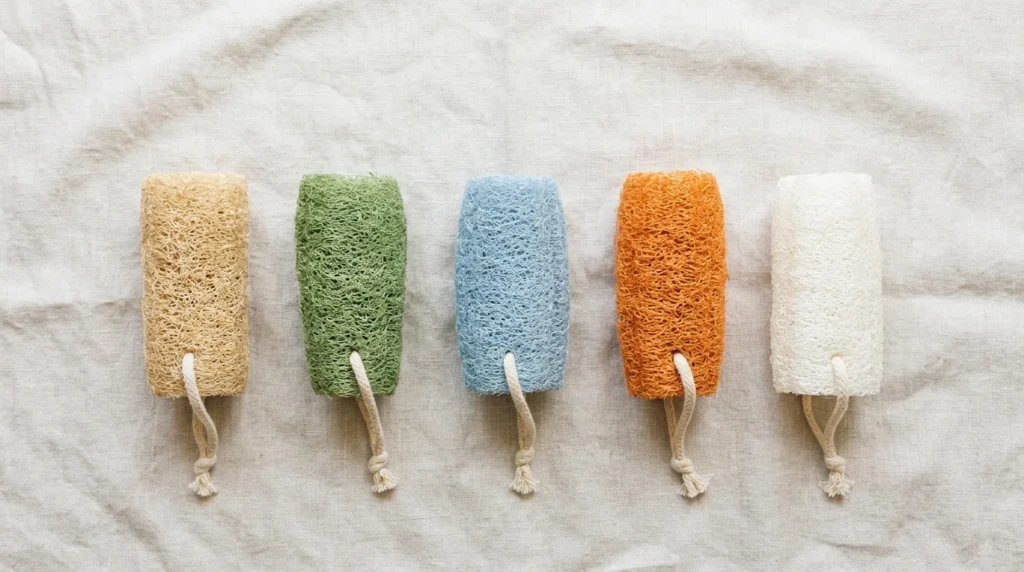
Do Loofah Colors Mean Anything?
Colored loofahs — green, blue, orange, white — are almost always a manufacturing or dyeing choice rather than an indicator of function, softness, or exfoliation strength. Natural, undyed loofah is a pale tan or cream color; any bright color seen on store shelves has been added during processing and has no bearing on performance.
Is Loofah Edible?
Yes — but only at the young, immature stage, before the fiber skeleton develops. Young luffa, often labeled “Chinese okra” or “silk squash” in grocery stores, is a common vegetable in Asian cuisine, typically peeled, sliced, and stir-fried or added to soups. Once the gourd matures into the fibrous sponge stage, it is no longer palatable or intended for eating.
Is a Loofah Safe for Kids?
Natural loofah can be used by children, though a softer variant or a shorter, gentler scrubbing routine is generally recommended, since children’s skin is thinner and more sensitive than adult skin. As with adults, hygiene and regular replacement matter even more given more frequent bath use in many households with young children.
Can You Be Allergic to Loofah?
True allergic reactions to loofah fiber itself are uncommon, but skin irritation from over-scrubbing, or reactions to residual bleaching chemicals in commercially processed loofahs, are more frequently reported. Choosing unbleached, minimally processed loofah reduces this risk.
Frequently Asked Questions
What is a loofah made of?
A loofah is made of the fibrous, cellulose-based vascular skeleton found inside a mature, dried Luffa gourd — a plant in the cucumber and gourd family.
Is a loofah a plant or an animal?
A loofah is entirely plant-based. It comes from the Luffa vine, unlike sea sponges, which are marine animals.
How often should you change your loofah?
Most natural loofahs should be replaced every three to four weeks with regular use, or sooner if you notice discoloration, odor, or fiber breakdown.
Does a loofah exfoliate skin?
Yes. Its textured fiber structure physically loosens and removes dead skin cells, supporting smoother texture and better product absorption.
Does a loofah hold bacteria?
It can, if left wet and stored without ventilation. Proper rinsing, drying, and weekly sanitizing significantly reduce this risk.
What’s the difference between loofah and luffa?
They refer to the same plant and product. “Luffa” is the botanical spelling, while “loofah” is the more common consumer-facing spelling in English retail markets.
Is loofah biodegradable?
Yes. As a pure plant-fiber product, natural loofah breaks down in a home compost system within weeks to a few months, unlike synthetic mesh poufs.
Can you eat loofah?
Only when harvested young, before the fiber skeleton develops. It’s a common vegetable in several Asian cuisines under names like Chinese okra or silk squash.
What do different loofah colors mean?
Colors are typically a cosmetic dyeing choice made during manufacturing and don’t indicate softness, quality, or exfoliation strength.
Is silicone or natural loofah better?
Silicone is more bacteria-resistant and dries faster, while natural loofah offers better biodegradability and a more textured exfoliating sensation. The right choice depends on whether hygiene convenience or sustainability is the higher priority.
Conclusion
From a fast-growing garden vine to a fixture in zero-waste bathrooms worldwide, the loofah’s story spans agriculture, dermatology, sustainability, and household practicality in a way few everyday products can match. Whether the goal is growing one from seed, understanding its skin benefits, keeping it hygienic, or comparing it against silicone and synthetic alternatives, the loofah remains one of the simplest, most versatile natural products available — a genuine plant-based tool with utility that starts in the kitchen, continues in the shower, and ends, eventually, back in the compost pile it came from.