
Choosing between a washcloth vs loofah often feels like a minor personal routine decision until skin irritation or persistent body breakouts force a closer look. Shower tools harbor dead skin cells and soap scum, creating an ideal breeding ground for microscopic mold and bacteria within humid bathroom stalls. Swapping your daily body cleanser delivers zero benefits if your scrubbing tool actively redistributes microbes back onto your skin barrier every morning.
Dermatologists and hygiene researchers point out that standard synthetic poufs accumulate bacteria rapidly within their porous mesh pockets. Meanwhile, dense woven fabrics present their own laundering hurdles if left damp on shower hooks. Navigating the choice between a washcloth vs loofah requires evaluating how well each tool exfoliates, resists bacterial growth, aligns with sustainable household practices, and fits your specific skin care requirements.
How Do Washcloths and Loofahs Actually Clean Your Skin?
The debate surrounding a washcloth vs loofah comes down to physical mechanics. Both tools work alongside liquid body washes or traditional soap bars, yet they interact with your epidermal layer through completely different physical textures.
A standard
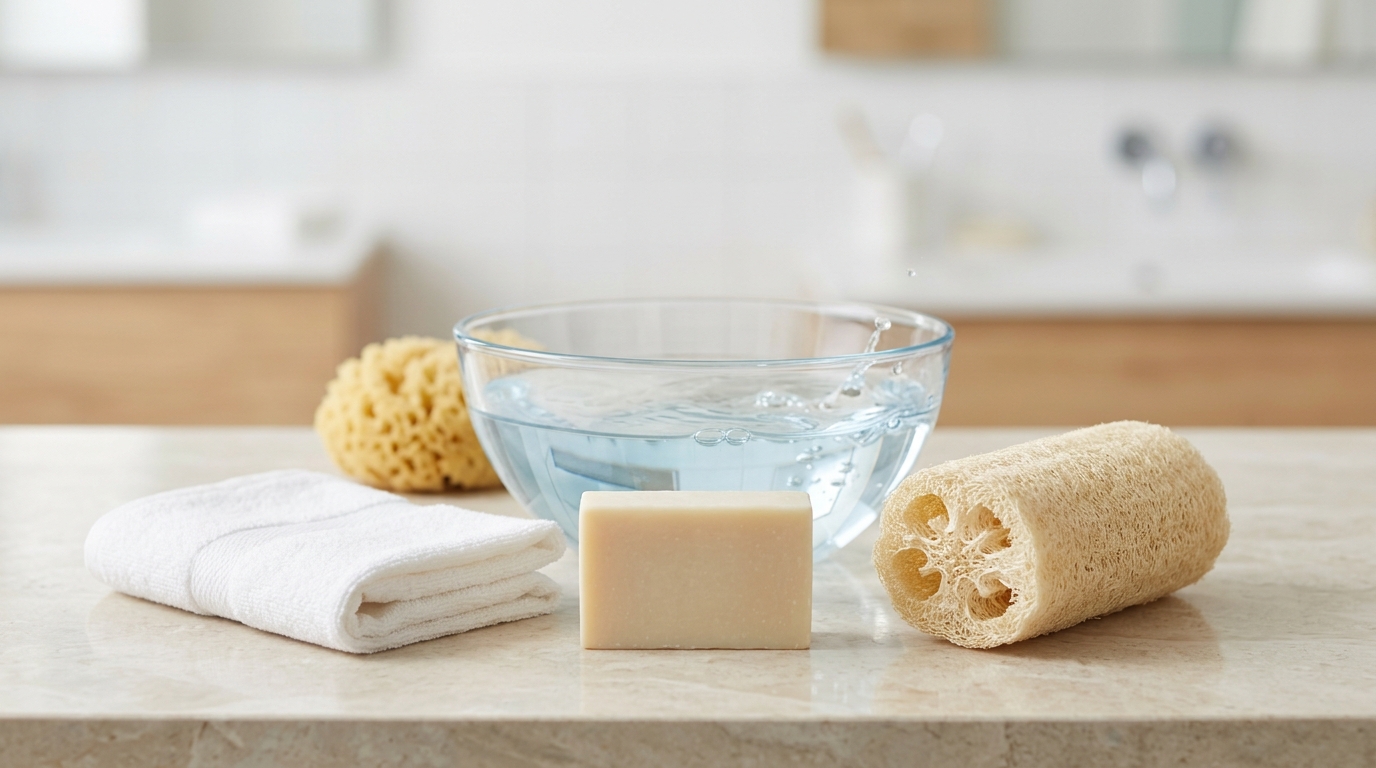
Natural and synthetic loofahs rely on an open-net matrix. A fibrous plant interior or plastic mesh pocket creates massive surface area. This open structure traps soap, air, and water, generating a rich lather with minimal soap product. When pressed against the skin, coarse outer fibers act as a mechanical scrub. They strip away stubborn stratum corneum layers, unclogging superficial pores along your back, elbows, and knees far more aggressively than flat cotton.
Exfoliation Comparison: Gentle Cleansing vs Deep Exfoliating
Exfoliation balance determines how healthy your skin looks and feels after washing. If you scrub too hard, you risk micro-tears and moisture loss; scrub too lightly, and dull dead skin accumulates. Evaluating a washcloth vs loofah reveals sharp differences in mechanical intensity.
Exfoliation Force Spectrum
[Gentle] --------------------------------------------------> [Aggressive]
Bare Hands  <  Microfiber  <  Terry Cloth  <  Synthetic Mesh  <  Natural Luffa
Cotton washcloths offer light-to-medium exfoliation that you can easily control through hand pressure. Microfiber variants glide smoothly with almost zero surface friction, making them safe for facial skin, thin eczema-prone patches, and sensitive areas. Heavy terry cloth offers slightly firm friction, removing daily grime while keeping your natural lipid barrier intact.
Natural loofahs deliver intense physical exfoliation. The dried vascular network of the luffa plant features rigid fibers that buff away thick calluses, rough patches, and dry flaky skin. Synthetic mesh poufs sit right in the middle, offering light mechanical friction through plastic netting. If you suffer from Keratosis Pilaris (strawberry skin) on your arms or legs, a natural loofah provides the physical force needed to smooth out kerain plugs. If you manage rosacea, sensitive skin, or active inflammatory acne, high-friction loofah fibers can trigger severe flare-ups.
Hygiene and Bacteria Growth: Which Tool Stays Cleaner?
Hygiene represents the single biggest functional divide in the washcloth vs loofah comparison. Bathrooms feature warm temperatures and elevated humidity—the exact environment environmental microbes need to thrive.
+------------------+-----------------------+-------------------------+
| Hygiene Metric   | Standard Washcloth    | Natural/Mesh Loofah     |
+------------------+-----------------------+-------------------------+
| Washing Method   | Machine wash (Hot)    | Surface rinse only      |
| Sanitization     | High-heat dryer safe  | Cannot boil or dry hot  |
| Replacement Time | 12 to 24 months       | 3 to 4 weeks            |
| Bacterial Risk   | Low (single-use mode) | High (stays damp inside)|
+------------------+-----------------------+-------------------------+
A washcloth wins the hygiene contest due to single-use laundering cycles. You use a fresh, clean cloth for one shower session, toss it into your laundry basket, and wash it in hot water with standard detergent. High-heat dryer cycles effectively sanitize cotton fibers, eliminating trapped fungi, yeast, and bacteria before your next use. Medical experts at ICGI highlight why it is critical to evaluate if you
Loofahs pose a persistent sanitization challenge. Their deep internal pockets hold onto water droplets, trapped body oil, and discarded skin cells. Because natural plant fibers take hours to dry completely in an enclosed bathroom, mold spores and bacterial colonies grow deep inside the matrix. Dermatologists frequently discover Pseudomonas aeruginosa, Staphylococcus, and various fungal strains inside used bath sponges. If you shave right before using a contaminated loofah, those microscopic organisms enter open hair follicles, leading directly to folliculitis or painful skin infections. To manage these risks safely, explore detailed protocols on
Environmental Impact: Natural Fiber vs Synthetic Mesh
Sustainable shoppers must consider environmental lifecycle when deciding between a washcloth vs loofah. Bath tools vary significantly in how they are harvested, manufactured, used, and discarded.
Cotton washcloths carry a high initial water and agricultural resource footprint during crop cultivation. However, their extended operational lifespan balances out that initial impact. A high-quality organic cotton or linen cloth lasts through hundreds of wash cycles over several years. At the end of its useful life, pure unbleached cotton biodegrades naturally without leaking synthetic residues into municipal soil or water systems.
Synthetic bath poufs are made from non-recyclable polyethylene plastic. These mesh sponges shed microplastic fragments down your bathroom drain during every warm shower. Once discarded after their short 3-to-4-week lifespan, synthetic poufs head straight to local landfills where they persist for hundreds of years.
Natural luffa sponges stand out as an exceptional eco-friendly choice. If you want to understand the origins of this unique plant tool, read our guide on
-
Fully home-compostable within 30 to 60 days
-
Free from petroleum plastics, dyes, and synthetic chemicals
-
Completely renewable seasonal harvest yield
-
Zero microplastic runoff into delicate aquatic ecosystems
If you prioritize zero-waste living, natural luffa gourds outshine synthetic mesh options completely while matching the low environmental footprint of long-lasting organic cotton washcloths.
Can You Wash Sensitive Skin with a Loofah?
Using a coarse loofah on delicate or compromised skin creates serious dermatological problems. Friction from dense, unyielding fibers strips away sebum lipids, leaving your skin barrier exposed to irritants, allergens, and moisture loss.
People who manage eczema, psoriasis, rosacea, or severe seasonal dry skin should avoid traditional natural loofahs entirely. The mechanical force disrupts the delicate stratum corneum, creating raw micro-fissures that sting, redden, and itch when exposed to hot water and scented soaps. If you want to dive deeper into skin barrier safety, learn more about whether you
Smooth cotton washcloths represent the safest choice for reactive skin. You can adjust your hand pressure to sweep away surface sweat without irritating raw skin patches. Microfiber cloths work exceptionally well for infants, toddlers, and elderly individuals whose skin layers are thin and tear easily.
If you prefer using a loofah despite having sensitive skin, reserve it strictly for resilient areas like your heels, knees, and elbows. Never drag a stiff loofah across sunburned skin, active acne lesions, or areas affected by contact dermatitis.
Cost and Durability: Which Option Saves More Money?
A clear financial calculation emerges when weighing the long-term expense of a washcloth vs loofah across a typical household budget.
Relative Cost & Replacement Timeline

Washcloth (Cotton)
[Cost: $2 - $5 each] ======================================> Lasts: 12-24 Months

Natural Loofah
[Cost: $3 - $6 each] ============> Lasts: 4-6 Weeks

Synthetic Pouf
[Cost: $1 - $3 each] ======> Lasts: 3-4 Weeks
A standard pack of 6-to-12 cotton washcloths costs between $10 and $20. Because you launder and reuse them continuously, that single purchase lasts two full years or longer. The only ongoing cost is the small fraction of water and laundry detergent used during regular wash loads.
Synthetic poufs and natural loofah gourds require frequent replacement due to microbial build-up and structural breakdown.
-
Synthetic poufs unspool, lose structural tension, and trap bacteria within 30 days ($12 to $36 per person annually).
-
Natural loofahs soften, lose their scrubbing texture, and decay within 4 to 6 weeks ($30 to $60 per person annually).
-
A 12-pack of cotton washcloths breaks down to less than $5 per person annually over a two-year operational lifecycle.
From a strict financial perspective, cotton washcloths offer far higher value per use, making them an ideal choice for budget-conscious families.
How to Properly Clean and Store Both Bath Tools
Improper maintenance destroys the performance of any bath tool, turning both washcloths and loofahs into unsafe vectors for skin irritation. Following strict drying protocols keeps your bathroom tools clean and safe.
How to Maintain Washcloths
-
Hang the cloth over a spacious towel bar immediately after your shower so air circulates around the fabric. Never leave damp cloth bunched up on the shower floor or tossed into a dark corner.
-
Transfer your used cloth to a dry laundry hamper after it air-dries completely.
-
Wash your bath linen collection every few days using hot water ( or higher) alongside a reliable laundry detergent.
-
Tumble dry on high heat to destroy surviving microbes and fluff up the cotton loops.
How to Maintain Loofahs
-
Rinse all soap, foam, and dead skin particles out of the interior fiber matrix using clean running water after every shower.
-
Shake the loofah vigorously to dislodge trapped water droplets inside the open structure.
-
Hang the loofah outside the humid shower enclosure in a dry area with active air movement.
-
Soak natural loofahs once a week in a diluted solution of 10% household bleach and 90% warm water for 5 minutes, then rinse thoroughly.
-
Replace synthetic mesh poufs every 30 days and natural luffa sponges every 4 to 6 weeks without exception.
Frequently Asked Questions
Which option is better for preventing body acne?
A clean washcloth is significantly better for preventing body acne. Synthetic poufs and natural loofahs trap acne-causing bacteria like Cutibacterium acnes inside their moist fibers, reintroducing micro-organisms into open pores during your next shower. Using a fresh, hot-laundered washcloth for every shower keeps your skin clean without spreading bacteria across your back and chest.
Is a natural loofah cleaner than a synthetic plastic pouf?
A natural loofah is not inherently cleaner than a synthetic plastic pouf. Both tools feature complex interiors that trap moisture, dead skin cells, and humidity. However, natural luffa fibers dry slightly faster than dense plastic mesh layers if hung in a dry room, reducing bacterial growth rates over time.
How often should you toss a washcloth into the laundry?
You should toss a washcloth into the laundry hamper after a single use. Reusing a damp washcloth two or three times allows surface moisture to breed bacteria within the cotton loops, eliminating its cleanliness advantage over a bath loofah.
Can you wash your face with a bath loofah?
No, you should never wash your face with a bath loofah. The skin layers across your face are significantly thinner and more sensitive than the skin on your arms or legs. High-friction loofah fibers cause micro-tears across your cheeks and forehead, accelerating inflammation, redness, and premature barrier breakdown.
Choosing the Best Tool for Your Daily Shower Routine
When choosing between a washcloth vs loofah, standard cotton washcloths come out ahead for overall hygiene, low cost, and daily skin safety. Rotating through a collection of fresh washcloths allows you to clean your skin thoroughly every morning without risking bacterial buildup or skin irritation. If you still prefer the deep exfoliation of a natural plant sponge, keep it reserved for rough areas on your body, sanitize it weekly, hang it in a well-ventilated space, and replace it regularly to keep your skin healthy and glowing.