

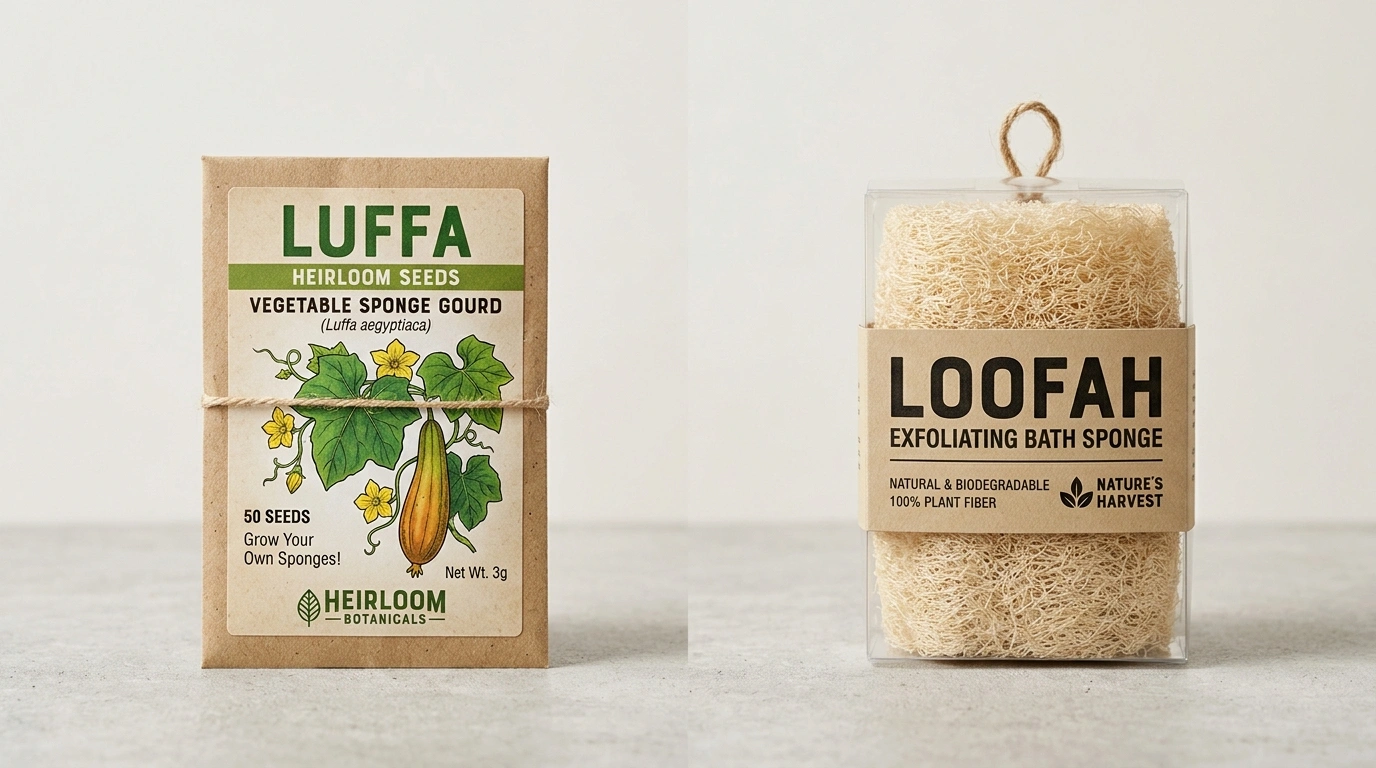
If you have spent any time shopping for bath products or browsing gardening catalogs, you have probably noticed the same plant spelled two, sometimes three or four different ways. One package says loofah. A seed packet says luffa. A dictionary entry says loofa. A gardening forum says lufa. Naturally, this leads to a common question: is there an actual difference between loofah and luffa, or are people just spelling the same thing differently?
The short answer is that loofah and luffa refer to the exact same plant and the exact same product. There is no botanical, functional, or practical difference between them. The variation comes entirely from language history, regional preference, and the way different industries adopted the word over time. But understanding why these spellings exist, where they came from, and when to use each one is genuinely useful, especially if you are a gardener, a content creator, a retailer, or simply someone who wants to get the terminology right.
The Short Answer First
Loofah and luffa are two spellings of the same word, referring to the same plant in the genus Luffa, part of the cucumber and gourd family, Cucurbitaceae. Whether you are talking about the vine growing in a garden, the young green vegetable eaten in many cuisines, or the dried fibrous sponge used for exfoliation and scrubbing, both spellings point to the identical organism and product. Neither spelling is more correct in a strict sense, though each has become associated with different contexts over time.
Where the Word Luffa Comes From
The word luffa has roots in Arabic. The Arabic term lūf, sometimes transliterated as luffah, referred to the plant long before it became widely known in Europe. As trade routes carried goods and language across North Africa, the Middle East, and eventually into Europe, the term was absorbed into Latin botanical nomenclature. Carl Linnaeus, the Swedish botanist responsible for formalizing modern taxonomic naming conventions, used Luffa as the official genus name in the eighteenth century, and it has remained the scientific standard ever since.
This is why nearly every seed catalog, botanical reference, horticultural extension guide, and scientific paper uses luffa rather than loofah. In academic and gardening contexts, luffa is treated as the authoritative spelling because it traces directly back to the Latin genus name.
Where the Word Loofah Comes From
Loofah developed as an English transliteration of the same root word, adapted over time as the product became more commercially available in English-speaking markets, particularly in the United Kingdom and later the United States. As bath and body products using the dried gourd fiber grew popular in retail settings during the twentieth century, loofah became the dominant spelling on packaging, in beauty aisles, and in everyday consumer language.
This split mirrors a common pattern in language evolution. A scientific or historical spelling persists in technical fields, while a phonetically adapted, consumer-friendly spelling takes over in retail and casual usage. Compare it to how the scientific term Cannabis sativa exists alongside the everyday word marijuana, or how Solanum lycopersicum quietly sits behind the word tomato. The formal and informal versions of a word can coexist indefinitely without one making the other incorrect.
So Which Spelling Should You Use?
The honest answer depends on context.
If you are writing a gardening guide, a seed description, or anything with a botanical or horticultural audience, luffa is generally the expected spelling. Gardeners searching for growing information, seed suppliers, and agricultural extension offices almost universally use luffa.
If you are writing about skincare, bath products, exfoliation, or anything consumer and retail facing, loofah is the more commonly searched and more commonly recognized spelling. Search volume data consistently shows loofah outperforming luffa for shopping and skincare related queries, while luffa holds its own in gardening and plant identification searches.
Neither choice is wrong. Many well-optimized websites use both spellings interchangeably throughout their content specifically because both terms carry meaningful search demand, and treating them as synonyms rather than separate topics tends to serve readers and search intent more effectively.
Other Spelling Variants You Will Encounter
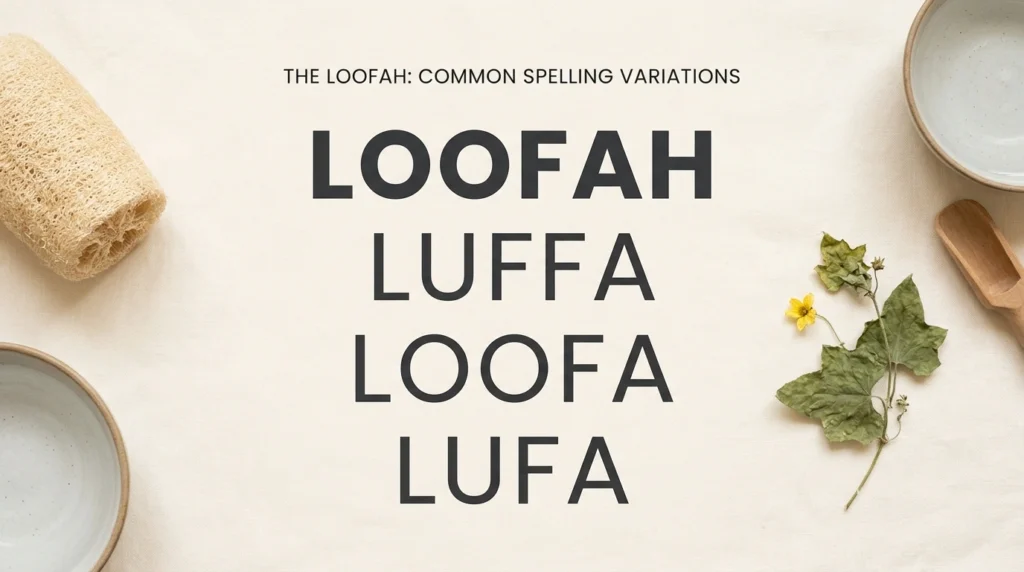
Beyond loofah and luffa, a handful of informal variants show up regularly in search queries, product listings, and casual writing.
Loofa appears frequently as a simplified version of loofah, dropping the second h. It is not considered a standard dictionary spelling, but it is common enough in search behavior that content creators should be aware of it.
Lufa is another informal shortening, sometimes used interchangeably with luffa, particularly in casual online writing and product listings from non-English-speaking sellers translating their listings into English.
Loufa, louffa, and similar phonetic spellings occasionally appear as well, generally as simple misspellings rather than intentional regional variants. These rarely carry meaningful independent search volume but are worth recognizing if you are auditing keyword research or analyzing how people search for the product.
Does the Spelling Difference Affect Meaning at All?
No. This is the part that surprises people the most. Regardless of which spelling is used, the word refers to the same object in every stage of its existence: the climbing vine, the edible young fruit, and the dried fibrous sponge. There is no scenario where loofah means one thing and luffa means something functionally or botanically different. Any perceived difference in meaning is really a difference in audience and context, not in the underlying subject matter.
This is different from cases where spelling genuinely changes meaning, such as desert versus dessert, or affect versus effect. Loofah and luffa are true synonyms in every practical sense, similar to how gray and grey are both correct spellings of the same color depending on whether you are using American or British English conventions.
A Closer Look at the Plant Itself
To fully understand why this spelling debate exists, it helps to understand what the plant actually is. Luffa, regardless of spelling, is an annual climbing vine in the same botanical family as cucumbers, zucchini, pumpkins, and squash. Two species dominate commercial and garden use: Luffa aegyptiaca, sometimes called the smooth luffa or Egyptian luffa, and Luffa acutangula, commonly called ridged luffa or angled luffa.
Both species produce long, cylindrical fruit that starts out green, tender, and edible, similar in texture to a zucchini. If left unharvested, the same fruit matures on the vine, its outer skin dries and turns brown, its internal moisture evaporates, and its interior transforms into the dense network of cellulose fibers recognized worldwide as a loofah sponge, or if you prefer, a luffa sponge.
This dual identity, part vegetable, part bath product, is part of why the plant has such a rich and varied vocabulary across cultures and industries. A word that needs to serve both a produce aisle and a bath and body aisle naturally develops multiple spellings depending on who is using it and why.
Why This Matters for Search and Content
For anyone building content around this topic, whether for a blog, an online store, or an educational resource, understanding the loofah versus luffa distinction has genuine practical value. Search engines and increasingly AI-powered answer engines evaluate content based on how thoroughly and accurately it addresses the full scope of a topic, including its terminology variants. A page that only uses loofah and never acknowledges luffa risks missing a meaningful portion of search intent, particularly from gardening-focused audiences. The reverse is true for a horticulture site ignoring the loofah spelling and missing skincare-focused searchers.
This is also relevant for structured data and answer engine optimization. When a search engine or AI assistant is asked a direct question like is loofah spelled differently than luffa, the ideal answer is direct, accurate, and clearly resolves the question in the first sentence or two, which is exactly the kind of content structure that tends to get pulled into featured snippets and AI-generated overviews.
Common Sentences Using Both Spellings Correctly
It helps to see both words used naturally in context.
A gardener might say, I planted luffa seeds in early spring and trellised the vines along my fence.
A skincare shopper might say, I switched to a natural loofah sponge instead of a plastic pouf.
A recipe writer might say, Young luffa, sometimes labeled Chinese okra, works well stir-fried with garlic and eggs.
A product reviewer might say, This loofah held up well after several weeks of daily use in the shower.
Notice that in each case, either spelling could technically be substituted without changing the meaning of the sentence. The choice simply reflects the tone, audience, and industry context of the writer.
Plural Forms and Grammar Notes
Both spellings follow standard English pluralization rules. The plural of loofah is loofahs, and the plural of luffa is luffas. There is no irregular plural form for either spelling, unlike some borrowed words that retain foreign plural conventions. This makes both terms straightforward to use in everyday writing without any special grammatical considerations.
How Dictionaries Handle the Two Spellings
Major English dictionaries, including Merriam-Webster and the Oxford English Dictionary, list both loofah and luffa as valid entries, often cross-referencing one another. This dual listing reflects exactly what has been described throughout this article: two accepted spellings of the same word, with usage shaped by context rather than correctness. Neither dictionary treats one spelling as an error or a deprecated form, which further confirms that this is a stylistic and contextual choice rather than a grammatical one.
A Brief Historical Timeline
Understanding how the word evolved over time adds useful context.
In ancient and medieval trade networks, the Arabic term for the plant moved through North Africa and the Middle East alongside agricultural and commercial exchange.
By the eighteenth century, the term had been formalized into Latin botanical nomenclature as Luffa, cementing its place in scientific literature.
Through the nineteenth and twentieth centuries, as the dried sponge form of the plant became a popular bath and household product in English-speaking countries, the phonetic spelling loofah began appearing more frequently in retail and consumer contexts.
By the twenty-first century, both spellings had become firmly entrenched in their respective domains, gardening and botany favoring luffa, and skincare and retail favoring loofah, a pattern that continues today.
Similar Dual-Spelling Patterns in English
The loofah and luffa situation is not unique. English has plenty of examples where two spellings of the same word coexist because of differing origins, regional development, or industry adoption. Gray and grey both describe the same color, with gray more common in American English and grey more common in British English. Yogurt and yoghurt describe the same food product, with the spelling varying primarily by region. Color and colour follow the same pattern.
What makes loofah and luffa slightly different from these examples is that the split is not primarily regional, meaning it is not simply an American versus British spelling difference. Instead, it is largely industry and context driven, with the scientific and horticultural world favoring luffa and the consumer retail world favoring loofah, regardless of which English-speaking country the content originates from. This distinction is worth understanding because it means the right spelling choice depends more on your audience’s intent than on their geographic location.
How Retailers and Brands Use Each Spelling
Looking at how the word appears in commercial contexts reinforces the pattern already described. Bath and body retailers, skincare brands, and beauty product manufacturers overwhelmingly favor loofah on packaging, product titles, and marketing copy, since this is the spelling their target customers recognize and search for when shopping for exfoliating sponges.
Seed companies, nurseries, and gardening supply retailers almost universally use luffa, both because it matches the scientific genus name their customers may already be familiar with, and because gardening audiences tend to engage more with botanically precise terminology than casual retail shoppers do.
Interestingly, some brands that operate across both categories, selling both raw seeds for growing and finished bath sponges, will intentionally use both spellings across different sections of their website, luffa on the gardening or seed pages, and loofah on the finished product or skincare pages. This dual approach reflects a sophisticated understanding of audience intent rather than inconsistency.
The Content Strategy Angle
For anyone building a content library around this plant, whether for an e-commerce brand, an educational resource, or a lifestyle blog, treating loofah and luffa as interchangeable synonyms throughout your content, rather than picking one and ignoring the other, tends to produce stronger search visibility. Search engines and modern natural language processing systems are generally capable of recognizing these terms as semantically equivalent, but reinforcing that equivalence directly within your content, as this article does, helps both traditional search rankings and newer AI-driven answer engines correctly attribute your content as authoritative on the topic regardless of which spelling a person originally searched.
This is particularly relevant given how differently these two spellings perform across different types of search intent. A person typing loofah into a search engine is statistically more likely to be shopping, researching skincare, or looking for hygiene information. A person typing luffa is statistically more likely to be researching gardening, seed sourcing, or plant identification. Content that acknowledges and serves both intents in one place, as opposed to splitting the difference or ignoring one entirely, tends to perform better across a wider range of queries.
What This Means If You Are Just a Curious Reader
If you arrived here simply wondering whether you had been spelling the word wrong your whole life, the reassuring answer is that you have not been. Whether you grew up calling it a loofah or a luffa, whether you first encountered the word on a shower shelf or a seed packet, you were using a legitimate, dictionary-recognized spelling of the exact same plant. There is no wrong answer here, only a slightly interesting piece of language history explaining why a humble garden vegetable ended up with two names.
Frequently Asked Questions
Is loofah the correct spelling or is luffa correct?
Both are correct. Luffa is the botanical and scientific spelling, while loofah is the more common consumer facing spelling used in skincare and retail contexts.
Do loofah and luffa mean different things?
No. They refer to the exact same plant and product at every stage of its life cycle, from the growing vine to the edible young fruit to the dried fibrous sponge.
Why do gardening sites use luffa while beauty sites use loofah?
This reflects the historical path each spelling took. Luffa comes directly from the Latin scientific genus name and remained standard in horticultural and academic contexts, while loofah developed as a phonetic, consumer-friendly spelling adopted by the retail and beauty industry.
Is loofa a real spelling?
Loofa is an informal variant that appears in casual writing and search queries, but it is not considered a standard dictionary spelling in the way loofah and luffa are.
Should content creators use both spellings?
Yes, particularly for websites covering both gardening and skincare topics. Using both spellings naturally throughout content helps address the full range of how people search for and refer to this plant.