

Figuring out the timing for a new garden addition often feels like a guessing game against the weather. You might invest months of careful watering and trellising, only to watch a surprise early frost wipe out dozens of unripe gourds overnight. This frustration is incredibly common for first-time growers attempting to cultivate a sustainable bath alternative. Timing your initial planting correctly eliminates this risk entirely.
Understanding when to plant loofah seeds dictates the success or failure of your entire harvest. These aggressive vining plants require massive amounts of thermal energy to produce the dense fibrous network you want for scrubbing. You need a verified minimum of 150 frost-free days to take a seed from germination to a fully dried, brown gourd. Starting indoors provides a critical head start for northern climates, while southern growers can capitalize on long, hot summers. Mapping your specific USDA hardiness zone to these temperature milestones ensures your plants reach full maturity long before the autumn chill arrives.
Understanding When to Plant Loofah Seeds by USDA Zone
Deciding when to plant loofah seeds requires a clear understanding of your local USDA hardiness zone. Your specific zone dictates whether you have the luxury of direct sowing or the necessity of an indoor jumpstart.
Northern growers in zones 3 through 6 face a mathematically challenging growing season. You must start seeds indoors 6 to 8 weeks before the final projected frost. Moving the plants outside too early stunts their growth, while starting them too late guarantees green, underdeveloped gourds in October. You must wait until nighttime ambient temperatures remain reliably above 60 degrees Fahrenheit before transplanting.
Southern growers in zones 7 through 10 experience a much more forgiving timeline. You can direct sow seeds straight into the garden beds once the soil warms sufficiently. Many gardeners in zone 8 and above push their planting dates into mid-May to ensure heavy spring rains do not rot the seeds in the ground.
For detailed guidance on sourcing viable genetics and how to start loofah seeds effectively, securing high-germination stock is your first operational priority.
The Frost-Free Window: Why Loofahs Demand 150 Days
Knowing exactly when to plant loofah seeds connects directly to the biological demands of the plant. A standard luffa gourd requires a massive uninterrupted block of warm weather to develop its internal fiber matrix.
The 150-day requirement is not a casual recommendation. The first 20 days involve seed coat breakdown, taproot establishment, and initial cotyledon emergence. The subsequent 60 days focus entirely on aggressive vegetative growth, with vines often climbing up to 30 feet. Flowering and pollination consume the next 30 days. The final 40 days are critical for the gourds to swell, heavy up with water, and then slowly dry out on the vine as the skin turns brown.
Interrupting this 150-day cycle with a frost event destroys the cellular structure of the gourd. Green loofahs exposed to freezing temperatures turn to mush within hours. The Missouri Botanical Garden notes that the loofah plant is extremely frost-tender and requires maximum solar exposure to complete its life cycle. You must reverse-engineer your planting date from your historical first fall frost to guarantee completion.
How to Start Loofah Seeds Indoors for Colder Climates
When determining when to plant loofah seeds inside, you must coordinate your equipment preparation with your target transplant date. Indoor sowing is mandatory if your location experiences fewer than 150 frost-free days annually.
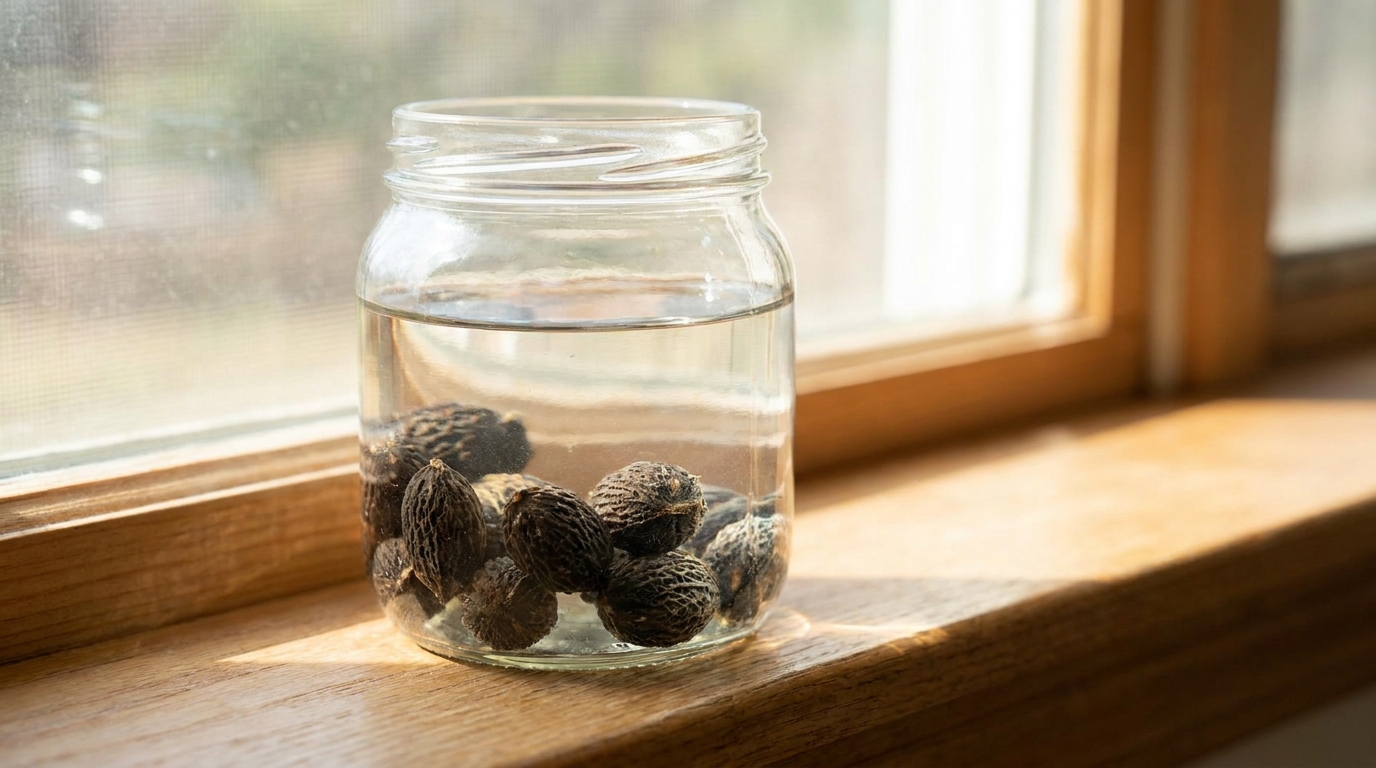
You need heavy-duty seedling trays, a seedling heat mat, and reliable grow lights. Loofah seeds possess incredibly hard outer coats that resist water absorption. You must scarify the seeds by gently roughing the edges with sandpaper and soaking them in warm water for 24 to 48 hours prior to planting. This physical intervention artificially accelerates the germination timeline by up to two weeks.
Plant the soaked seeds half an inch deep in a sterile, well-draining seed starting mix. The soil temperature must remain a constant 75 to 85 degrees Fahrenheit. A seedling heat mat is non-negotiable for this step, as ambient room temperature rarely warms the soil enough to trigger rapid sprouting. Once the cotyledons break the surface, position your grow lights exactly two inches above the leaves to prevent leggy, fragile stems.
Direct Sowing: When to Plant Loofah Seeds Outdoors
Figuring out when to plant loofah seeds directly in the ground hinges entirely on soil thermodynamics. Gardeners in warmer climates often prefer direct sowing to avoid the severe root shock that loofahs experience during transplanting.
You cannot rely on the calendar or ambient air temperature alone. Soil temperature is the sole metric that matters for direct sowing. The top two inches of your garden soil must register a consistent 70 degrees Fahrenheit early in the morning before the sun hits the bed. Sowing seeds into 60-degree soil results in fungal rot, meaning the seeds will decay long before they have a chance to sprout.
Prepare your outdoor hills by mounding compost and well-rotted manure a week before your target planting date. Black plastic mulch laid over the mounds traps solar radiation and warms the soil profile rapidly. Plant three to four seeds per mound, spacing the mounds at least three feet apart along a sturdy trellis system. Once established, thinning the weaker seedlings directs all nutrient uptake to the strongest plant.
The Impact of Soil Temperature on Germination Timing
Calculating exactly when to plant loofah seeds requires treating soil temperature as your primary operational trigger. The correlation between soil warmth and germination speed is exponential for tropical gourds.
At 60 degrees Fahrenheit, a loofah seed might sit dormant for three weeks, leaving it vulnerable to insects and soil-borne pathogens. Elevating that temperature to 75 degrees Fahrenheit cuts germination time down to roughly 10 days. Pushing the soil temperature to the optimal 85-degree mark can force sprouting in as little as 4 to 6 days.
Monitoring this requires a digital soil thermometer. Take readings at a depth of one inch at 8:00 AM for three consecutive days. If the average remains above 70 degrees, you have the green light. Using raised beds significantly accelerates this timeline, as the elevated soil mass drains faster and absorbs ambient heat more efficiently than flat ground planting.
Analytical Framework: Indoor vs. Outdoor Planting Decision Matrix
Choosing when to plant loofah seeds involves assessing your local risk factors against your equipment capabilities. This decision matrix clarifies the exact path you should take based on your environmental constraints.
Criteria 1: Annual Frost-Free Days
-
Less than 150 days: Indoor starting is mandatory.
-
150 to 180 days: Indoor starting highly recommended.
-
180+ days: Direct sowing is optimal.
Criteria 2: Soil Warming Speed
-
Heavy clay soils: Retain cold temperatures longer. Requires delayed direct sowing or indoor starting.
-
Sandy loam soils: Warm rapidly in spring. Ideal for early direct sowing.
Criteria 3: Transplant Capability
-
Peat pots or soil blocks available: Indoor starting is safe, as roots remain undisturbed.
-
Only plastic cell trays available: High risk of root shock. Requires extreme care during transplanting, leaning toward direct sowing if climate permits.
Using this matrix prevents the common mistake of forcing an indoor start when a warm climate makes it unnecessary. To understand more about growing and caring for loofah outdoors, matching your methodology to your regional soil profile is essential.
Decoding Your Microclimate for Optimal Planting Windows
Pinpointing when to plant loofah seeds at your specific residence requires analyzing your immediate microclimate. A hardiness zone provides a macro-level average, but your actual yard contains pockets of distinct temperature variations.
South-facing brick walls create massive thermal batteries. Planting your loofah seeds near these structures allows you to start seeds outdoors up to two weeks earlier than an exposed, open field. The masonry absorbs solar radiation throughout the day and slowly releases it at night, artificially elevating the localized ambient temperature.
Conversely, low-lying areas in your yard act as frost pockets where cold air settles. Avoid planting in these depressions entirely. Urban gardeners often benefit from the urban heat island effect, gaining an extra week of frost-free growing time on both ends of the season compared to rural neighbors just five miles away. Mapping these zones ensures you maximize every available degree of thermal energy.
Preparing the Transplant: Timing the Move Outside
Knowing when to plant loofah seeds indoors is only half the battle; timing the outdoor transition is equally critical. Loofahs possess highly sensitive taproots that deeply resent being disturbed.
You must begin the hardening-off process 10 to 14 days before your target transplant date. This transition exposes the sheltered indoor seedlings to real-world UV radiation, wind stress, and temperature fluctuations. Start by placing the trays in dappled shade for two hours, gradually increasing their exposure to direct sunlight and outdoor conditions each day. Skipping this step results in immediate sunburn and leaf drop.
Execute the actual transplanting on an overcast, calm day to minimize transpiration stress. Dig a hole twice the width of the root ball and gently slide the plant in without teasing the roots apart. Water the base deeply with a liquid kelp solution to stimulate immediate root expansion and mitigate the inevitable shock of the move. For those interested in culinary applications, getting the plants established quickly ensures a steady supply of young gourds for edible uses long before they mature into fibrous sponges.
Late Planting Risks: What Happens If You Miss the Window?
Missing the ideal window for when to plant loofah seeds triggers a cascade of compounding agricultural failures. A delay of just three weeks in the spring can completely ruin the autumn harvest.
Late-planted loofahs will still grow aggressively, masking the underlying problem. The vines will cover your trellis and produce massive yellow flowers. However, the gourds that form in late summer will not have the thermal runway required to mature. As day length decreases and night temperatures drop in September, the plant shifts energy away from fiber development.
When the first frost strikes, you are left with dozens of heavy, waterlogged green gourds. These immature gourds contain weak, underdeveloped fibers that disintegrate when you attempt to peel and wash them. Understanding the entire lifecycle of transforming the garden vine to a bath sponge reinforces why you cannot cheat the required 150-day timeline.
Regional Timing Variations for Global Gardeners
Adjusting when to plant loofah seeds requires adapting to extreme regional weather anomalies. The standard North American guidelines do not apply universally across different topographies.
Gardeners in the Pacific Northwest face a unique challenge. While their frost-free season is technically long enough, the ambient summer temperatures frequently sit below the 80-degree threshold loofahs prefer. You must utilize greenhouse environments or heavy high-tunnel plastics to trap heat and simulate a southern summer.
Growers in the deep South or desert Southwest face the opposite extreme. Sowing seeds too late pushes the delicate flowering phase into the brutal 100-degree heat of July. High heat sterilizes the pollen, resulting in massive vine growth but zero gourd production. You must time your planting so the first major flush of flowers occurs before the peak thermal stress of mid-summer arrives.
Frequently Asked Questions
Can I plant loofah seeds in late spring?
You can plant in late spring only if you live in USDA zones 8 through 10. Northern gardeners who delay until late spring will not have enough frost-free days left in the year to harvest mature, fibrous sponges.
How long does a loofah seed take to germinate?
With proper scarification and a seedling heat mat set to 80 degrees Fahrenheit, seeds emerge in 5 to 10 days. Sown in cold soil without preparation, they can take up to three weeks or rot entirely.
What is the lowest temperature a loofah plant can tolerate?
Loofahs suffer physiological damage when ambient temperatures drop below 50 degrees Fahrenheit. A freeze at 32 degrees Fahrenheit will kill the vine and destroy any green, immature gourds left on the plant.
Will loofah grow in partial shade?
No, full sun is an absolute requirement for successful cultivation. The plants require a minimum of 8 to 10 hours of direct, unobstructed sunlight daily to generate the energy needed for massive gourd production.
How do I know when the soil is warm enough?
Use a digital soil thermometer placed one inch deep in your garden bed at 8:00 AM. When the reading stays above 70 degrees Fahrenheit for three consecutive mornings, the soil is ready for direct sowing.
Do I need a greenhouse to start loofah seeds early?
A greenhouse is highly beneficial but not strictly required. You can successfully start seeds indoors using a standard wire rack, heavy-duty seedling heat mats, and full-spectrum LED grow lights suspended two inches above the plants.
Why did my loofah seeds rot instead of sprouting?
Seeds rot when planted in soil that is too wet and too cold. Maintaining high moisture in soil below 70 degrees Fahrenheit creates the perfect breeding ground for fungal pathogens that consume the seed before the taproot emerges.
Getting your timing right is the single highest-leverage action you can take for a massive autumn harvest. Now that you understand the 150-day biological requirement, audit your local frost dates immediately. Order your seeds by early February so you have ample time to scarify and soak them before your specific starting window opens. Secure your heavy-duty trellising materials before the vines hit the ground, as they grow inches per day once established. If you respect the temperature thresholds and manage your soil heat properly, you will secure dozens of durable, organic sponges from a single packet of seeds this season.