
You replace your shower loufah every few weeks because synthetic plastic mesh unravels and harbors mold. Standard bathroom sponges turn slimy, trap dead skin cells, and lose their coarse texture after 10 uses. Switching to a natural exfoliant often leaves buyers with thin, scratchy luffa pods that collapse under light pressure, wasting your beauty budget.
Choosing an authentic egyptian loofah solves this frustrating cycle by delivering an ultra-durable plant sponge that lasts up to 4 months with proper care. The native Egyptian gourd variety develops thick, supportive vascular walls under the North African sun, creating a springy texture that lifts dull skin cells while preserving your skin barrier. Understanding how this organic botanical material outperforms plastic mesh and wild gourd varieties helps you select the right tool for smooth, healthy skin.
What Is an Egyptian Loofah?
An egyptian loofah is the dried vascular skeleton of the Luffa aegyptiaca plant, a subtropical vine in the cucumber family cultivated in the fertile Nile River Delta. Farmers harvest the mature gourds, peel the outer green skin, wash out the seeds, and sun-dry the fibrous core to reveal a dense matrix of natural cellulose.
Unlike synthetic plastic bath poufs manufactured from petroleum polymers, this natural vegetable sponge consists entirely of biodegradable plant fibers. The structural network features wide, open pores that allow water and air to flow freely through the center. This natural design ensures rapid drying between uses, preventing the stagnant moisture accumulation common in flat synthetic sponges.
The botanical lineage of Luffa aegyptiaca differs significantly from other species across the globe. Egyptian agricultural practices preserve heirloom seeds that produce larger, rounder fruit with unusually thick wall fibers. When harvested at peak maturity, the plant yields a soft yet springy structure that softens dramatically upon soaking while maintaining structural integrity during vigorous scrubbing.
Why Is the Egyptian Loofah Considered Premium Quality?
An egyptian loofah earns its premium status due to its thick fiber density, exceptional durability, and unique softening mechanism when wet. The unique climate of the Nile Delta provides long sunlight hours and rich alluvial soil, allowing the gourd to build flexible vascular walls that resist tearing.
Fiber Density and Texture
Asian varieties, such as Luffa acutangula, feature thin, tightly woven internal fibers that easily turn brittle and snap when scrubbed against coarse skin. In contrast, Egyptian gourds develop thick, round fibers organized in a flexible grid. The coarse surface provides maximum surface area to scrub away dead keratinocytes without scratching the epidermis.
Water Absorption and Structural Resiliency
When dry, an Egyptian sponge feels rigid and stiff. Once immersed in warm water for 30 seconds, the cellulose matrix expands by up to 20 percent, transforming the stiff fibers into pliable, cushiony ridges. The open weave retains soap lather while allowing user pressure to distribute evenly across your body.
+------------------------+--------------------------+--------------------------+
| Feature                | Egyptian Loofah          | Asian / Common Luffa     |
+------------------------+--------------------------+--------------------------+
| Fiber Thickness        | Thick, flexible, round   | Thin, rigid, flat        |
| Weave Pattern          | Open, springy matrix     | Dense, tightly compressed|
| Wet Texture            | Softly cushiony, firm    | Slightly scratchy        |
| Lifespan               | 3 to 4 months            | 3 to 6 weeks             |
| Drying Speed           | Fast (high airflow)      | Slow (dense center)      |
+------------------------+--------------------------+--------------------------+
How Does an Egyptian Loofah Benefit Your Skin?
Using an egyptian loofah improves skin texture by removing built-up dead skin cells, unlocking clogged pores, and boosting superficial microcirculation during your daily wash routine. The physical action of natural cellulose offers precise mechanical exfoliation that chemical washes cannot mimic.
Removes Dead Skin and Smooths Texture
Keratin deposits create rough, bumpy skin on elbows, knees, and heels. The firm ridges of the natural plant fibers scrub away these loose surface layers without stripping your natural lipids. Regular use twice a week prevents the build-up of dull skin, leaving a smooth surface that absorbs moisturizing lotions far more effectively.
Prevents Ingrowing Hairs and Unclogs Pores
Shaving and waxing often trap hair follicles beneath dry epidermal patches, leading to painful ingrown hairs and razor bumps. Massaging your legs and bikini line with an Egyptian sponge lifts trapped hair shafts before shaving. The open fiber weave sweeps away oil accumulations from skin pores, reducing body acne on the chest and back.
Stimulates Blood and Lymphatic Circulation
The gentle friction of rolling plant fibers across the skin stimulates localized peripheral blood flow. This increased circulation delivers fresh oxygen to dermal tissues and aids the body’s natural lymphatic drainage. Regular scrubbing encourages healthy cell turnover, producing a bright, natural glow across your shoulders and limbs.
How Do Egyptian Loofahs Compare to Synthetic Alternatives?
Choosing an egyptian loofah over plastic mesh bath poufs directly reduces your household microplastic waste while providing superior physical skin exfoliation. Plastic poufs are manufactured from polyethylene mesh that sheds microscopic plastic bits down your shower drain during every wash, polluting local water systems.
Synthetic poufs also breakdown rapidly under heat and friction. Within weeks, the center knot unties, turning the bath ball into a loose, useless strip of plastic. The tight, layered folds of plastic mesh trap water, creating an ideal breeding ground for bacteria and mold deep inside the core where air cannot reach.
Natural plant sponges bypass these synthetic issues entirely. An Egyptian plant gourd offers a fully compostable alternative that breaks down naturally in garden soil within 30 days of disposal. Its wide vascular tubes allow complete drainage and airflow, keeping your bath accessory hygienic over months of daily use.
How to Care for Your Egyptian Loofah to Maximize Lifespan?
Maintaining your egyptian loofah requires simple cleansing and drying habits that prevent bacterial growth and preserve fiber elasticity. A well-cared-for natural sponge lasts up to 4 months before needing replacement.
-
Rinse thoroughly after every use. Squeeze out all residual soap, body wash, and trapped skin debris under running warm water. Never wring or twist the sponge tightly, as this breaks the natural cellulose fibers; press it firmly between your flat palms instead.
-
Hang in a dry location. Store the sponge outside the humid shower enclosure using its attached hanging loop. High airflow allows the inner core to dry completely within a few hours.
-
Disinfect weekly. Soak your dry loofah in a solution of 10 percent white vinegar and 90 percent water for 10 minutes, or submerge it in boiling water for 2 minutes. This kills lingering microbes and freshens the fibers.
-
Replace periodically. Discard your natural sponge if the fibers become soft and lose their scrubbing spring, if you notice discoloration, or if an earthy odor persists after washing.
How to Identify Authentic Egyptian Loofah Products?
Spotting a real egyptian loofah requires checking the physical density, color, and fiber pattern before purchasing. Low-cost imitations often substitute cheaper Asian species while using chemical bleaches to mask poor quality.
Color and Aroma
Authentic Egyptian gourds feature a warm cream, light tan, or pale golden color with subtle variations. Avoid bright, stark white sponges, as this indicates heavy chlorine bleaching that weakens the natural cellulose bonds. A genuine dried plant sponge carries a mild, sweet straw-like scent when dry.
Fiber Architecture
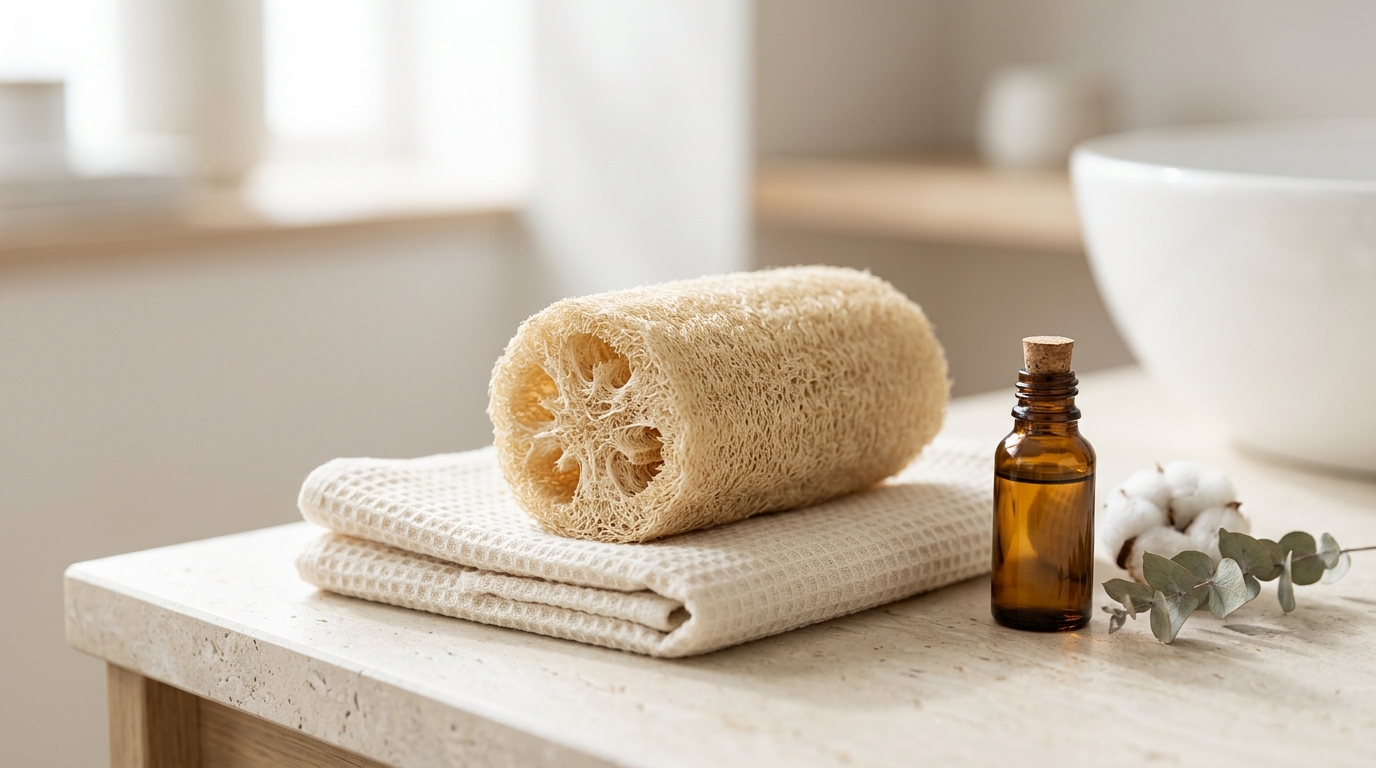
Look at the cross-section or end of the gourd. Authentic Egyptian varieties feature three distinct internal chambers with wide, thick-walled vascular tubes radiating from the core. The sponge should feel firm and slightly springy under hand pressure, rather than soft, flat, or paper-thin.
What Are the Environmental Benefits of Choosing Egyptian Loofah?
Incorporating an egyptian loofah into your personal care routine supports sustainable agriculture while diverting synthetic petroleum waste from landfills. Organic gourd farming relies on natural rainfall, solar energy, and crop rotation across historic farming regions in Egypt.
Unlike industrial plastic manufacturing, growing gourd crops sequesters carbon dioxide from the atmosphere throughout the multi-month growing season. Once harvested, the entire processing chain—peeling, washing, and drying—uses minimal electricity and zero synthetic chemicals.
When your natural luffa reaches the end of its useful lifecycle, you can throw it directly into your backyard compost bin or bury it under garden soil. The plant cellulose breaks down completely into organic matter, enriching your soil without leaching toxic chemical dyes or synthetic microplastics into the ecosystem.
Frequently Asked Questions
Is an Egyptian loofah safe for sensitive skin?
Yes, an Egyptian loofah is safe for sensitive skin when properly saturated with warm water before use. Soaking softens the thick plant fibers into flexible ridges. Use gentle, circular motions without applying heavy pressure, and limit exfoliation to once or twice per week to protect sensitive skin types.
How long does an Egyptian loofah last compared to synthetic poufs?
An Egyptian loofah lasts 3 to 4 months with proper rinsing and air drying, whereas synthetic bath poufs typically unravel or collect bacteria within 3 to 4 weeks. The thick cellulose structure of the Egyptian gourd maintains its texture far longer than thin plastic mesh.
Can you use an Egyptian loofah on your face?
You should avoid using a full-strength body loofah on your delicate facial skin. Facial skin is significantly thinner than body skin and can suffer micro-tears from coarse mechanical exfoliation. Reserve your natural plant sponge for arms, legs, back, and feet.
Why does a dry Egyptian loofah feel so hard?
A dry Egyptian loofah feels rigid because the natural cellulose fibers contract and harden when dry. This natural property keeps the plant skeleton durable during storage. Immersion in warm water for 30 seconds instantly rehydrates the fibers, turning them soft, flexible, and ready for bathing.
Conclusion
Choosing an egyptian loofah upgrades your daily self-care routine with a natural, durable exfoliation tool rooted in sustainable agricultural traditions. Its thick vascular fibers, superior water absorption, and open weave deliver healthy skin benefits while eliminating plastic mesh waste from your bathroom. Inspect your sponge for cream-colored tones and thick fiber chambers to ensure you receive authentic quality. Start by soaking your new plant sponge in warm bathwater today, establish a simple weekly vinegar rinse, and enjoy smooth, refreshed skin with an eco-friendly tool built to last.