

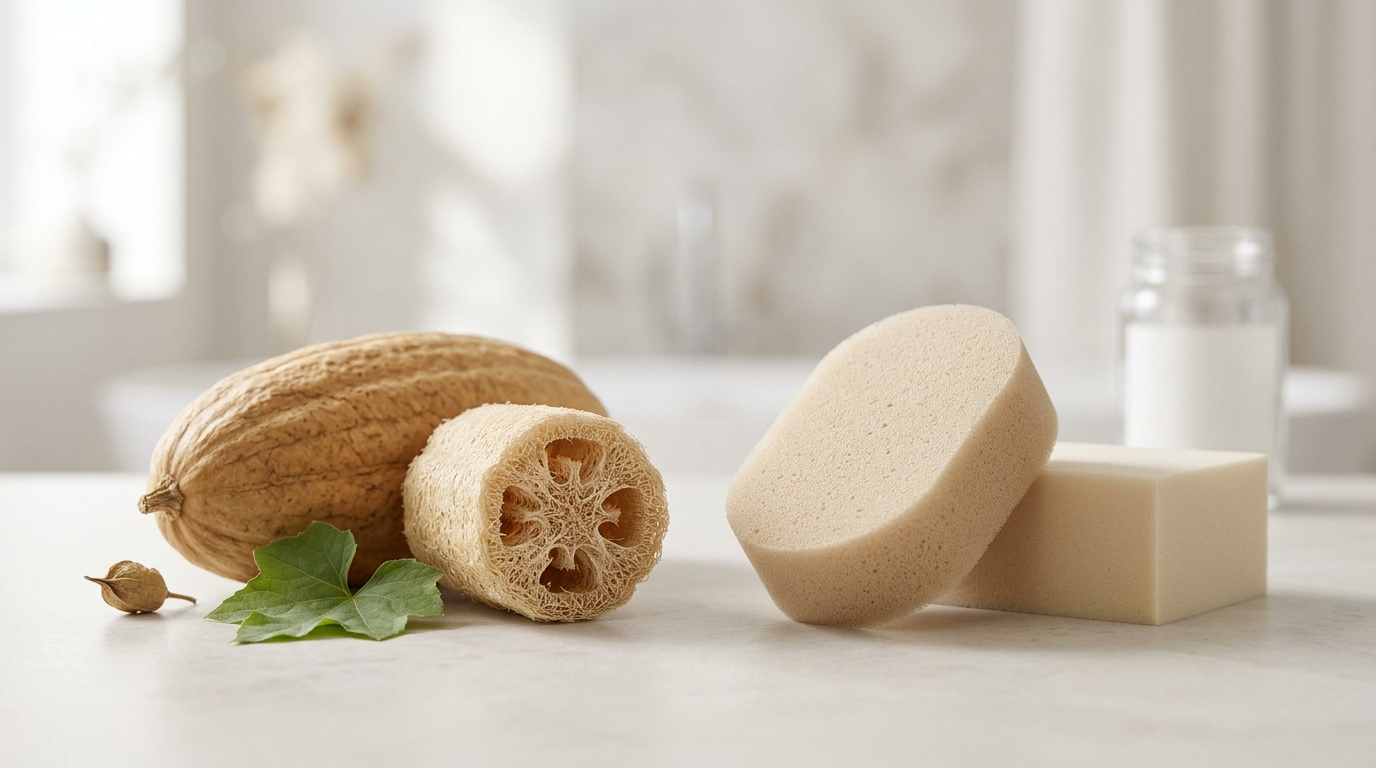
You step into the shower expecting a fresh, exfoliating clean, but your trusty bath tool might be harboring billions of microscopic bacteria or shedding hidden microplastics down your drain. Over 70% of bathers use a bath tool daily without realizing how its raw materials impact skin health and the environment. Understanding the true origins of your exfoliator allows you to make safer, greener choices for your daily personal care routine.
Uncovering what is a loofah made of reveals a fascinating divide between traditional agriculture and modern plastic manufacturing. While modern retail stores label both options as loofahs, their structural composition, botanical roots, and hygiene requirements are vastly different. Natural loofahs originate from tropical vines yielding dense fibrous interiors, while synthetic counterparts stem from extruded petroleum polymers.
What Is a Natural Loofah Made Of?
Natural loofahs are composed entirely of dried vascular bundles from the gourd family plant, specifically Luffa aegyptiaca (smooth loofah) or Luffa acutangula (angled loofah). When the gourd fully matures on the vine, its soft edible pulp dries up, leaving behind a tough, interconnected network of cellulose, hemicellulose, and lignin fibers.
These structural polymers form a lightweight, porous matrix that naturally resists immediate decay while offering stiff exfoliation when dry. Once saturated with warm water, the botanical fibers soften into an ergonomic mesh ideal for removing dead skin cells without micro-tearing your dermal layer.
To better understand how these tropical plants transform into everyday bath tools, you can read more about
How Natural Loofah Gourds Become Bath Sponges
The transformation from green vegetable to bathroom staple requires patience and precise harvesting timing. Growing conditions require warm climates, abundant sunshine, and up to 200 frost-free days to develop dense internal fiber networks.
-
Harvesting: Farmers allow the gourds to mature fully until the outer skin turns yellow-brown and loses most of its water weight.
-
De-husking: Workers peel away the dry, brittle outer skin to expose the dense fibrous skeleton inside.
-
Deseeding and Washing: The inner core is vigorously shaken to dislodge seeds, then washed thoroughly in water to remove remaining plant sap and pulp.
-
Sun Drying: Cleaned fibrous cores dry in the sun to eliminate moisture and prevent mold colonization before distribution.
Once dried, producers cut the long cylindrical fibers into manageable segments or flatten them for bath pads. You can explore more details on
What Are Synthetic Bath Poufs Made Of?
Synthetic loofahs—commonly called shower poufs, bath mesh, or scrubbies—are constructed entirely from synthetic plastic polymers, most frequently high-density polyethylene (HDPE) or standard polyethylene (PE). Some premium varieties utilize nylon or polypropylene for added elasticity.
The manufacturing process involves extruding molten plastic resin through fine dies to create thin, flexible mesh tubing. Factory equipment gathers, folds, and tightly binds several yards of this mesh netting at the center with a central cord, creating a ruffled, ball-like shape that lathers liquid soaps effortlessly.
While synthetic bath tools are inexpensive and generate immediate foam, they present distinct drawbacks. Every time you scrub, friction against your skin sheds microplastic particles into the wastewater system, contributing to marine polymer pollution.
Natural Loofah vs Synthetic Bath Mesh: Comparison
Choosing between organic plant fibers and manufactured plastic netting comes down to exfoliation performance, bacterial risk, and environmental impact.
Understanding the distinction between these materials helps clear up common confusion around bath tools. Many shoppers wonder
How to Care for Your Loofah and Prevent Mold
Regardless of whether your bath tool is made from dried plant matrix or extruded plastic netting, its warm, humid bath environment creates a prime breeding ground for bacteria like Pseudomonas and fungal molds.
1. Rinse and Squeeze Thoroughly
After every bath, rinse all residual soap and dead skin cells from the fibers under running water. Squeeze out excess water completely—never twist or wring natural fibers harshly, as this breaks the structural matrix.
2. Store in a Well-Ventilated Area
Never leave your bath tool inside a damp shower stall or tub corner. Hang it near an open window or in a dry room with positive airflow so moisture evaporates rapidly between uses.
3. Sanitize Weekly
Disinfect your natural plant loofah once a week by soaking it in a 10% bleach solution for 5 minutes, or by microwaving a damp loofah on high for 20 seconds. Synthetic mesh poufs can be soaked in diluted white vinegar for 15 minutes.
Replace natural plant fibers every 4 weeks without fail. Replace synthetic plastic poufs every 6 to 8 weeks to prevent skin irritation and bacterial breakouts.
How Do Marine Sea Sponges Compare?
Marine sea sponges are harvested directly from ocean floors and consist of simple multicellular sea organisms, primarily from the phylum Porifera. Unlike plant gourds or plastic mesh, sea sponges feature a soft skeleton made of a flexible structural protein called spongin.
Natural sea sponges offer exceptionally soft texture and massive water retention, making them ideal for sensitive skin, infants, and facial cleansing. However, they are significantly more expensive than plant-derived options and require delicate handling during washing to prevent tearing the animal protein fibers.
If you are evaluating different personal care tools for your household routine, reading our foundational guide on
Frequently Asked Questions
Is a loofah made from a ocean creature?
Natural loofahs are not sea animals; they are dried gourds grown on terrestrial vines belonging to the cucumber family. True sea sponges are living marine animals composed of protein structures, whereas bath loofahs grow in soil on farms.
Can you compost a natural plant loofah?
Yes, natural plant loofahs are 100% organic matter and break down completely in home compost bins within 30 to 60 days. Cut old dried gourds into smaller pieces before adding them to your green waste pile to accelerate decomposition.
Why does my synthetic bath pouf smell bad after a few weeks?
Unpleasant odors indicate bacterial and fungal colonies trapping trapped body oils, dead skin cells, and lingering soap film inside the inner gathers of plastic mesh. Replace the pouf immediately if rinsing fails to clear the odor.
Are natural loofahs rougher on skin than synthetic plastic options?
Dry plant loofahs feel rigid initially, but soaking them in warm water for 2 minutes softens the cellulose matrix into an ideal exfoliating texture. Synthetic plastic mesh stays soft continuously but offers less effective dead skin cell removal.
Choosing the Right Exfoliator for Your Skin
Investigating what is a loofah made of highlights the balance between environmental sustainability and skin hygiene in your daily routine. Plant-based Luffa gourds provide exceptional natural exfoliation and complete compostability, while plastic mesh poufs offer soft, affordable lathering at the expense of non-biodegradable waste. Switching to a natural plant loofah reduces home microplastic runoff while keeping your skin smooth and clear. To safeguard your skin barrier, prioritize daily drying and replace your bath tools regularly.