
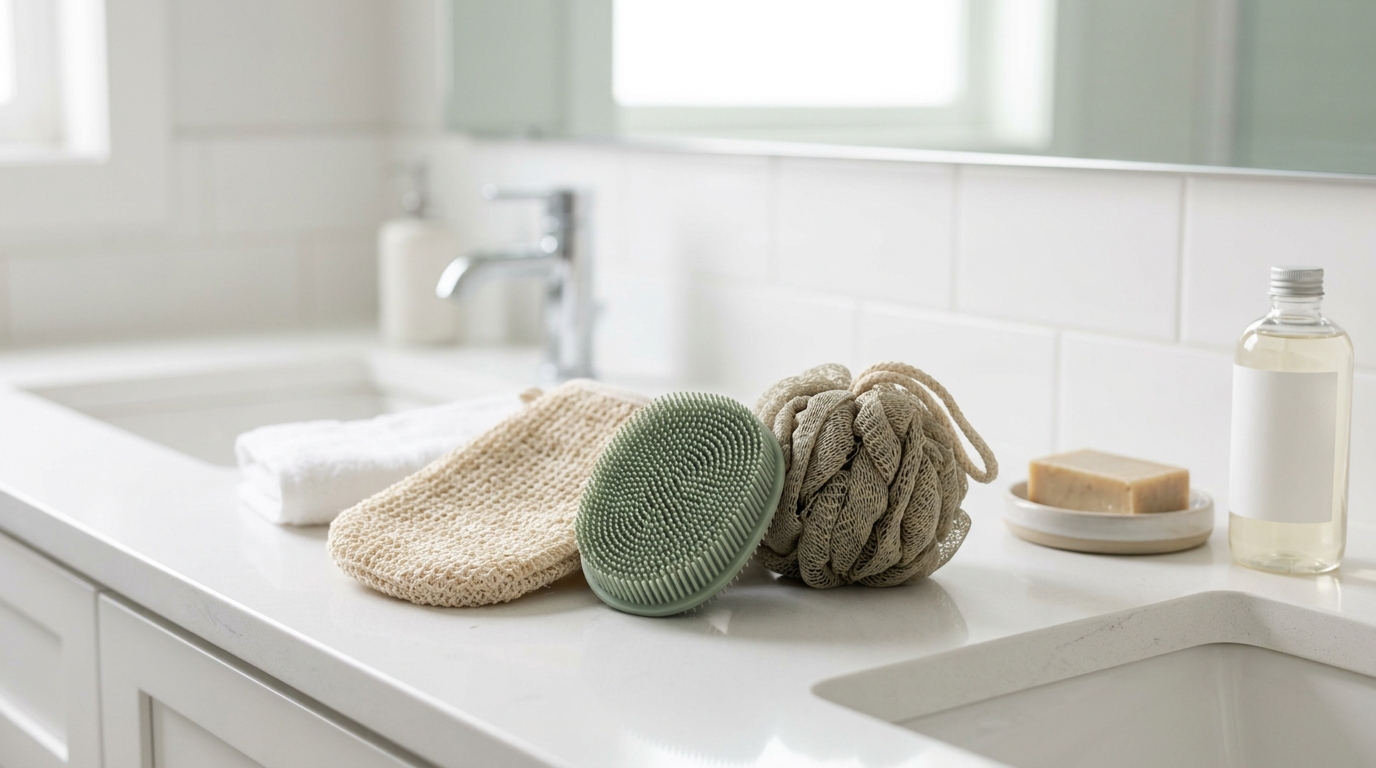
Standard plastic bath mesh disintegrates within weeks and acts as a moist sanctuary for unwanted microbes. You end up buying replacement after replacement, watching synthetic shreds unravel while throwing money directly into the trash.
Upgrading to a washable loofah breaks this cycle completely by delivering a durable, deep-cleaning scrub tool that survives over 50 laundry cycles without losing its texture.
Switching your daily bath routine away from disposable plastic requires understanding material performance, laundering techniques, and structural integrity. A truly reusable scrubber gives you the perfect balance of physical exfoliation and easy maintenance.
Why Switch to a Washable Loofah?
Conventional plastic bath poufs harbour trapped moisture and dead skin cells in their tight interior folds. Microbiologists at institutions like the Cleveland Clinic warn that damp shower environments allow bacteria to multiply rapidly inside synthetic mesh.
A natural, washable loofah solves this hygiene issue by allowing you to sanitize the material thoroughly using hot water or washing machine cycles.
Microplastic pollution presents another major problem with standard plastic bath accessories. Every time a synthetic pouf degrades, fine plastic fragments wash down your shower drain and enter municipal waterways.
Choosing reusable alternatives keeps non-biodegradable waste out of landfills and municipal water systems while providing superior skin texture results.
Financial savings build up rapidly when you transition to reusable bath textiles. While a cheap plastic mesh ball costs two dollars every three weeks, a single durable natural scrubber lasts an entire year or more.
Investing in quality materials lowers your long-term personal care spending while elevating your daily shower experience.
Types of Washable Loofah Materials That Outlast Plastic
Understanding material science helps you select a durable option tailored to your skin sensitivity and cleaning preferences.
Organic Cotton Waffle and Terry Weaves
Woven organic cotton bath pads utilize textured surfaces to lift dead skin cells without scraping delicate epidermis layers. Manufacturers stitch these pads with reinforced edges to survive hot-water washing cycles and high-heat dryer runs.
Cotton options work exceptionally well for sensitive skin types needing gentle daily cleansing.
Natural Plant Luffa Gourds
Many bathers are surprised to discover that natural luffa originates from a vine plant rather than marine life. If you have ever wondered is a loofah a plant, the answer is a definitive yes—it comes from dried fibrous gourds.
Whole dried luffa gourds feature interconnected vascular networks that hold structural firmness through months of heavy use. You can easily sanitize raw plant luffas by boiling them on your stovetop every two weeks.
Agave and Sisal Plant Fibers
Hand-woven sisal scrubbers utilize rigid fibers harvested from Agave sisalana plants. These coarse textiles deliver vigorous exfoliation that suits rough areas like feet, knees, and elbows.
Sisal fibers resist breakdown from acidic soaps and dry much faster than heavy cotton weaves.
Silicone and Antimicrobial Polymers
Food-grade silicone scrubbers represent a modern, non-porous alternative to traditional fibrous textiles. Silicone does not harbor fungal spores or bacterial colonies inside hollow pores.
You can sanitize silicone scrubbers in your dishwasher or boil them repeatedly without causing material degradation.
How to Machine Wash and Sanitize Your Washable Loofah
Keeping your shower accessories hygienic demands a simple, repeatable cleaning routine. You can eliminate organic buildup, body oils, and soap scum completely through regular laundering.
-
Rinse out all soap residue immediately after showering. Squeeze the damp material tightly under cold running water until no suds emerge.
-
Hang the scrubber in a high-airflow area outside the damp shower stall. Rapid drying prevents fungal spores from establishing inside the fibers.
-
Run a weekly deep-clean cycle. Place cotton pads inside a mesh laundry bag and wash on hot ( / ) using your regular plant-based laundry detergent.
-
Boil plant-based luffas bi-weekly. Submerge natural luffa gourds in a pot of boiling water with two tablespoons of white vinegar for five minutes to kill stubborn microbes, as recommended in home care sanitation guides.
-
Air dry thoroughly before returning the scrubber to your bathroom. Sun drying provides natural ultraviolet sanitization that further extends textile lifespans.
Natural Luffa Gourds vs. Cotton Washable Options
Choosing between raw plant fiber and woven fabric depends on your exfoliation preferences and daily drying habits.
Natural luffa gourds derived from the loofah plant provide a firm, invigorating texture that softens when soaked in warm water. They excel at clearing pores and prepping skin for heavy body moisturizers.
Woven cotton scrub pads feature flat profiles that dry out faster than thick gourd structures. You can throw five or six cotton pads into your weekly towel laundry, ensuring you always have a completely fresh pad ready for your shower.
Cotton pads fold easily, making them ideal travel accessories for eco-conscious travelers.
Natural plant luffas require periodic boiling or vinegar soaking to maintain hygiene, whereas cotton options handle standard washing machines and tumble dryers effortlessly.
If you want a traditional raw scrub, opt for natural luffa. If convenience drives your routine, pick machine-washable cotton pads.
What Causes Bath Loofahs to Wear Out Quickly?
Premature deterioration stems from structural abuse, improper soap choices, and poor drying environments.
Excessive twisting and wringing break down the structural matrix of both natural plant fibers and cotton stitching. Always press water out flat between your palms instead of wringing the material tightly like a rope.
Using heavy body oils or high-fat bar soaps without thorough rinsing leaves sticky residues deep inside the scrubber core. Soap scum acts as food for mold spores while clogging air passages needed for complete drying.
Always flush your scrubber with clear water until the effluent runs crystal clear.
Storing your bathing tools inside a closed shower enclosure traps high relative humidity around the wet textile. Mold colonies can establish within 24 to 48 hours in damp environments.
Mount a stainless steel hook on your bathroom door or wall to ensure complete air movement around your hanging loofah.
How Can You Make a Washable Loofah Last Over a Year?
Reaching 12 to 18 months of continuous use from a single washable loofah requires straightforward preventive maintenance habits.
Rotating between two identical scrubbers doubles the lifespan of both items. Alternating days gives each scrubber 48 full hours to dry completely, starving out moisture-loving bacteria.
Avoid using harsh chlorine bleach during your sanitization routine. Bleach breaks down natural cotton fibers and degrades plant lignin, causing natural gourds to turn brittle and crumble.
Rely on white vinegar, hydrogen peroxide, or hot water cycles to sanitize safely.
Inspect your loofah monthly for seam stress or fiber fraying. Trimming small frayed threads early prevents long tears from pulling apart woven cotton pads.
Proper care keeps your eco-friendly bathroom routine efficient, clean, and zero-waste.
Frequently Asked Questions
How often should you put a washable loofah in the laundry?
Wash cotton loofah pads after every 3 to 4 uses in a hot-water laundry cycle. If you use natural luffa gourds, boil them in water with a splash of vinegar once every two weeks to sanitize deep fibers thoroughly.
Can you put a natural plant loofah in the washing machine?
Yes, natural plant luffa pieces can survive washing machine cycles if placed inside a mesh laundry bag. However, skip the tumble dryer—high heat causes raw luffa fibers to warp and shrink rapidly.
What is the cleanest, most hygienic loofah alternative?
Food-grade silicone body scrubbers rank as the most hygienic option because their non-porous surface prevents bacterial growth entirely. For natural fiber fans, machine-washable organic cotton pads washed weekly offer superior hygiene compared to standard plastic mesh.
How do you know when it is time to replace a reusable loofah?
Replace your reusable loofah when the material loses its structural texture, develops unresolved odors despite deep sanitizing, or shows persistent fraying and tearing along reinforced seams.
Does a natural luffa mold faster than synthetic options?
Raw plant luffas can grow mold if left sitting in standing water or inside unventilated shower stalls. However, unlike plastic mesh poufs, natural luffas can be sanitized thoroughly with boiling water or vinegar solutions to eliminate mold spores completely.
Final Steps to Upgrade Your Shower Routine
Ditching single-use plastic bath tools for a reusable, washable loofah elevates your personal care routine while cutting household plastic waste. Select an organic cotton pad or raw plant gourd that matches your preferred exfoliation level, and set up a basic drying rack outside your shower area.
Integrating a weekly hot-water laundry or stovetop boiling routine ensures your bath tools stay entirely fresh and hygienic for months to come. Start by purchasing two alternating scrubbers today to establish a seamless, zero-waste bathing habit that protects both your skin and your budget.