

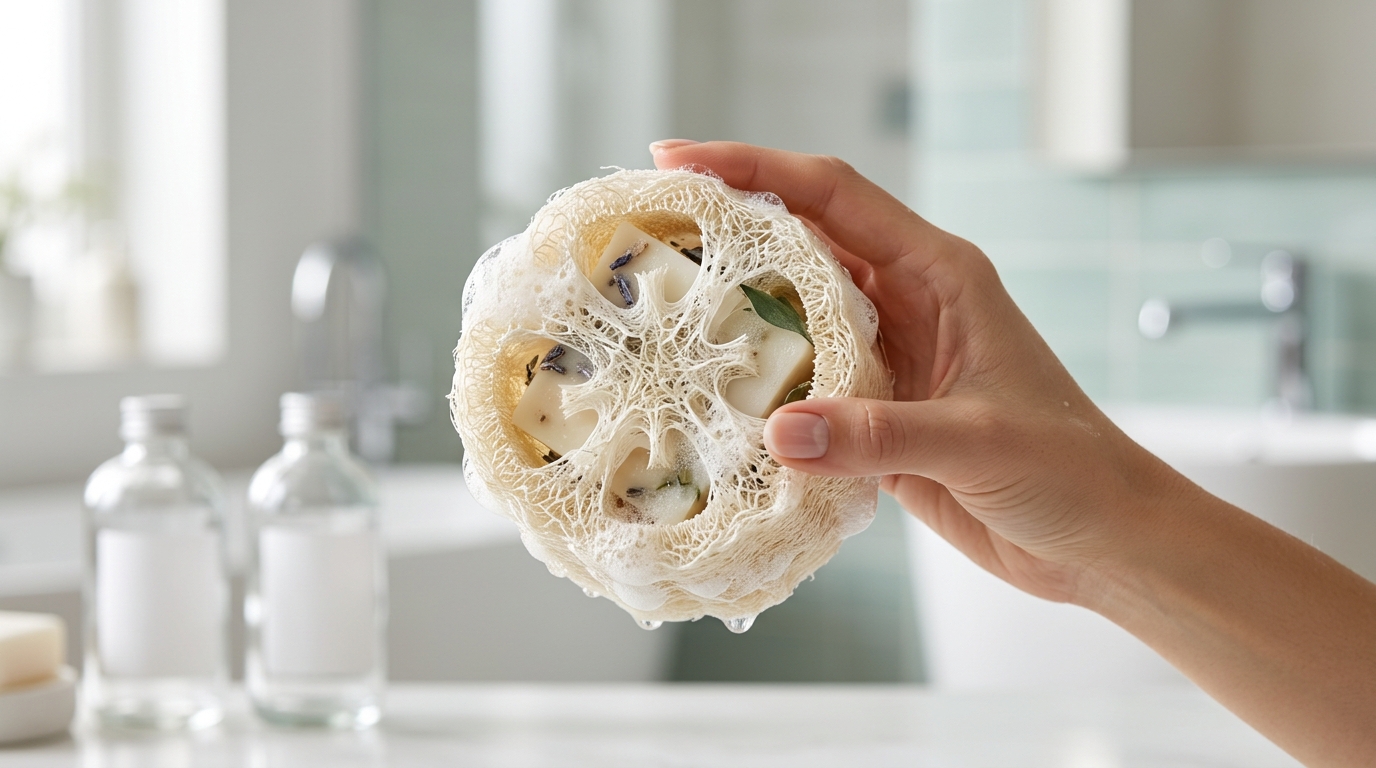
Standard shower routines often require juggling slippery liquid body washes and dripping sponges. If you want a simpler approach, a loofah with soap inside integrates solid cleanser directly into the fibrous core of an exfoliator. This two-in-one design creates instant lather when exposed to water, eliminating extra bottles from your shower ledge.
Choosing the right personal care products comes down to performance, hygiene, and overall value. Embedded soap sponges last between 15 and 30 uses before the internal bar dissolves completely. Understanding how these products perform over time helps you decide if their elevated price per wash justifies the time saved.
What Is a Loofah With Soap Inside and How Does It Work?
A loofah with soap inside combines a physical exfoliant with a solid cleanser cast directly into the material. Manufacturers melt glycerin or butter-based soap formulas and pour them over sliced natural gourd fibers or synthetic mesh. As the soap cools, it solidifies within the internal matrix of the sponge.
When you bring the unit into a warm shower, water penetrates the outer fibers and softens the embedded soap. Squeezing the pad releases a thick lather directly through the exfoliator walls. This mechanism removes the need to apply liquid soap separately while showering.
Natural varieties use dried fibrous scaffolding from the
What Are the Key Benefits of Using Soap-Infused Loofahs?
Using an integrated soap sponge speeds up your morning routine by combining two steps into one movement. You do not need to cap liquid wash bottles or rub bar soap against a damp washcloth. The pre-loaded design delivers immediate lather the moment water strikes the surface.
Travel convenience represents another major advantage for active individuals. Air travel regulations restrict liquid carry-on volumes, making solid toiletries ideal for trips. A dry loofah with soap inside packs flat in gym bags or luggage without leaking liquids onto your gear.
-
Simplified showering: Exfoliates and cleanses in a single continuous step.
-
Space efficiency: Cleans up cluttered shower racks by removing extra plastic bottles.
-
Controlled application: Releases a measured dose of soap per squeeze, reducing product waste.
-
Mess-free portability: Eliminates liquid spill risks in carry-on bags and gym totes.
Beyond space savings, these dual-purpose pads deliver consistent mechanical exfoliation. The steady release of soap lubricates your skin while the fibrous surface lifts away dead surface cells.
Are There Drawbacks to Soap-Filled Loofahs?
Despite their convenience, soap-filled sponges have notable limitations regarding lifespan and hygiene. The internal soap bar dissolves faster than a standalone soap bar exposed to ambient air. Once the soap core dissolves, you are left with a standard pad that requires manual re-loading.
Bacteria control requires extra attention due to trapped moisture inside the core. Research highlighted by the
Cost per wash runs higher compared to conventional shower setups. A quality soap-infused pad ranges from $8 to $15 and lasts roughly three weeks with daily use. Buying separate bar soap and raw natural pads delivers a lower long-term cost per wash.
How Long Does a Loofah With Soap Core Last?
Most integrated soap loofahs last between 15 and 30 shower sessions under normal water pressure. The exact longevity depends on shower temperature, water hardness, and how forcefully you squeeze the core. Hotter water dissolves the internal solid soap faster than lukewarm water.
Natural gourd fibers outlast the soap cast inside them. Once the central bar dissolves, the outer shell remains intact and functional. You can continue using the remaining fiber structure by applying fresh liquid wash or rubbing external soap against the exterior.
+-----------------------------------------------------------------+
|                       PRODUCT LIFESPAN                          |
|                                                                 |
|  Showers 1–10  : High lather output, firm exfoliation           |
|  Showers 11–20 : Moderate lather, core soap thins out           |
|  Showers 21–30 : Low lather, inner soap fully dissolves         |
|  Post-Soap     : Shell remains usable as a standard exfoliant   |
+-----------------------------------------------------------------+
To extend the usable life of the embedded cleanser, remove the pad from the direct water stream when not actively lathering. Storing the tool outside the humid shower stall helps the internal core dry out completely between uses.
Is a Soap-Filled Loofah Cost-Effective Compared to Separate Soap and Sponges?
Determining whether a loofah with soap inside makes financial sense depends on how you value convenience versus raw material costs. Combining separate items requires a lower upfront investment per month, but integrated products eliminate product overuse.
Liquid body wash users often waste product through over-dispensing or rinse-off down the drain. Soap-infused pads release cleanser only when squeezed against wet skin, controlling application rates automatically.
While standalone bar soaps remain the most economical choice, the time savings and reduced clutter of integrated pads satisfy many consumer preferences.
How Do Natural and Synthetic Soap Loofahs Compare?
Choosing between natural plant fibers and synthetic mesh alters both skin feel and environmental footprint. Natural pads use dried fibrous rinds harvested from mature gourds. Learning about
Synthetic mesh options use woven plastic strands to trap air and create dense foam. While synthetic mesh lathers easily with minimal water, it sheds microplastics down household drains over time.
Natural gourd fibers start firm but soften quickly in warm water, offering vigorous exfoliation that clears rough elbows and heels. Synthetic sponges maintain a uniform soft texture throughout their lifecycle but lack the deep scrubbing power of genuine plant fibers.
For proper botanical identification, review the distinction between
How to Clean and Store Your Soap-Infused Loofah Safely?
Maintaining proper shower hygiene requires keeping your soap-infused tool clean and dry. Because the inner soap core holds water, these tools need airflow to prevent mold and mildew growth.
According to a report on
-
Rinse light soap suds: Shake out excess water after ending your shower without squeezing out all the internal soap.
-
Hang in high airflow: Suspend the tool using its attached lanyard outside the humid shower enclosure.
-
Avoid standing water: Never leave the soap-infused pad flat on a solid soap dish where water pools.
-
Sanitize periodically: Submerge the outer edges in a diluted vinegar solution (1 part vinegar to 4 parts water) for two minutes every week, avoiding deep immersion of the soap core.
-
Replace on schedule: Discard the remaining shell after four to six weeks of use, or sooner if discoloration or sour odors develop.
Keeping your shower accessories dry protects your skin health while preserving the structural integrity of the embedded cleanser.
How Can You Make DIY Loofah Soap at Home?
Making your own soap-filled pads at home allows you to select custom botanical ingredients and avoid synthetic additives. The process involves pouring melted clear melt-and-pour soap base over pre-cut slices of natural dried gourd.
Purchase a whole dried natural gourd shell, then cut it into one-inch slices using a serrated knife. Place these slices into round silicone muffin molds. Melt a vegetable glycerin soap base in a double boiler, stir in your preferred essential oils, and pour the liquid soap over the fiber discs.
Allow the poured soap to cool and harden at room temperature for two hours. This simple DIY method lowers your cost per unit while providing full control over fragrance, colorants, and moisturizing ingredients.
Frequently Asked Questions
Can you refill a loofah with soap once the internal bar dissolves?
You cannot easily re-cast solid soap into a used fiber matrix at home without specialized molds. However, you can continue using the remaining fiber casing by applying fresh liquid wash or rubbing external soap against the outer walls.
Is a loofah with soap inside safe for sensitive skin?
It depends on the exfoliant firmness and added fragrances. Individuals with sensitive skin should select soft synthetic pads or well-softened plant fibers infused with fragrance-free, hypoallergenic glycerin soaps to prevent skin irritation.
How often should you replace a soap-infused shower pad?
Replace the entire unit every three to four weeks. Even if the outer shell remains intact after the soap dissolves, bacteria and dead skin cells accumulate inside porous shower materials over time.
Can you take a soap-filled loofah on an airplane in carry-on luggage?
Yes, because the soap embedded inside the sponge is solid. TSA regulations for liquids do not apply to solid bar soaps, making these integrated pads ideal for hassle-free travel.
Do soap loofahs harbor more bacteria than regular soap bars?
Yes, because the porous matrix retains moisture longer than a standard bar of soap. Hanging your tool in a well-ventilated space outside the shower stall ensures thorough drying between uses and lowers bacterial growth.
Conclusion
A loofah with soap inside offers a convenient, space-saving solution for daily hygiene routines. While these integrated products carry a higher cost per wash than traditional soap bars, their mess-free portability and fast lathering make them worthwhile for travelers, gym-goers, and busy households. To maintain skin health and maximize product life, select natural plant-based options, hang them to dry in well-ventilated spaces, and replace them every three to four weeks.