

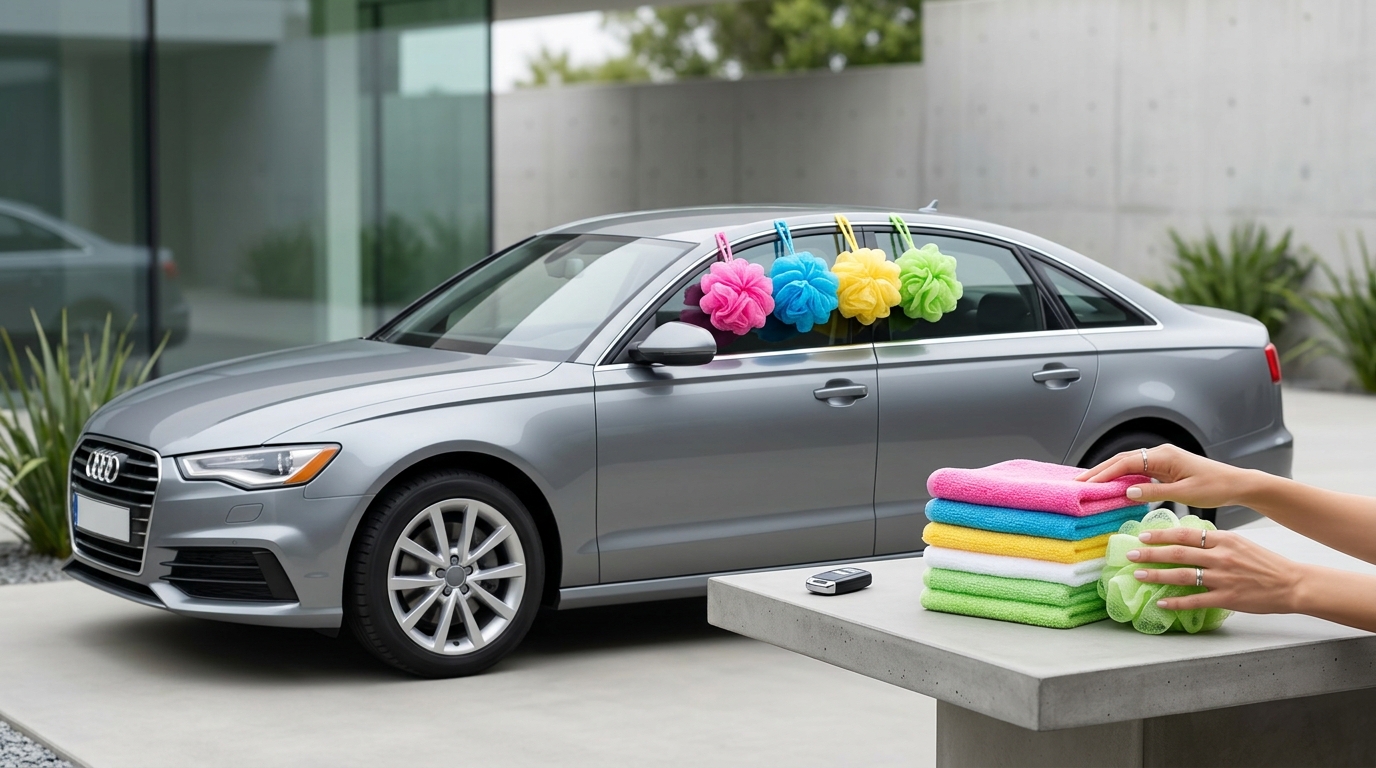
Seeing a brightly colored bath sponge strapped to a vehicle antenna or roof rack leaves thousands of drivers bewildered every single day. What started as a practical navigation trick in massive active-adult communities has transformed into an internet phenomenon, prompting widespread curiosity about whether these bath poufs carry secret social signals. Understanding the loofah on car meaning requires separating viral internet lore from genuine local parking solutions used across major retirement developments.
While social media platforms regularly amplify wild claims about secret suburban codes, the real story combines practical parking solutions with local folklore. Over 100,000 residents live in large-scale retirement developments where neighborhood shopping plazas contain thousands of nearly identical golf carts and sedans. Drivers attachment choices often begin as a simple way to spot a personal vehicle across a sea of white and silver roofs, yet public curiosity transforms these simple markers into elaborate urban legends.
What Is the Real Loofah on Car Meaning?
The primary loofah on car meaning stems from practical vehicle identification in massive retirement communities, specifically popular locations throughout central Florida. Seniors attach brightly colored mesh poufs to tall radio antennas or roof rails so they can locate their automobiles in sprawling shopping center lots.
In communities housing over 80,000 golf carts and compact cars, finding a specific vehicle among rows of matching models creates daily frustration. A vibrant pink or green sponge sticking out above the roofline provides an instant visual reference point from 50 yards away.
Beyond simple parking aids, viral social media accounts transformed this harmless habit into an urban legend regarding adult lifestyle signals. Internet rumors suggest that different mesh colors signal specific relationship preferences or lifestyle availability, though local residents consistently confirm that parking convenience remains the main motivation.
Why Do People Put Loofahs on Their Cars in The Villages?
The phenomenon traces its strongest roots to The Villages, a massive master-planned retirement development in Florida spanning three counties. Residents rely heavily on golf carts and standard sedans, leading to parking areas filled with hundreds of identical vehicles.
Golf cart parking spaces sit tight together, making rooflines blend into a uniform line of white, beige, and silver. Attaching a mesh shower pouf to an antenna lifts a unique color marker high into the air, solving the lost-vehicle problem instantly.
Local golf cart customizers and gift shops even sell color-matched antenna toppers designed specifically for this purpose. What began as an individual DIY solution quickly became a community-wide trend among thousands of active seniors.
Decoding the Alleged Loofah Color Code
Viral online discussions claim that the specific color of a mesh sponge reveals particular social or lifestyle interests. While these meanings are largely internet-created mythology rather than an official handbook, the color legend continues to circulate widely online.
-
White Loofahs: According to online lore, a white loofah represents novices or individuals who prefer traditional relationship dynamics.
-
Pink Loofahs: Internet lists state that pink indicates a desire for casual social interactions or open lifestyle arrangements.
-
Blue Loofahs: Social media threads assign blue to experienced community members or individuals seeking specific partner matches.
-
Purple Loofahs: Urban legend claims purple signals specialized lifestyle preferences or flexible social dynamics.
In practice, most drivers simply pick their favorite color or purchase whatever mesh sponge happens to be available in a multipack at the local grocery store.
Is the Loofah Color Code Real or an Urban Legend?
The concept of a structured, color-coded lifestyle language among golf cart owners functions almost entirely as a modern urban legend. Community surveys and local news investigations consistently report that car owners choose colors based on visibility, aesthetic preference, or personal favorite shades.
Sociologists note that complex color codes regularly emerge as urban myths within large, close-knit communities. When outsiders observe widespread adoption of an unusual visual habit, they naturally invent dramatic explanations to make sense of the visual trend.
While a small minority of drivers might adopt the viral joke intentionally, standard practice remains strictly utilitarian. Asking an owner about their antenna attachment almost always yields a simple explanation about finding a car after getting groceries.
Practical Reasons Drivers Use Mesh Poufs on Antennas
Using a synthetic mesh ball on a vehicle antenna provides several distinct functional advantages over traditional car ribbons or flags. Understanding these practical benefits explains why the trend continues to spread outside senior living spaces.
-
Weather Resistance: Polyethylene mesh handles heavy downpours, bright sunlight, and high humidity without absorbing excessive water or rotting.
-
Aerodynamic Durability: The porous weave allows highway airflow to pass through without snapping thin radio antennas or creating intense wind noise.
-
Low Cost Replacement: A multi-pack of bath accessories costs under 5 dollars, making replacement cheap if the material wears down over time.
-
Zero Paint Damage: Soft synthetic mesh will not scratch clear coats or dent side panels if wind causes the antenna to bend while driving.
Drivers seeking alternative natural materials for home use often compare synthetic accessories to genuine organic bath items, as detailed in our guide covering what is a loofah and how natural options differ from synthetic plastic mesh.
How Did the Antenna Sponge Myth Go Viral?
Social media platforms like TikTok, YouTube, and Reddit propelled the loofah on car meaning into national headlines through comedic commentary and exaggerated storytelling. Content creators visiting central Florida filmed parking lots full of decorated golf carts, adding dramatic voiceovers about secret codes.
Local news outlets picked up the viral videos, interviewing residents who were often surprised to learn their simple parking trick had become an internet sensation. The contrast between wholesome senior parking habits and provocative online theories drove millions of views across multiple platforms.
This digital feedback loop led some younger drivers outside Florida to adopt the trend as a tongue-in-cheek joke, further spreading the visual sight to college campuses and suburban neighborhoods nationwide.
What Should You Do If You See a Loofah on a Car?
Encountering a vehicle with a mesh sponge attached requires no special action or awkward assumptions. Treating the attachment as a routine vehicle personalization keeps interactions normal and respectful.
-
Assume Practical Intent: Recognize that the driver likely placed the item there to locate their vehicle in packed parking spaces.
-
Avoid Unnecessary Assumptions: Refrain from making personal comments or jokes about adult lifestyle codes based solely on online rumors.
-
Consider the Material Difference: Remember that synthetic automotive markers differ completely from organic plant sponges grown in home gardens.
If you enjoy growing sustainable items at home, explore the loofah plant to learn how natural gourd fibers are cultivated, processed, and used for eco-friendly household purposes.
Synthetic Mesh Poufs vs. Real Plant Loofahs
Many people use the word loofah to describe both colorful plastic mesh bath poufs and natural dried gourd fibers. Understanding the distinction helps clarify both automotive trends and everyday consumer choices.
Real plant sponges originate from dried Luffa aegyptiaca or Luffa acutangula vines, which produce fibrous interior structures perfect for eco-friendly scrubbing. Synthetic bath poufs rely on extruded polyethylene mesh tied together with a central cord.
For vehicle identification, synthetic options dominate because plastic mesh holds bright neon dyes that resist sunlight fading. Natural plant fibers turn light tan when dried, offering less visual pop against standard car paints, though they offer superior environmental benefits for home bath routines.
You can learn more about botanical classification by consulting the official Wikipedia loofah definition or reviewing standard English usage on the Cambridge Dictionary loofah entry.
Frequently Asked Questions
What does a yellow loofah on a car antenna mean?
A yellow loofah primarily serves as a high-visibility parking marker that stands out clearly against dark vehicle colors. While online rumors assign various lifestyle meanings to yellow mesh, car owners select bright yellow purely because it reflects light well in dimly lit parking garages.
Did the loofah code start in Florida?
Yes, the practical habit originated in large active-senior communities across Florida like The Villages, where thousands of identical golf carts make visual identification difficult. Online rumors later generalized the local parking solution into a nationwide viral myth.
Do natural loofahs work as car antenna toppers?
Natural loofahs can be attached to antennas, but they absorb more moisture during rainstorms and dry into pale brown shades that are harder to spot from a distance. Plastic mesh poufs remain the preferred choice for vehicle markers due to their bright colors and water resistance.
Are people putting loofahs on cars as a joke now?
Many younger drivers and college students attach shower poufs to their cars explicitly as a humorous nod to the viral internet trend. This ironic adoption has spread the visual sight far beyond original retirement communities into general suburban areas.
Conclusion
The real loofah on car meaning centers on simple, practical vehicle identification rather than complex secret codes. While internet rumors continue to spread colorful theories about adult lifestyle signals, the vast majority of drivers simply want a reliable way to spot their golf cart or sedan in a crowded parking lot. Separating viral social media myths from practical daily habits allows you to appreciate this unique suburban trend for what it truly is—a clever, low-cost solution to a universal parking problem. If you want to explore how these versatile natural fibers grow before reaching the home market, review our detailed guide on ideal loofah growing conditions to cultivate your own sustainable sponges.