

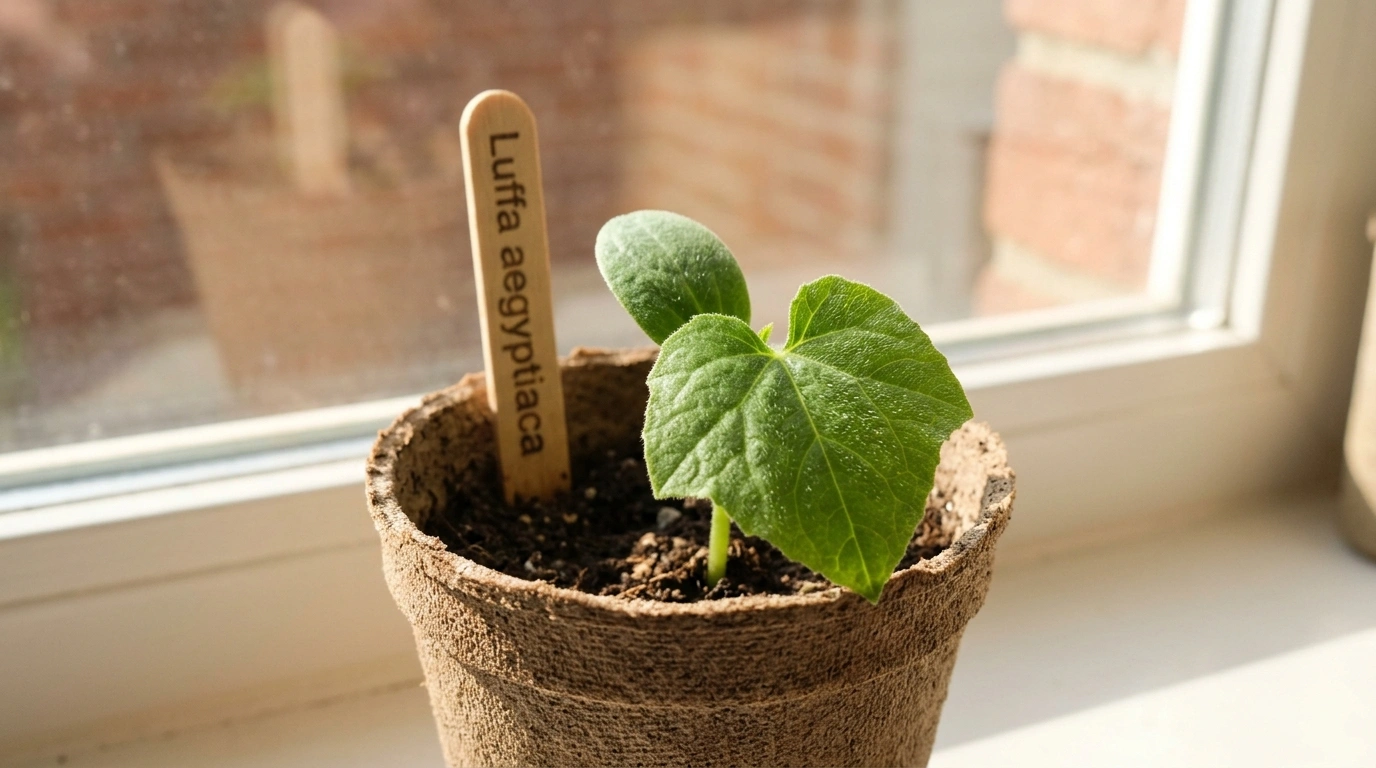
Once you understand the basics of starting loofah from seed and its general life cycle, the next set of questions most growers face are more practical, what climate and soil actually work best, how to properly care for the vine as it develops, what pests and diseases to watch for, whether container growing is realistic, and how to avoid confusing the plant with its closest garden relative, the cucumber. This guide addresses each of these in detail, building directly on the foundational growing knowledge covered in the earlier seed-to-sponge guide.
Best Climate and Soil Conditions for Growing Loofah
Loofah is fundamentally a warm season, tropical to subtropical plant, and its climate and soil needs reflect that origin closely. Understanding these requirements in detail makes the difference between a vine that merely survives and one that produces a genuinely strong harvest.
In terms of climate, loofah thrives in consistently warm conditions, generally performing best where daytime temperatures stay in the seventy five to ninety five degree Fahrenheit range throughout the growing season. It has essentially zero frost tolerance at any growth stage, meaning both the seedling and mature vine will be killed by even a light frost. This makes loofah best suited to USDA hardiness zones seven through eleven for outdoor growing without season extension methods, though gardeners in cooler zones can still succeed with the indoor seed starting approach and, in some cases, season extension tools like row covers or greenhouse growing.
Humidity also plays a meaningful role in loofah’s native growing conditions, given its origins in tropical and subtropical Asia. While the plant can tolerate a range of humidity levels, it generally performs best in moderately humid conditions rather than very dry, arid climates, though consistent soil moisture can help compensate for lower ambient humidity in drier regions.
Soil requirements for loofah closely mirror what most cucurbit family plants need. Well-draining soil is essential, since loofah roots are genuinely susceptible to rot in waterlogged or heavy clay conditions that retain excess moisture. A slightly acidic to neutral soil pH, generally in the six to seven range, tends to produce the best results. Rich, organic matter content significantly benefits the plant as well, since loofah is a heavy feeder that produces substantial vine growth and fruit over its long growing season, meaning soil amended with compost or well-rotted manure ahead of planting tends to support noticeably stronger growth than nutrient-poor native soil.
Raised beds or mounded rows are a popular growing method for loofah specifically because they improve drainage naturally, an important consideration given the plant’s sensitivity to waterlogged roots, while also allowing the soil to warm more quickly in spring, which supports faster, more reliable germination and early growth.
Loofah Plant Care: Watering, Sunlight, and Trellising
Once established, ongoing loofah plant care centers on three main pillars, consistent watering, adequate sunlight, and proper trellising, each of which plays a distinct role in supporting healthy vine growth and strong fruit development.
Watering needs for loofah are relatively high given its large leaf surface area and vigorous growth habit, but consistency matters more than sheer volume. The plant generally performs best with deep, consistent watering that keeps soil evenly moist without becoming waterlogged, roughly equivalent to one to two inches of water per week depending on climate and rainfall, increasing during particularly hot or dry stretches.
Watering at the base of the plant rather than overhead helps reduce the risk of fungal leaf diseases, a genuinely important consideration given how susceptible cucurbit family plants can be to powdery mildew and similar fungal issues in humid conditions. Mulching around the base of the plant helps retain soil moisture, suppress competing weeds, and moderate soil temperature, all of which indirectly support more consistent watering outcomes.
Sunlight requirements are straightforward, loofah needs full sun, generally understood as a minimum of six to eight hours of direct sunlight daily, to support the vigorous vine growth and abundant flowering the plant needs to produce a strong fruit set. Partial shade conditions typically result in noticeably weaker growth, delayed flowering, and reduced fruit production, making a genuinely sunny planting location one of the more important siting decisions a grower can make.
Trellising deserves particular attention given how central it is to successfully growing loofah. Left without support, loofah vines will sprawl extensively across the ground, which creates several compounding problems, increased fruit rot risk from ground contact and moisture, greater vulnerability to pests that travel along soil level, misshapen fruit from resting directly on the ground, and simply a much larger, harder to manage growing footprint.
A sturdy trellis, fence, arbor, or similar vertical support structure solves all of these issues simultaneously, while also making harvesting considerably easier and improving airflow around the foliage, which further reduces fungal disease risk. Trellis structures should be installed early, ideally before or immediately after transplanting, and built sturdily enough to support a mature vine that can easily reach fifteen to thirty feet in length along with the weight of developing fruit.
Common Pests and Diseases Affecting Loofah Plants
Like most members of the cucurbit family, loofah is susceptible to a fairly predictable set of pests and diseases, and understanding what to watch for allows growers to intervene early before minor issues become serious problems.
Among insect pests, aphids are one of the most common issues, small sap-sucking insects that cluster on new growth and the undersides of leaves, potentially weakening the plant and spreading viral diseases between plants if left unchecked. Cucumber beetles, both the striped and spotted varieties, are another significant concern, feeding on leaves, flowers, and sometimes fruit, while also being known vectors for bacterial wilt, a serious disease that can rapidly kill an otherwise healthy vine.
Squash bugs and squash vine borers, while more commonly associated with squash and pumpkin plants, can occasionally affect loofah as well, given the close botanical relationship within the same plant family. Spider mites can become problematic in hot, dry conditions, appearing as fine webbing and stippled, discolored leaves.
On the disease side, powdery mildew is arguably the most common issue loofah growers encounter, appearing as a white, powdery coating on leaves, particularly in humid conditions with poor air circulation, which is exactly why proper spacing and trellising, discussed in the previous section, play such an important preventive role. Downy mildew presents somewhat similarly but tends to show yellowing patches on the upper leaf surface with a corresponding fuzzy growth on the underside.
Bacterial wilt, often introduced by cucumber beetle feeding, causes rapid, irreversible wilting of the vine and generally cannot be treated once established, making prevention through pest control the primary defense. Fusarium wilt and various other soil-borne fungal diseases can also affect loofah, generally favored by poorly draining soil and repeated planting in the same location year after year without crop rotation.
Effective pest and disease management for loofah relies heavily on prevention rather than treatment after the fact. Maintaining good airflow through proper spacing and trellising, watering at the soil level rather than overhead, rotating planting locations year to year rather than growing cucurbit family plants in the same spot repeatedly, and monitoring plants regularly for early signs of pest activity all significantly reduce the likelihood of serious problems developing. For active infestations, options range from simple mechanical removal and insecticidal soap for aphids and spider mites, to floating row covers used during early growth to physically exclude cucumber beetles, to prompt removal of any plant showing clear signs of bacterial wilt to prevent further spread to neighboring vines.
Can You Grow Loofah in Pots or Containers?
This is a common question among gardeners with limited outdoor space, and the honest answer is that container growing is possible but comes with meaningful limitations worth understanding before committing to this approach.
Loofah is a large, vigorous vine with an extensive root system and a long growing season, characteristics that generally favor in-ground planting over container growing. That said, successful container cultivation has been achieved by gardeners willing to work within a few key requirements. A genuinely large container is essential, generally a minimum of fifteen to twenty gallons, since loofah’s root system needs considerably more room than smaller container vegetables like herbs or lettuce typically require. Excellent drainage is non-negotiable given the plant’s sensitivity to waterlogged roots, meaning containers need ample drainage holes and a well-draining potting mix rather than dense garden soil.
Container-grown loofah also requires more frequent watering and fertilizing than in-ground plants, since containers dry out faster and have a finite nutrient supply compared to garden soil. A sturdy, well-anchored trellis is equally, if not more, important for container growing, since a mature vine’s weight and wind exposure can easily tip over an inadequately secured container without proper support.
Realistically, gardeners growing loofah in containers should expect a somewhat smaller harvest compared to in-ground plants, given the inherent root space limitations, though a well-managed container plant in ideal conditions can still produce a meaningful number of fruit over a full growing season. For gardeners in colder climates, container growing does offer one distinct advantage, the ability to move plants to a warmer, more protected location during cooler stretches of the growing season, potentially extending an otherwise too-short growing window.
Loofah vs Cucumber Plant: How to Tell Them Apart
Given their shared family membership within Cucurbitaceae, it is genuinely common for new gardeners to have difficulty distinguishing young loofah plants from cucumber plants, particularly in the seedling and early vine stage, when both share broadly similar leaf shapes, tendrils, and climbing growth habits.
A few reliable distinguishing features help separate the two once the plants mature somewhat. Loofah leaves tend to be noticeably larger and more deeply lobed than typical cucumber leaves, which are generally smaller with a simpler, less deeply cut shape. Loofah vines also tend to grow considerably more vigorously and reach greater overall lengths than most cucumber varieties, often significantly outpacing cucumber growth once both are well established.
Flower differences become apparent once plants begin blooming. Both produce yellow flowers, but loofah flowers are generally somewhat larger and more star shaped than typical cucumber flowers, and loofah’s flowering and fruiting timeline tends to run noticeably later in the season compared to many faster maturing cucumber varieties.
Fruit differences are the most definitive way to tell the two apart once fruit begins developing. Young loofah fruit, while superficially similar in general shape and color to a cucumber, typically has a slightly different skin texture, and this distinction becomes unmistakable as the fruit matures. A cucumber left to overripen simply becomes yellow, tough, and bitter, remaining essentially a solid vegetable throughout. A loofah left to mature fully undergoes its characteristic internal transformation into the dry, fibrous sponge structure entirely unique to this plant, a transformation no cucumber variety undergoes under any circumstances.
For gardeners planting both crops in the same growing space, clearly labeling plants at the time of transplanting is the simplest way to avoid confusion during the vulnerable early growth stage, since relying purely on visual identification before plants mature can genuinely be difficult even for experienced growers.
Fertilizing and Feeding Loofah Throughout the Season
Beyond soil preparation, ongoing fertilization plays a meaningful role in supporting loofah through its long growing season, given how much vine growth and fruit development the plant needs to sustain over several months. Early in the season, a balanced fertilizer or a generous top dressing of compost helps establish strong vegetative growth as the vine begins climbing and spreading. Once flowering begins, shifting toward a fertilizer slightly higher in phosphorus and potassium relative to nitrogen tends to support stronger flowering and fruit set, since excessive nitrogen at this stage can sometimes push the plant toward continued leafy growth at the expense of flower and fruit production.
Organic feeding options work particularly well for loofah, given how compatible the plant is with a wider zero waste, sustainable gardening approach that many growers who choose loofah are already drawn to. Compost tea, well-rotted manure, and organic granular fertilizers all provide a steady, gentle nutrient supply well suited to loofah’s long growing timeline, compared to synthetic fertilizers that can sometimes cause rapid but short-lived growth spurts followed by nutrient deficiency later in the season if not reapplied consistently.
Container-grown loofah, as noted earlier, requires more frequent feeding than in-ground plants, since the limited soil volume in a container depletes available nutrients considerably faster than garden soil. A consistent biweekly feeding schedule throughout the growing season is generally recommended for container plants to keep pace with the vine’s substantial nutrient demands.
Wind Protection and Trellis Durability
One practical consideration that often gets overlooked in loofah plant care discussions is wind exposure, particularly for gardeners in more exposed locations. Given how large and heavy a mature loofah vine becomes once fully loaded with foliage and developing fruit, a lightweight or poorly anchored trellis can genuinely struggle under strong wind conditions, especially later in the season. Choosing a sturdy trellis material,
whether wood, metal cattle panel, or heavy-gauge wire fencing, and anchoring support posts securely into the ground, helps prevent the frustrating scenario of an otherwise thriving vine collapsing under its own weight or wind stress just as fruit is beginning to mature. For gardeners in particularly windy regions, positioning the trellis structure to run parallel to prevailing wind direction, rather than perpendicular to it, can further reduce structural stress on both the trellis and the vine itself throughout the growing season.
Frequently Asked Questions
What soil pH is ideal for growing loofah?
Loofah generally performs best in slightly acidic to neutral soil, typically in the six to seven pH range, similar to most other cucurbit family plants.
How often should loofah plants be watered?
Loofah generally needs consistent, deep watering equivalent to roughly one to two inches per week, adjusted upward during hot or dry conditions, while avoiding waterlogged soil that can lead to root rot.
Is powdery mildew dangerous to loofah plants?
Powdery mildew can weaken a loofah vine and reduce fruit production if left untreated, though it is rarely immediately fatal. Improving airflow through proper spacing and trellising is the most effective prevention method.
Can loofah really grow successfully in a container?
Yes, though it requires a large container, generally fifteen gallons or more, excellent drainage, a sturdy trellis, and more frequent watering and fertilizing compared to in-ground growing, and will typically produce a smaller harvest than a garden-grown vine.
What is the easiest way to tell loofah and cucumber plants apart early on?
The most reliable early method is simply labeling plants at transplant time, since young loofah and cucumber seedlings can look quite similar until leaf size, vine vigor, and eventually fruit maturation reveal clearer differences.
A Final Note on Growing With Confidence
Between understanding your climate and soil, staying consistent with watering and trellising, watching for the handful of common pests and diseases covered here, and knowing how to tell a young loofah seedling apart from a cucumber, most of what stands between a new gardener and a genuinely successful loofah harvest comes down to simple consistency rather than any single advanced technique. With the right conditions in place, this plant tends to reward patient, attentive care with a genuinely abundant season of both food and homegrown natural sponges.