

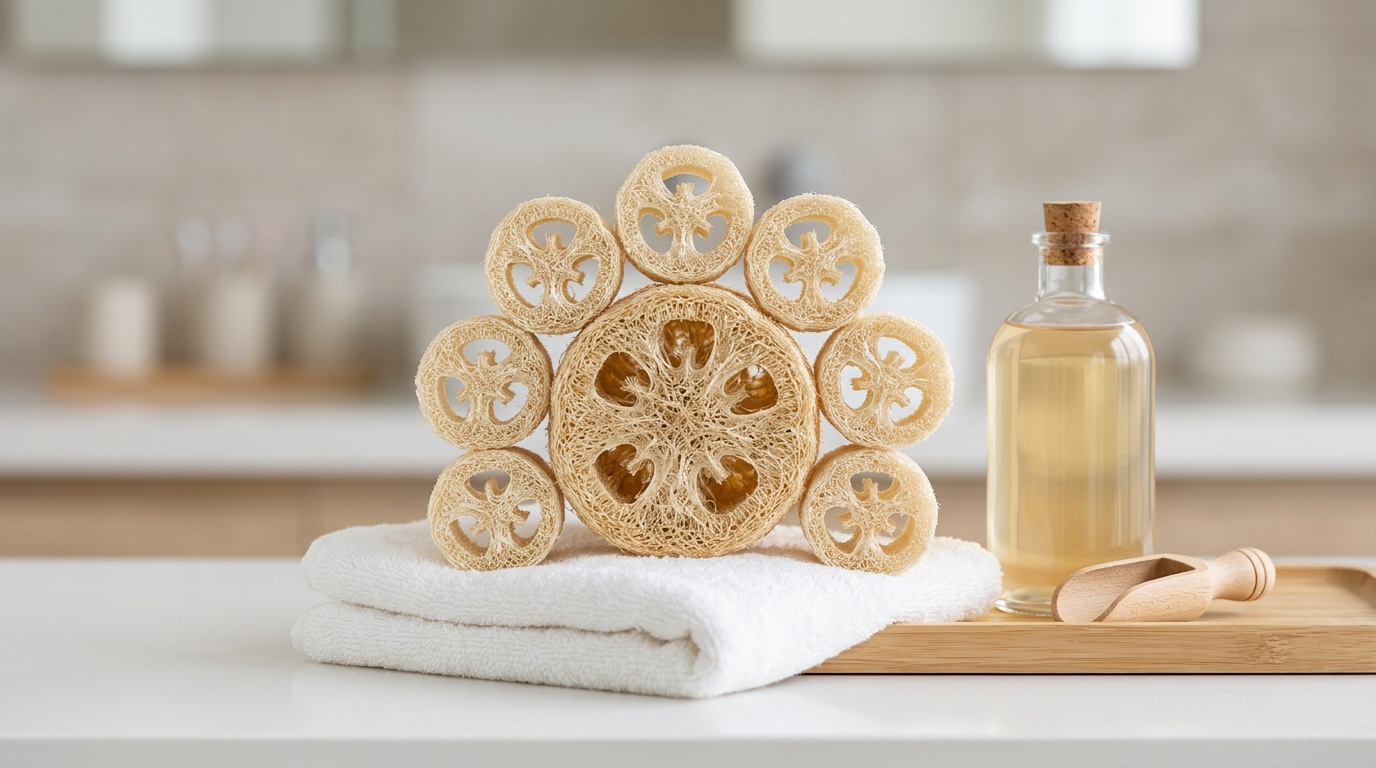
Dermatologists report that standard synthetic mesh poufs harbour millions of bacteria within just two weeks of use. If your bath routine involves grabbing a damp sponge sitting in a humid shower enclosure, you might be transferring microbes directly back onto your skin. Upgrading your hygiene habits requires understanding the physical mechanics of exfoliation and proper tool maintenance.
Mastering how to use a loofah transforms an ordinary shower into a therapeutic skin-renewal ritual. Whether you use a fibrous natural gourds or a synthetic mesh pouf, proper technique unlocks smooth skin without stripping your natural moisture barrier. Skin cell turnover slows down as you age, leaving dead cells on the surface that make your skin look dull. Using a loofah properly removes this buildup, frees ingrown hairs, and boosts blood circulation across your body.
What Is the Right Way to Prep Your Loofah?
Before learning how to use a loofah on your skin, you must prepare the sponge material correctly. Raw natural gourds arrive stiff and scratchy, requiring warm water to soften their rigid plant fibres before contact with your body.
Submerge your new loofah in warm running water for 60 seconds. The water breaks the surface tension and causes the fibrous channels of
Apply a quarter-sized dollop of liquid body wash or gently rub a damp bar of soap directly into the center core of the loofah. Work the soap into the fibers by squeezing the loofah repeatedly for 10 seconds until a rich lather forms. Pre-foaming ensures the cleanser distributes evenly across the surface rather than clumping in one spot.
How to Use a Loofah on Your Body Step-by-Step
Exfoliation requires light pressure and rhythmic motion rather than harsh scrubbing. Follow these steps to maximize skin smoothing while protecting your epidermal barrier.
-
Wet your skin thoroughly: Spend 3 to 5 minutes under warm water to open your pores and soften dead skin cells before applying the loofah.
-
Start at your extremities: Place the lathered loofah on your feet or ankles and work your way upward toward your heart to support lymphatic drainage.
-
Use gentle circular motions: Move the sponge in small, overlapping circles across your calves, thighs, arms, and torso. Apply minimal hand pressure and let the textured fibers pull away dead cells.
-
Avoid sensitive skin zones: Do not use a loofah on your face, neck, genitals, or anywhere with open cuts, razor burn, or active eczema flares.
-
Rinse with cool water: After scrubbing your body, wash away all loosened debris and soap suds under running water.
Understanding
Why Does Material Type Change How You Use a Loofah?
Not all shower sponges perform identically. The material structure dictates how much pressure you apply, how much soap you need, and how frequently you clean the tool.
Natural loofahs come from dried plant gourds belonging to the Luffa aegyptiaca species, as detailed on
Natural varieties soften significantly under hot water, making them ideal for rough spots like elbows, knees, and heels. Synthetic poufs maintain constant softness regardless of water temperature, making them better suited for daily light cleansing across delicate skin.
How Do You Clean and Dry a Loofah After Every Use?
Cleaning your loofah after bathing matters just as much as washing your skin. Leaving soap residue and sloughed-off skin cells inside a wet sponge turns it into a breeding ground for bacteria and mold spores.
Hold the loofah directly under hot running water after finishing your shower. Squeeze and release the core repeatedly until the water running out of the bottom shows zero soap bubbles or cloudiness. Trapped soap film hardens the fibers and traps bacteria inside the internal network.
Shake the loofah vigorously over the drain 5 to 10 times to remove trapped water drops. Squeeze natural plant loofahs between two clean palms to press out deep moisture without crushing the structural shape.
Never leave your loofah hanging inside the shower stall. Showers remain humid long after you turn off the tap, preventing the center of the sponge from drying completely. Hang your loofah on a hook outside the bathroom in an open area with strong airflow.
How Often Should You Replace Your Loofah?
Even diligent washing cannot stop microbial buildup indefinitely. Replacing your loofah on a strict schedule prevents skin breakouts, folliculitis, and fungal rashes.
Natural plant loofahs require replacement every 3 to 4 weeks. Organic plant fibers degrade over time when exposed to daily water, retaining moisture longer and creating ideal conditions for mold. Synthetic mesh poufs last slightly longer, requiring replacement every 4 to 6 weeks before the plastic mesh unravels and harbors bacterial colonies.
Toss your loofah immediately if you notice any of these warning signs:
-
Visible black, green, or brown spots inside the inner core
-
A musty, sour, or mildew smell lingering on the dry sponge
-
Fibers unraveling, fraying, or falling apart during use
-
Skin irritation, mysterious red bumps, or itching after showering
You can extend the lifespan of a natural loofah slightly by deep cleaning it once a week. Soak the natural gourd in a mixture of 10% household bleach and 90% water for 5 minutes, then rinse it thoroughly with warm water and hang it in direct sunlight to dry completely.
Can You Use a Loofah on Delicate or Dry Skin?
People with dry, sensitive, or reactive skin must approach exfoliation cautiously. Using a coarse loofah incorrectly strips the stratum corneum, allowing moisture to escape and environmental irritants to penetrate the skin.
If your skin turns red or feels tight after bathing, scale back your usage. Limit loofah exfoliation to 1 or 2 times per week rather than daily scrubbing. Choose a synthetic mesh pouf or an extra-soft natural pad instead of a whole coarse gourd.
Always apply a rich moisturizer within 3 minutes of exiting the shower while your skin remains damp. Hydrating creams lock in surface water and rebuild the lipid layer disrupted during physical exfoliation.
If you struggle with chronic skin conditions like psoriasis, rosacea, or severe acne, skip physical loofah scrubbing entirely. Switch to gentle chemical exfoliants like lactic acid or glycolic acid body washes, which dissolve dead skin cells without mechanical friction.
What Are the Most Common Loofah Mistakes to Avoid?
Avoiding key mistakes protects your skin barrier and extends the life of your bath tools.
-
Scrubbing the face: Facial skin is far thinner than body skin. Using a body loofah on your face causes broken capillaries and severe irritation.
-
Sharing loofahs: Never share a shower sponge with family members or partners. Sharing transfers skin bacteria, staph microorganisms, and fungal spores between bodies.
-
Storing in closed cabinets: Storing a damp loofah in a dark cupboard prevents drying and triggers mold growth within 24 hours.
-
Using on freshly shaved skin: Shaving removes the top layer of skin cells and opens hair follicles. Using a loofah immediately after shaving drives bacteria directly into exposed pores, causing painful razor bumps.
-
Neglecting kitchen hygiene: If you use natural loofahs for household cleaning, follow dedicated food safety rules. Learn more at
Honest Food Info’s loofah safety guide
Frequently Asked Questions
Can you use a loofah every single day?
Daily loofah use works fine for normal or oily skin if you apply light pressure and use a soft sponge. People with dry, sensitive, or aging skin should limit loofah exfoliation to 2 or 3 times per week to prevent irritation and moisture loss.
Is a natural loofah better than a synthetic plastic pouf?
Natural plant loofahs offer superior eco-friendly benefits because they are 100% biodegradable and compostable. They provide deeper physical exfoliation than plastic poufs, but they decompose faster and require replacement every 3 to 4 weeks.
How do you sanitize a natural loofah without bleach?
Sanitize natural plant loofahs by soaking them in pure white vinegar for 10 minutes, or submerge them in a bowl of boiling water for 3 minutes. Allow the loofah to dry completely in direct sunlight, as UV rays naturally kill remaining bacteria.
Why does my loofah smell sour after a few days?
A sour or musty smell indicates that mold, mildew, or bacteria are growing inside the sponge core. This happens when the loofah stays wet between uses because it was left inside a humid shower enclosure rather than hung in a dry, ventilated room.
Conclusion
Mastering how to use a loofah comes down to correct preparation, light pressure, and strict hygiene discipline. Soak your sponge in warm water, work up a rich lather, and move in smooth circular motions from your feet upward. Rinse the loofah thoroughly after every use, squeeze out excess water, and hang it to dry outside your humid bathroom. Replace natural loofahs every month and synthetic poufs every six weeks to keep your skin smooth, clean, and free from irritation. Take a look at your current shower sponge today—if it shows signs of wear or sits in a damp corner, replace it with a fresh loofah and upgrade your bath routine.