

You buy an all-natural body scrubber expecting it grew on a sturdy yard plant, only to discover your garden setup needs a massive overhaul. Misunderstanding the structural growth of a loofah tree leads to collapsed fences, broken stems, and zero harvested sponges. Over 80% of first-time growers fail to yield usable sponges simply because they prepare soil for a woody shrub rather than a heavy, fast-spreading vine.
Understanding the botanical realities saves you time, space, and garden budget. While colloquial references to a loofah tree persist across online gardening forums, every natural loofah sponge comes from an annual vining plant that demands specific vertical support structures. Clinging to the myth of a woody tree causes poor planning, whereas treating the crop as an aggressive climber delivers dozens of durable, eco-friendly exfoliating sponges every autumn.
Is There Actually a Loofah Tree?
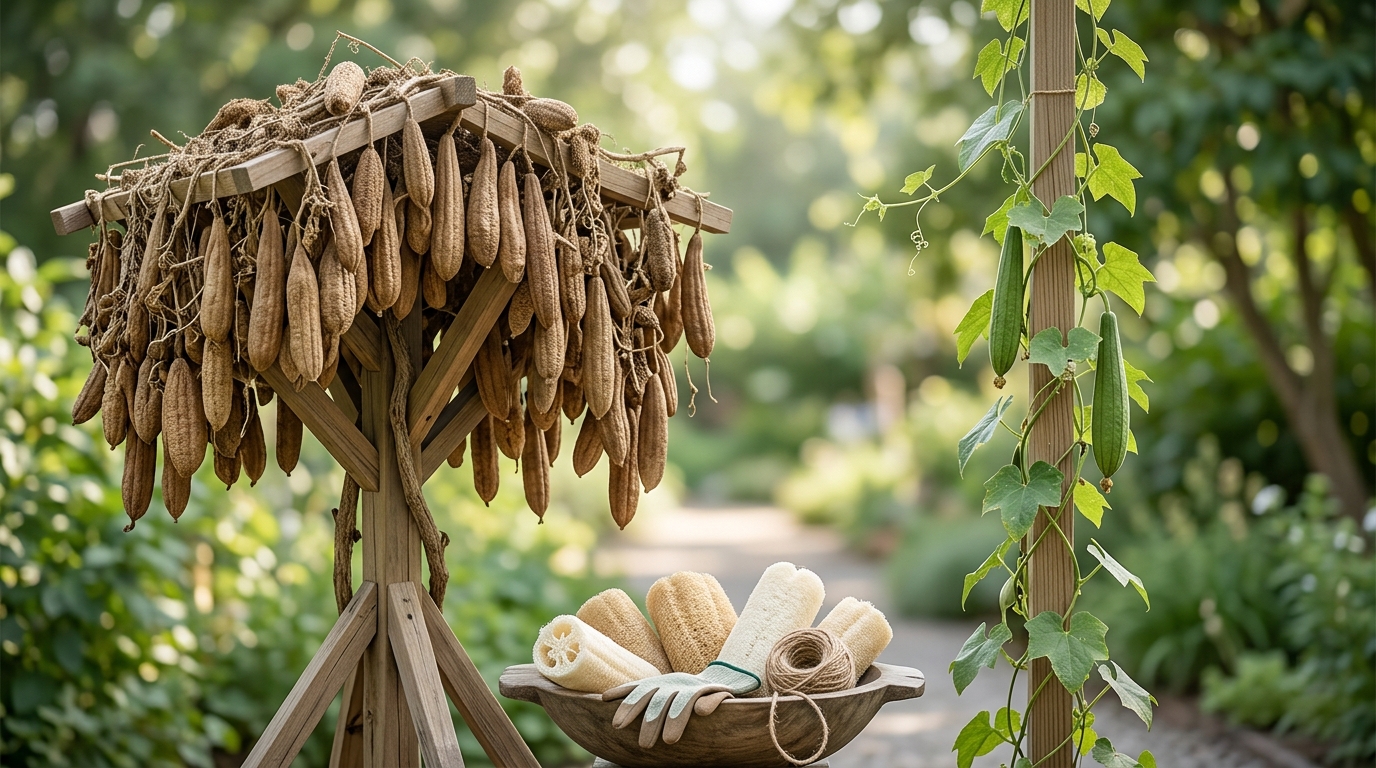
The concept of a true loofah tree is a persistent gardening myth caused by visual confusion in home gardens. When mature vines climb high into secondary tree canopies or completely cover massive 10-foot wooden arbors, the thick main stems thicken and take on a brown, fibrous appearance. To a casual observer, the hanging, foot-long gourds look like fruit dangling directly from a leafy tree trunk.
Botanically, no species in the plant kingdom naturally grows a woody trunk that produces loofah sponges. According to botanical classifications documented on
Understanding this biological difference determines how you allocate garden space. Knowing
Botanical Differences: Vine Reality vs Tree Myth
To understand why the loofah tree confusion exists, you must compare the biological structures of herbaceous climbing vines against woody trees. Loofahs belong to the Cucurbitaceae family, making them direct relatives of cucumbers, pumpkins, and squashes. They rely on coiled tendrils to anchor themselves onto surrounding vegetation rather than developing self-supporting lignified wood.
The plant’s internal structure relies entirely on turgor pressure and fibrous vascular bundles rather than rings of hard heartwood. Trees store carbon over decades to construct massive trunks, whereas a loofah vine builds long, flexible stems designed to reach maximum sunlight in a single 180-day growing season.
Recognizing these physical characteristics prevents major landscaping mistakes. If you plant loofahs directly next to house siding or light patio furniture, the aggressive tendrils will wrap tightly around any surface within reach.
Why Do People Call It a Loofah Tree?
The term loofah tree entered common vocabulary through a mix of regional naming habits, improper trellising, and visual deception. When gardeners fail to install dedicated trellises, the vine naturally scales neighboring fruit trees, pine trees, or boundary fences. By mid-summer, the host tree becomes completely enveloped in dense loofah foliage, masking its original leaves and making the gourds appear as tree fruit.
Another reason for the terminology stems from the thick, fibrous main stem of a mature vine. Near the end of the season, the base of a 20-foot vine thickens significantly, reaching over an inch in diameter with a rough, bark-like texture. When growers clear away dead foliage in late autumn, the dried main stem resembles a small, leafless woody sapling anchored to the ground.
Regional translation differences also play a role. In several tropical countries where Luffa species grow as perennial perennials due to a lack of frost, local names for large trellis setups translate directly into English as “sponge trees.” You can learn more about these global origins and cultural uses by reading about
Growing Requirements for Loofah Vines
Because the loofah tree is actually a heat-loving annual vine, its growing requirements match those of long-season summer gourds. The plant requires a minimum of 150 to 200 frost-free days to transition from seed germination to fully matured, dried sponge gourds. Short growing seasons require starting seeds indoors under grow lights 4 to 6 weeks before your region’s average last spring frost date.
Soils must be well-draining, rich in organic matter, and kept consistently moist without becoming waterlogged. Full sun exposure—at least 6 to 8 hours of direct sunlight daily—is non-negotiable for vibrant flowering and fruit production. For detailed soil preparation and temperature parameters, check out standard
-
Seed Preparation: Nick seed coats gently with a file and soak in warm water for 24 hours to break hard dormancy.
-
Warm Soil Planting: Wait until soil temperatures consistently reach 70°F before transplanting outdoors.
-
Consistent Hydration: Provide 1 inch of water per week, increasing volume during hot mid-summer fruit setting.
-
Balanced Nutrition: Apply low-nitrogen, high-phosphorus fertilizer once flowering begins to encourage fruit set rather than excess leaf growth.
Providing the correct balance of heat, light, and nutrients ensures your vines produce heavy, thick-walled gourds that yield dense, long-lasting bath sponges.
Supporting Your Loofah Vine: Trellis vs Tree Training
Attempting to train your vine up an actual yard tree causes severe problems for both plants. While a tree offers height, its dense canopy shades out the loofah’s lower leaves, reducing photosynthesis and weakening fruit production. Additionally, harvesting heavy gourds hanging 15 feet up in tree branches creates unnecessary safety hazards during autumn maintenance.
A dedicated trellis system delivers maximum air circulation, complete sun exposure, and easy harvest access. A heavy-duty wooden arbor, cattle panel arch, or T-post wire system supports the heavy weight of water-filled summer gourds without risk of collapse. Detailed structural recommendations can be reviewed through
Cattle Panel Arches
Cattle panel arches are constructed from 16-foot galvanized steel wire panels bent into a semi-circle and secured with T-posts. This setup provides exceptional stability for heavy fruit while allowing gourds to hang perfectly straight down through the wire mesh for clean harvesting.
Post and Wire Trellising
Post and wire systems use 8-foot wooden posts sunk 2 feet into the ground with high-tensile wire strung horizontally at 18-inch intervals. This design provides budget-friendly vertical support across long garden rows, ideal for growing multiple vines side by side.
Heavy Wooden Arbors
Heavy wooden arbors utilize 4×4 lumber posts with top crossbeams to create a permanent architectural feature in the garden. This option offers a decorative entrance pathway while supporting hundreds of pounds of wet foliage and mature gourds.
Harvesting and Processing Natural Loofah Sponges
Transforming a vine harvest into usable bath tools requires patience during late summer and autumn. Gourds must remain on the vine as long as possible until the green skin turns yellow-brown, loses water weight, and feels hollow when tapped. Harvesting gourds while still green and heavy results in soft, underdeveloped fibers that rot easily during washing.
Once the outer skin turns brittle and brown, processing begins immediately to prevent mold growth inside the fibrous core. The step-by-step drying, peeling, and seed extraction steps are essential for creating durable eco-friendly tools. Learn more about the biology of these useful gourds in our guide asking
[Vine Growth Phase] ➔ [Skin Turns Brown & Light] ➔ [Peel Outer Shell] ➔ [Wash Core & Remove Seeds] ➔ [Sun Dry Sponges]
After peeling away the dry skin, thoroughly wash the fibrous interior core in warm water with a mild splash of dish soap to remove natural sap. Shake out all black seeds, which can be saved in a cool, dry location for next spring’s planting. Allow the clean sponges to dry completely in full sunlight for two days before storing them indoors.
For step-by-step tips on cultivation, harvesting, and pest control, read through
Common Myths About Loofahs Debunked
Misinformation regarding the loofah tree often prevents eco-conscious shoppers from growing their own sustainable bathroom supplies. Mislabeling the plant as a marine animal or tree species obscures how simple home cultivation really is when given proper space and heat.
Debunking these common misconceptions helps clarify expectations before investing time and money into seeds or garden infrastructure:
-
Myth: Loofah sponges are harvested from ocean coral or sea sponges.
-
Reality: Natural loofahs are 100% plant-based gourd interiors grown in soil on land.
-
Myth: A loofah plant takes several years to grow into a mature producing tree.
-
Reality: Loofahs complete their entire life cycle from seed to harvest in under 200 days.
-
Myth: You can buy a perennial “loofah tree” sapling at local plant nurseries.
-
Reality: Nurseries sell seeds or young herbaceous vine starts; any product labeled as a loofah tree is misbranded.
-
Myth: Commercial synthetic loofahs are healthier for skin than natural grown varieties.
-
Reality: Natural plant fibers exfoliate dead skin gently without releasing microplastics into municipal water systems.
To dive deeper into plant varieties, taxonomy, and fiber density differences, explore our detailed breakdown on
Frequently Asked Questions
Can I grow a loofah plant in a container if I do not have room for a tree?
Yes, loofah vines grow successfully in containers holding at least 5 to 10 gallons of soil per plant. Ensure the container has bottom drainage holes and attach a sturdy 6-foot trellis directly inside or behind the pot to support climbing stems.
How many sponges does one loofah vine produce in a single season?
A healthy, well-pollinated loofah vine typically produces between 5 and 10 large gourds per season. Under ideal high-heat conditions with rich soil and optimal trellising, vigorous vines can yield up to 15 usable sponges.
Will a loofah vine survive the winter outdoors?
Loofah vines are sensitive annuals that die at freezing temperatures (32°F). They cannot overwinter outdoors in temperate climates, requiring new seeds to be planted every spring after frost risks pass.
What is the difference between smooth and angled loofah plants?
Smooth loofah (Luffa aegyptiaca) produces cylindrical gourds ideal for coarse bath sponges, while angled loofah (Luffa acutangula) has distinct longitudinal ridges and softer internal fibers often cooked as a vegetable when young.
Conclusion
Understanding that the loofah tree is actually a fast-growing, annual climbing vine allows you to plan an ideal garden strategy for growing natural sponges. Rather than waiting years for a tree sapling to mature, you can install a sturdy cattle panel trellis or post-and-wire frame this spring, sow high-quality seeds, and harvest dozens of sustainable, plastic-free exfoliating sponges by early autumn. Start preparing your sunny outdoor growing plot today, secure proper climbing supports, and enjoy the reward of home-grown eco-friendly bath accessories.