

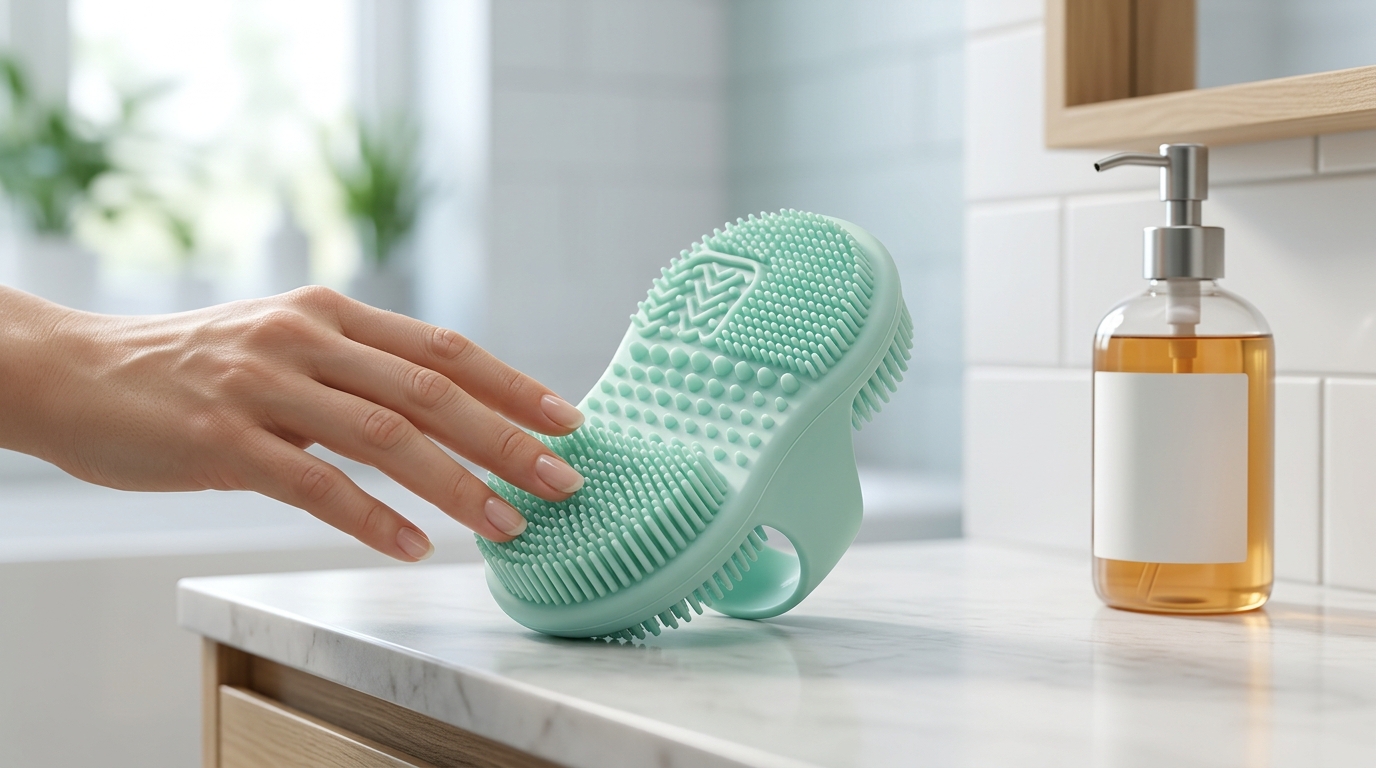
Traditional mesh bath poufs trap dead skin cells and hold onto moisture, turning your shower into a breeding ground for mold. If you switch to a silicone loofah, you eliminate that damp environment entirely while reducing plastic waste in landfill sites. Over 80% of standard synthetic scrubbers end up discarded after just a few weeks of use. Switching to durable silicone solves your bathroom hygiene issues while giving your daily shower routine a clean, low-maintenance upgrade.
Made from food-grade, non-porous materials, a silicone loofah relies on hundreds of soft, flexible bristles to gently sweep away dirt, sweat, and surface impurities. Standard shower sponges soak up soapy water into hidden internal pockets. Silicone scrubbers hold soap right on their surface, distributing body wash across your skin without absorbing the product. Because bacteria need water and organic residue to multiply, the rapid-drying nature of silicone prevents micro-organisms from colonizing your shower accessories between uses.
What Is a Silicone Loofah and How Does It Work?
A silicone loofah is an ergonomic body scrubber engineered from food-grade or medical-grade silicone. Unlike natural plant fibers or synthetic nylon mesh, silicone features a smooth, non-porous structure. This material design blocks moisture, body oils, and soap scum from penetrating beneath the surface.
The mechanism relies on structural flexibility rather than porous absorption. When you apply body wash to the face of a silicone shower tool, the flexible bristles bend under light pressure. These bristles slip across the contours of your skin to dislodge oil and dead skin cells.
Most designs feature a dual-sided surface to customize your shower routine. One side houses long, thin bristles for everyday cleansing and light massage. The opposing side often contains firm, raised nodes aimed at deeper muscle tension or target areas like elbows and heels.
Because silicone is naturally hydrophobic, water glides off the surface instantly. You rinse the tool under running water, shake off excess droplets, and hand it to dry. Within minutes, the scrubber reaches a completely dry state, leaving zero damp material for bacteria to feed on.
Why Are Traditional Bath Loofahs Unhygienic?
Traditional loofahs create a major hygiene problem in hot, humid bathrooms. Natural gourds and synthetic mesh poufs feature thousands of microscopic cavities that retain water long after your shower ends.
According to research highlighted by the
Natural options degrade rapidly when exposed to daily humidity. Understanding
Synthetic nylon poufs fair no better on environmental fronts. They shed microplastics directly down your drain and unravel within a few months. Most dermatologists recommend throwing away traditional mesh poufs every 3 to 4 weeks, creating a constant cycle of waste.
What Are the Key Benefits of Using a Silicone Loofah?
Switching to a silicone loofah introduces several distinct advantages for your skin health, household budget, and daily bathroom routine.
Ultra-Hygienic and Resistance to Bacteria
Silicone does not absorb liquid, meaning bacteria, mold, and mildew cannot penetrate its structure. The material dries completely within 10 to 15 minutes of hanging in your shower, cutting off the moisture supply micro-organisms require to thrive.
Long-Lasting Durability
A quality silicone body scrubber lasts for years without warping, tearing, or breaking down. While you must replace mesh poufs monthly, a single silicone tool remains functional for 2 to 3 years of daily use, reducing household landfill waste dramatically.
Easy to Clean and Sanitize
Cleaning synthetic sponges requires tedious soaking that rarely removes deep-seated grime. You can sanitize silicone in seconds by rinsing it under boiling water or running it through your dishwasher on the top rack.
Gentle Everyday Exfoliation
Soft silicone bristles remove surface oil and dead skin cells without micro-tearing your delicate skin barrier. This makes it an ideal choice for sensitive skin types, eczema-prone skin, or daily shower use.
Eco-Friendly Material Profile
While derived from silica rather than plant material, silicone’s multi-year lifespan replaces dozens of single-use plastic poufs over time. Many brands now manufacture recyclable silicone body scrubbers to support zero-waste lifestyles.
Soap Efficiency and Savings
Silicone does not absorb liquid soap into internal chambers. Every drop of body wash sits on top of the bristles, meaning you use up to 30% less product per shower to achieve a full-body lather.
Ergonomic and Travel-Friendly Design
Silicone scrubbers are lightweight, flexible, and compact. You can fold them into a travel bag immediately after a shower without worrying about damp odors or mildew building up inside your luggage.
Are There Any Drawbacks to Silicone Body Scrubbers?
While silicone offers clear hygienic advantages, it presents a few functional trade-offs compared to traditional shower sponges.
-
Reduced Lather Production: Silicone does not trap air like nylon mesh. You will get a slick, gliding lather rather than a towering cloud of foam.
-
Slippery Handling: Liquid soap makes smooth silicone handles slick. Look for models featuring built-in hand straps or textured finger loops.
-
Milder Exfoliation Level: If you prefer intense physical scrubbing, soft silicone bristles may feel overly gentle.
-
Higher Initial Purchase Price: A premium silicone scrubber costs more upfront than a standard mesh pouf, though it pays for itself over time.
For context on how traditional options perform, explore the origins of
Silicone Loofah vs Traditional Options: Comparison
Selecting the right shower tool depends on your priorities regarding hygiene, lather quality, environmental impact, and exfoliation intensity.
If you appreciate organic materials, reviewing
How Do You Clean and Maintain a Silicone Loofah?
Maintaining a silicone loofah takes almost no effort due to its non-porous structure. Following a simple routine ensures your shower tool remains spotless for years.
-
Rinse Thoroughly: After washing, hold your silicone scrubber under warm running water. Flex the soft bristles back and forth with your thumb to remove all remaining soap suds.
-
Shake Off Water: Tap the scrubber firmly against your hand or shower wall to dislodge loose water droplets from the bristle base.
-
Hang to Air Dry: Hang the tool by its built-in lanyard or loop in an area with good air circulation. Avoid laying it flat on a damp shower shelf.
-
Deep Clean Weekly: Place your silicone loofah on the top rack of your dishwasher during a standard wash cycle, or submerge it in boiling water for 3 minutes to eliminate residual shower oils.
Is a Silicone Loofah Right for Your Skin Type?
Choosing the right bath accessory depends heavily on your unique skin profile and sensitive skin concerns.
Sensitive and Dry Skin
If your skin turns red easily or suffers from barrier damage, a silicone loofah is an ideal option. The smooth, rounded bristle tips glide over delicate skin without causing micro-tears or stripping essential natural oils.
Acne-Prone Skin
Blemish-prone skin on the back and chest suffers when exposed to bacterial buildup on dirty shower tools. Silicone’s bacteria-resistant surface ensures you aren’t transferring old oils or micro-organisms back onto vulnerable pores.
Oily Skin Requiring Deep Cleansing
Those with higher sebum production can use the firm massage side of a dual-textured silicone tool. Pair it with a salicylic acid body wash to unclog pores effectively without harsh friction.
If you are exploring physical exfoliators for rough skin patches, check independent evaluations like
How to Choose the Best Silicone Body Scrubber
Not all silicone shower tools offer the same performance or durability. Evaluate these four features before making a purchase:
-
100% Food-Grade Silicone: Ensure the manufacturer specifies pure, food-grade or medical-grade silicone free from BPA, phthalates, and cheap filler plastics.
-
Ergonomic Hand Strap: Smooth silicone gets slippery when wet. Choose a model with a rear hand strap, finger loops, or an anti-slip grip pattern.
-
Dual-Bristle Design: Select scrubbers offering fine, long bristles on one side for sensitive skin and short, firm nodes on the back for targeted muscle relief.
-
Integrated Hanging Loop: A durable top loop allows your tool to hang freely in the shower, maximizing airflow for quick drying.
For those interested in fully organic, compostable alternatives to synthetic products, exploring
Frequently Asked Questions
Do silicone loofahs harbor bacteria?
No, high-quality silicone loofahs do not harbor bacteria. Silicone is a non-porous material that dries within minutes, depriving bacteria and mold of the moist environment required to grow.
How often should you replace a silicone loofah?
You only need to replace a silicone loofah every 2 to 3 years. Replace it sooner if you notice visible tears in the silicone material or if the hanging loop snaps.
Can you wash a silicone loofah in the dishwasher?
Yes, you can safely wash your silicone loofah on the top rack of your dishwasher. High heat sanitizes the non-porous material without warping or melting the structure.
Do silicone loofahs lather well with body wash?
Silicone loofahs generate a smooth, slick lather rather than massive foam bubbles. You get an even distribution of body wash across your skin using less soap overall.
Is a silicone loofah good for sensitive skin?
Yes, silicone loofahs work exceptionally well for sensitive skin. Soft, flexible bristles exfoliate surface skin gently without creating irritation or microscopic abrasions.
Upgrading Your Daily Shower Routine
Switching to a silicone loofah gives you an easy way to eliminate bacterial growth in your shower while cutting down on single-use bathroom plastics. By replacing porous mesh poufs with non-porous, food-grade silicone, you gain a durable, hygienic body scrubber that cleanses gently without irritating sensitive skin.
To get the most out of your silicone scrubber, pick a dual-sided model featuring fine bristles and an ergonomic hand strap. Hang it to dry in a ventilated area after every shower, and run it through your dishwasher once a week to keep it fresh. Taking these simple steps elevates your personal hygiene, cuts down on wasted body wash, and simplifies your daily skincare routine for years to come.