

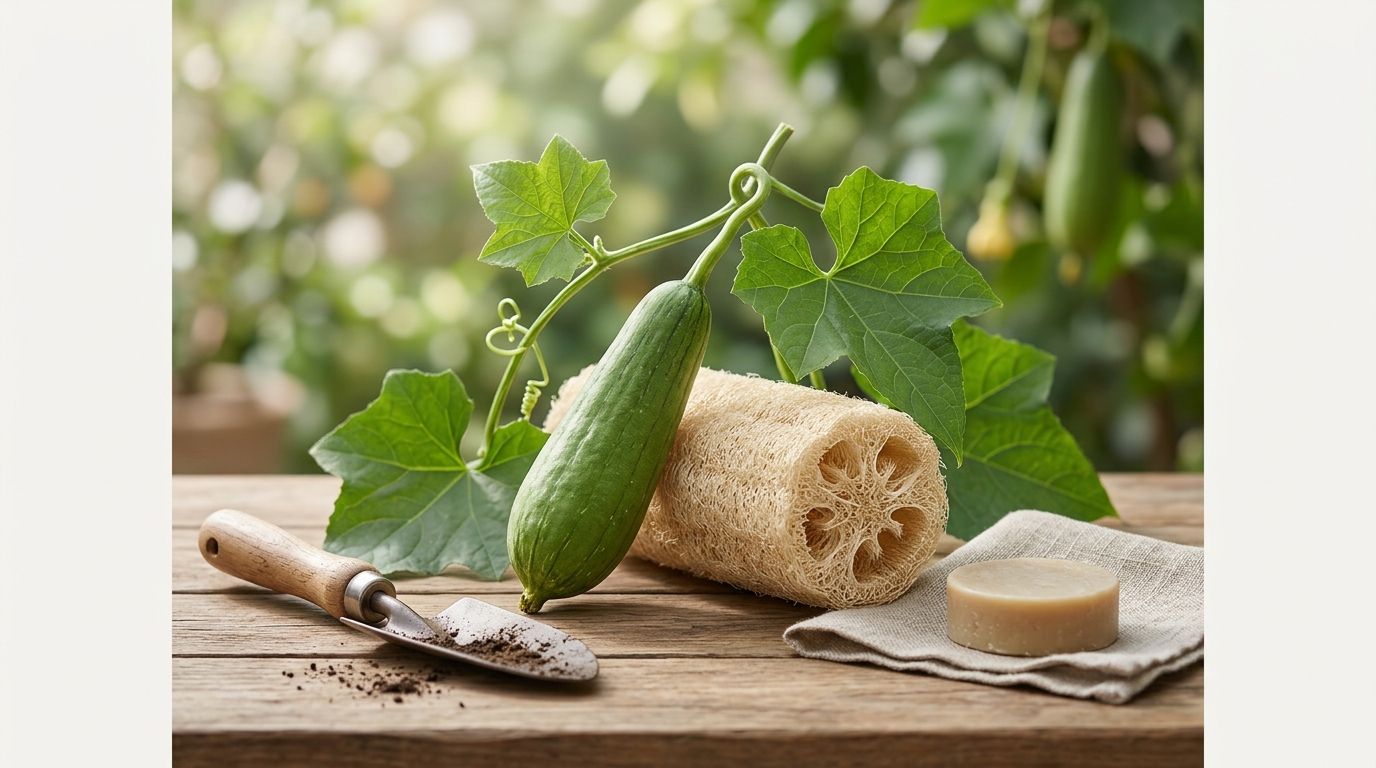
Synthetic bath poufs end up in landfills, shedding microplastics down your drain with every single shower. Over 100 million plastic mesh sponges hit municipal waste streams each year, taking centuries to degrade. Transforming your routine starts right in your backyard garden. Growing your own natural scrubber requires only basic soil preparation, a sturdy support framework, and a single sunny season.
The loofah gourd is one of the most versatile functional plants you can cultivate. While young gourds are edible and taste similar to zucchini, leaving them on the vine transforms them into durable, biodegradable sponges. Botanically classified under the genus Luffa, these climbing annual vines develop intricate vascular networks that become coarse natural scrubbers when peeled and dried. Understanding the lifecycle of this plant allows you to harvest zero-waste bath tools while reducing household reliance on petroleum-based products.
What Is a Loofah Gourd and How Does It Grow?
The loofah gourd belongs to the Cucurbitaceae plant family, making it a close relative of squashes, cucumbers, and pumpkins. Originating in tropical Asia and Africa, the plant thrives in warm climates with long summer days.
Two primary species dominate home gardens: Luffa aegyptiaca (smooth loofah) and Luffa acutangula (angled loofah). According to the
Understanding
[Spring: Seed Germination] ➔ [Early Summer: Rapid Vine Growth] ➔ [Mid Summer: Yellow Blooms & Pollination] ➔ [Late Summer: Edible Green Gourds] ➔ [Autumn: Brown Shell & Fiber Maturation]
Is a Loofah Gourd Easy to Cultivate at Home?
Growing a loofah gourd is straightforward if you provide heat, full sun, and ample vertical space. Because they require a lengthy growing window—typically 150 to 200 frost-free days—gardeners in northern regions must start seeds indoors four to six weeks before the last spring frost.
To jumpstart germination, nick the tough outer seed coats with a file and soak them in warm water for 24 hours. Plant seeds in rich, well-draining soil with a pH between 6.0 and 6.8. Gardeners interested in optimizing plant layout can examine specific
Maintaining vine structure requires sturdy infrastructure from the moment seedlings go into the ground. A single mature plant can support dozens of heavy gourds weighing several pounds each.
How Do You Care for Vines During the Season?
Healthy loofah gourd vines demand consistent moisture and heavy nutrient feeds throughout the heat of summer. Apply a balanced organic fertilizer during early growth, switching to a high-potassium formula once yellow blossoms appear.
Mulch around the vine base to retain soil moisture and suppress weeds. Pruning the lower side shoots up to three feet off the ground improves airflow and prevents fungal diseases like powdery mildew.
Directing main stems up a strong trellis keeps developing fruit off the ground. Suspended gourds grow straighter, stay cleaner, and resist rot far better than gourds resting on damp soil.
How to Harvest and Process Your Loofah Gourd?
Knowing when to pick your loofah gourd determines the quality of your finished sponge. Green, heavy gourds contain too much moisture and immature fibers. Wait until autumn when the outer skin turns yellow-brown, feels lightweight, and rustles when shaken.
If an early frost threatens your region, cut green gourds from the vine and allow them to dry in a warm, well-ventilated indoor space. Though harder to peel, mature green gourds can still produce functional scrubbers.
Processing your harvest into usable sponges requires four simple steps:
-
Peel the Outer Shell: Crack the hardened outer brown skin by gently pressing the gourd. Flake away the shell pieces to reveal the fibrous interior.
-
Remove Seeds and Pulp: Shake the dried seed cavity over a bucket to release dozens of black seeds. Rinse out the remaining inner pulp under cold running water.
-
Soak and Clean: Submerge the fiber core in a bucket of warm water mixed with a small amount of mild soap or a diluted bleach solution (1 tbsp per gallon) to brighten the natural fibers.
-
Air Dry Thoroughly: Squeeze out excess water and hang the sponges in full sun or a dry, breezy room for 24 to 48 hours until completely dry.
What Are the Best Uses for Natural Loofah Sponges?
A dried loofah gourd delivers impressive versatility throughout the home. Unlike synthetic plastic meshes, natural fiber structures soften when wet while maintaining structural firmness for cleaning.
Body exfoliation remains its most popular use. The natural texture sweeps away dead skin cells, stimulates surface blood circulation, and preps skin for moisturizing creams.
Beyond the bathroom, these plant-based sponges excel at non-abrasive household cleaning. Cut your dry loofah into custom slices for various daily tasks:
-
Kitchen Dishwashing: Cuts through grease on cast iron and non-stick pans without scratching surface coatings.
-
Bathroom Scrubbing: Removes soap scum from tile grout, glass shower doors, and porcelain sinks.
-
Vegetable Washing: Scrubs stubborn dirt off root vegetables like potatoes and carrots without stripping skins.
-
Craft Projects: Serves as a mold base for handmade soap bars, embedding natural scrubbers directly into glycerin bases.
How Does a Loofah Gourd Compare to Synthetic Sponges?
Choosing a loofah gourd over petroleum-derived foam or plastic poufs offers clear environmental and health advantages. Understanding where these plants originate reveals their biological benefits; exploring
Synthetic sponges leach microplastic particles down household drains during routine washing. These tiny particles bypass wastewater treatment plants, washing into oceans and harming aquatic ecosystems.
Natural gourd scrubbers remain 100% compostable at the end of their lifecycle. Once a natural sponge wears down, simply throw it into your home compost bin to decompose naturally within weeks.
Research detailed by
How Do You Clean and Maintain Natural Loofah Sponges?
Because a loofah gourd sponge features open organic fibers, proper maintenance keeps it clean and hygienic over months of daily use. Moist bathroom environments can harbor bacteria if sponges remain wet indefinitely.
Always rinse your sponge thoroughly after each use, shaking out excess water and hanging it by a cotton cord in a well-ventilated area outside the shower stall.
Sanitize your loofah weekly using one of these practical methods:
-
Boiling Water: Submerge the sponge in a pot of boiling water for two to three minutes.
-
Vinegar Soak: Soak the scrubber in a mixture of 1 part white vinegar to 4 parts water for 15 minutes, then rinse.
-
Dishwasher Cycle: Place the sponge on the top rack of your dishwasher during a standard heated drying cycle.
Replace your home-grown sponge every four to six weeks, or sooner if it develops a persistent odor or structural softness.
Frequently Asked Questions
Can you eat a loofah gourd?
Yes, young loofah gourd fruits are edible when harvested at 4 to 8 inches in length. They offer a mild zucchini-like flavor and are commonly used in stir-fries, soups, and curries across Asian cuisines.
How many sponges does one loofah plant produce?
A single healthy plant typically yields between 5 and 15 mature gourds per season, depending on your growing climate, vine support, and frost-free day count.
Can you grow loofah gourds in containers?
Yes, you can grow them in large containers holding at least 5 to 10 gallons of high-quality potting mix. Ensure the container has drainage holes and sits directly beneath a sturdy trellis structure.
Why is my loofah sponge dark or discolored?
Natural color variation ranges from creamy white to dark tan. Dark spots often stem from skin sap staining during peeling or delayed harvesting; as long as the fibers feel firm and smell clean, color variations are normal.
Transforming Your Daily Household Routine
Cultivating your own loofah gourd vine offers a practical bridge between daily home care and sustainable living. Transitioning from plastic bathroom accessories to homegrown scrubbers reduces microplastic waste while adding renewable supplies to your pantry and linen closet. Start by ordering open-pollinated seeds early in the year, preparing an elevated trellis spot in full sun, and following structured harvest timing. With basic care and end-of-season processing, a single patch of vines delivers a year-round supply of eco-friendly, biodegradable sponges directly from your garden bed.