
Conventional plastic mesh poufs harbor bacteria within weeks and create harsh micro-abrasions that trigger redness, flare-ups, and severe barrier damage on delicate skin. Synthetic alternatives degrade into microplastics that end up in water systems, leaving conscious shoppers trapped between harsh exfoliation and plastic waste. Natural loofahs solve both issues by providing biodegradable, plant-based exfoliation that adapts to your skin’s tolerance. Switching to an unbleached, high-density plant sponge restores your skin barrier while paring down daily bath plastic by 100%.
Choosing the best natural loofah requires looking beyond basic zero-waste marketing claims to understand fiber density, processing methods, and origin. True natural loofahs are the fibrous vascular skeletons of dried gourds, primarily Luffa aegyptiaca and Luffa acutangula. When hydrated with warm water, these plant fibers soften into flexible structures that lift dead skin cells without scratching delicate tissue. Synthetic sponges rely on petroleum-based meshes that retain moisture, creating ideal conditions for bacterial growth. Plant-based options feature natural aeration channels that dry rapidly when stored correctly. Understanding how these fibers interact with delicate tissue allows you to enjoy smooth skin without triggering irritation or compromising your zero-waste values.
What Makes a Natural Loofah Safe for Sensitive Skin?
Fragile skin barriers require low friction and chemical-free materials to prevent contact dermatitis. Commercial plastic poufs feature sharp synthetic edges that slice into vulnerable skin layers, while many low-quality sponges undergo harsh chlorine bleaching to achieve uniform white coloring. Residual processing chemicals remain trapped in the mesh, leaching out during hot showers and irritating compromised skin barriers.
Raw, unbleached loofah fibers retain their natural tan color and organic strength. Understanding
Chemical processing also strips away the natural flexibility of plant fibers. Factory-bleached options often feel brittle, producing stiff edges that scratch skin even when soaked. Whole gourds harvested at peak maturity and washed in clean spring water yield softer, more resilient fibers that suit sensitive skin types.
How Do Egyptian and Asian Loofah Varieties Compare?
Not all plant gourds yield identical textures. Regional growing conditions, seed varieties, and harvesting practices produce distinct fiber structures that directly affect how gentle a loofah feels during daily use.
Egyptian Loofah (Luffa aegyptiaca)
Egyptian varieties grow in warm coastal climates, creating broad, loose fiber networks with generous air pockets. These gourds yield flexible, soft sponges that expand quickly when submerged in warm water. The wider fiber weave holds generous amounts of water, creating a soft cushion between the gourd and your skin. This cushioning effect makes Egyptian options ideal for individuals prone to eczema, psoriasis, or daily friction irritation.
Asian Loofah (Luffa acutangula)
Asian gourds produce compact, dense fiber matrices with tighter structural walls. These varieties provide firmer texture designed for heavy-duty body scrubbing or kitchen cleaning. While durable, dense Asian varieties require longer soaking times to soften and can irritate delicate skin if used with heavy hand pressure.
7 Top Natural Loofah Options for Sensitive Skin
Finding the best natural loofah for delicate skin means balancing softness, processing purity, and structural durability. The following seven choices excel in fiber flexibility and skin safety.
1. Organic Unbleached Whole Egyptian Loofah
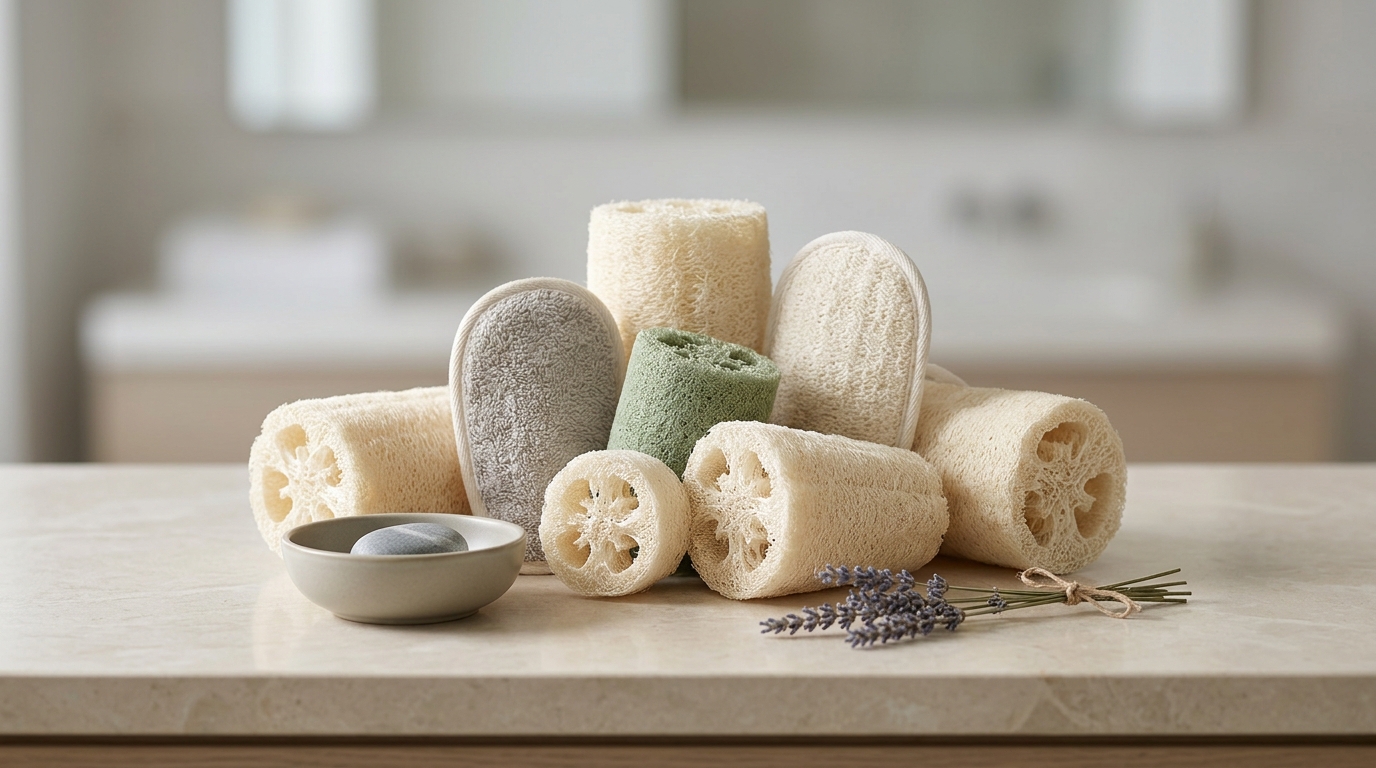
Whole Egyptian gourds sliced into custom sections offer unmatched softness for delicate skin. Unbleached whole gourds arrive in their natural golden-brown shade, free from sulfur or chlorine treatments. When soaked in warm bathwater, these whole sections expand into generous cushions that glide over broad areas like arms, legs, and torso without digging into skin.
Purchasing full gourds allows you to cut custom sizes tailored to your bath needs. You can leave larger pads for body cleansing while cutting smaller disks for precise face washing or spot treatment.
2. Flat Pad Loofahs with Organic Cotton Backing
Flat loofah pads feature a soft layer of unbleached plant fiber stitched to a flexible backing of organic cotton or terry cloth. An integrated hand strap allows you to maintain control without squeezing or applying harsh pressure to sensitive areas.
This hybrid construction provides gentle control. You use the plant side for smooth body cleansing, then flip to the soft cotton side for delicate areas like the neck, chest, and inner arms. Ensure the stitching uses unbleached cotton thread rather than synthetic nylon, which can scratch sensitive skin along pad borders.
3. Soft-Treated Compressed Travel Loofahs
Compressed loofah disks undergo mechanical pressing to reduce shipping bulk without chemical additives. Upon submerging in warm water, these compressed rounds expand into plush, soft sponges within seconds.
The compression process gently breaks stiff outer wall rigidities, leaving behind pliable fibers that feel comfortable against reactive skin. Their compact size makes them practical for travel, fitting neatly into dry travel pouches without adding unnecessary weight.
4. Natural Loofah Back Scrubber Strops
Cleansing the back without irritating skin requires precise control and proper reach. Woven back scrubbers incorporate a central strip of soft Egyptian loofah flanked by soft woven cotton handles.
This design lets you wash hard-to-reach areas across the shoulders and lower back without contorting your arms or pressing too hard. The soft cotton rope handles prevent slipping, allowing smooth strokes across sensitive back skin.
5. Dual-Sided Facial Loofah Pads
Facial skin is thinner and more delicate than body skin, requiring ultra-fine fiber structures. Premium facial loofah pads use thin slices from the innermost core of young gourds, where fibers remain exceptionally soft and pliable.
Paired with a plush bamboo or organic cotton fleece backing, these small rounds offer gentle exfoliation that lifts dead skin cells without disrupting the facial lipid barrier. Using a dedicated facial pad twice weekly helps clear clogged pores without causing redness or irritation.
6. Raw Loofah Slices for Soap Custody
Inserting whole raw loofah disks directly into soap dishes keeps bar soaps dry while providing a gentle, pre-lathered cleansing tool. As the soap sits on the porous disk, it coats the fibers in a rich cream base.
Using a soap-infused disk provides light exfoliation backed by the protective glide of your favorite sensitive-skin soap bar. The continuous soap coating shields sensitive skin from direct fiber friction while keeping your bath counter free from soap residue.
7. Organically Grown Heirloom Loofah Sponges
Heirloom loofah varieties cultivated on small organic farms avoid synthetic fertilizers and chemical defoliants during harvest. Farmers harvest these specialty gourds by hand at exact maturity windows to ensure optimal fiber softness.
Heirloom sponges feature exceptionally consistent fiber quality without brittle spots or sharp seeds. Supporting organic growers ensures your bath routine remains free from pesticide residues while promoting sustainable agricultural practices detailed on resources like
How to Safely Soften and Prepare a New Loofah
Raw plant fibers arrive in a dry, compressed state that feels stiff to the touch. Preparing your sponge correctly prevents accidental scratches during your first bath session.
-
Submerge the new sponge in a bowl of hot (not boiling) water for 10 minutes.
-
Gently squeeze the sponge repeatedly underwater to release trapped air and soften stiff internal walls.
-
Add 1 tablespoon of vegetable glycerin or a few drops of mild body oil to the soak water to hydrate natural cellulose fibers.
-
Rinse thoroughly under warm running water to flush out any lingering plant dust or stray seeds.
-
Hang the sponge in a well-ventilated spot to air dry completely before its first use.
Following this initial conditioning process turns dry plant material into a supple, skin-friendly sponge. Taking time to hydrate your sponge ensures every bath session remains smooth and comfortable.
How to Maintain Proper Hygiene and Prevent Bacteria Growth
All bath accessories pick up moisture, dead skin cells, and soap residue during use. Because natural loofahs are porous plant materials, proper hygiene is essential for keeping them clean and safe for delicate skin.
Daily Drying Protocol
Never leave your sponge sitting on a wet shower floor or hanging inside a closed damp stall. Shake out excess water after every bath and hang the sponge using its cotton loop in an airy location with good air circulation. Placing it near an open window or under a fan speeds up drying, stopping bacterial growth before it starts.
Weekly Sanitizing Clean
Disinfect your plant sponge once a week to kill bacteria and clear away trapped soap scum. Submerge the sponge in a solution of 1 part white vinegar to 4 parts warm water for 15 minutes, or soak it in a bowl with 5 drops of pure tea tree oil. Rinse the sponge thoroughly with clean water and let it dry completely in bright sunlight. Sunlight acts as a natural disinfectant, bleaching out minor spots without damaging cellulose structures.
Knowing When to Replace
Even well-maintained plant sponges break down over time. Replace your body sponge every 4 to 6 weeks, or sooner if you notice color changes, lingering odors, or fiber breakdown. For more insights on sourcing and fiber durability, explore
FAQ
Can you use a natural loofah every day on sensitive skin?
Daily use is generally too intense for sensitive or reactive skin types. Limit exfoliation to 2 or 3 times per week to allow your natural skin barrier to recover between uses. On non-exfoliating days, use a soft organic cotton cloth or hands-only cleansing.
Why does my natural loofah feel scratchy even when wet?
Scratchy fibers usually indicate a dense Asian gourd variety, chemical bleaching, or insufficient soaking time. Ensure you submerge your sponge in warm water for at least 60 seconds before it touches your skin. Switching to an unbleached Egyptian variety provides a much softer texture.
Is a natural loofah better than a synthetic bath pouf?
Natural plant options offer superior hygiene and sustainability compared to synthetic plastic poufs. Synthetic mesh traps bacteria within tight plastic layers and sheds microplastics into shower runoff. Plant sponges dry faster when hung correctly, contain zero petroleum chemicals, and compost fully at the end of their lifespan.
How do I compost a worn-out natural loofah?
Cut the old sponge into small pieces using kitchen shears to speed up decomposition. Toss the fiber pieces into your home compost bin or bury them directly in garden soil. Pure plant sponges break down completely within 30 to 60 days, enriching your soil without leaving toxic residues.
Choosing the Right Natural Option for Your Skin
Finding the best natural loofah transforms daily bathing from a harsh chore into a soothing skin-care ritual. Selecting unbleached Egyptian gourds ensures your bath routine stays free from chlorine treatments, synthetic meshes, and microplastic waste.
Combine your new plant sponge with a gentle, fragrance-free body wash to keep skin hydrated and calm. Soften the fibers thoroughly in warm water before each use, use light hand pressure, and let your sponge dry in an airy spot between showers. To dive deeper into growing your own sustainable bath accessories, read about