
Standard plastic shower poufs shed microplastics down your drain with every use, cluttering landfills for centuries after you toss them out. Even many natural sponges undergo heavy industrial bleaching with chlorine to achieve a uniform, artificial white color. Finding an authentic, non-toxic shower alternative often feels like navigating a maze of greenwashing claims, leaving you unsure of what you are actually rubbing onto your skin daily. Over 100 million synthetic bath sponges end up in municipal waste systems each year, making the search for a clean alternative more urgent than ever.
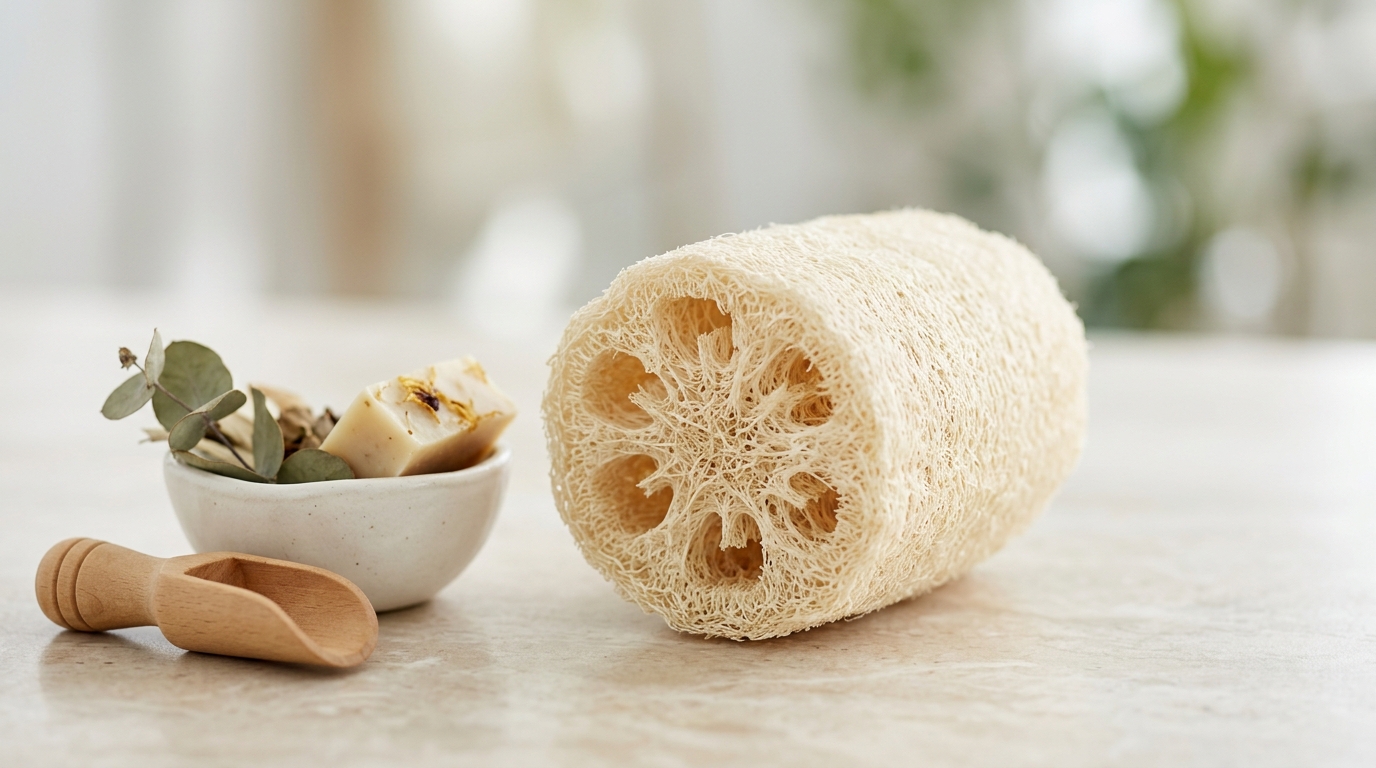
An organic loofah offers an effective, zero-waste solution that completely bypasses petroleum derivatives and aggressive chemical processing. Originating as a fast-growing tropical gourd from the Cucurbitaceae family, the plant matures on the vine until its outer skin hardens and its interior transforms into a tough, fibrous network of cellulose. When harvested organically, farmers strip the outer husk and wash the fibrous core using only clean water and natural drying methods. This process preserves the structural integrity of the plant fibers while ensuring no toxic residue remains in the matrix. Understanding how an organic loofah differs from standard alternatives helps you make an informed choice for your personal care routine and household sustainability goals.
What Is an Organic Loofah and How Is It Grown?
An organic loofah begins its life as a climbing vine species grown primarily in warm, sunny climates. Farmers cultivate these gourds without chemical fertilizers, synthetic insecticides, or systemic fungicides. By using natural compost and organic crop management, the soil remains healthy while protecting the developing fruit from absorbing toxic compounds.
The growing season lasts between 150 and 200 frost-free days. As the gourd matures on the vine, the green outer rind gradually turns brown and lightweight, signaling that the inner water content has evaporated and the tough cellulose skeleton has fully formed. You can read more about
Once harvested, workers peel away the dry outer skin to expose the dense network of vascular fibers inside. In organic production, these fibrous cylinders are thoroughly rinsed in water to flush out remaining seeds and natural sap. They dry naturally under the sun rather than going through heated industrial kilns or chemical baths.
Why Does Chemical-Free Processing Matter for Your Skin?
Conventional bath sponges—even those labeled as natural—often undergo industrial bleaching using concentrated chlorine or hydrogen peroxide. Factories use these treatments to give the fiber a uniform off-white appearance and to strip away residual plant oils rapidly.
Chemical treatments weaken the natural cellulose strands, causing conventional sponges to break down much faster during daily use. Residual bleaching agents can also remain trapped within the tight fibrous weave, potentially triggering contact dermatitis or skin irritation when exposed to hot water and soap.
An organic loofah retains its natural tan, cream, or light brown color variations because it avoids synthetic bleaching agents entirely. The raw cellulose fibers maintain their full tensile strength, creating a durable matrix that softens predictably in warm water without releasing skin irritants.
How Does Organic Loofah Compare to Synthetic Poufs?
Synthetic shower poufs consist of extruded polyethylene plastic mesh held together by a central string. While inexpensive, plastic mesh exfoliators present severe long-term drawbacks for personal health and environmental safety.
+------------------------+---------------------------------+----------------------------------+
| Feature                | Organic Loofah                  | Synthetic Plastic Pouf           |
+------------------------+---------------------------------+----------------------------------+
| Material Source        | 100% Plant Cellulose Gourd      | Polyethylene Plastic (Petroleum) |
| Chemical Treatments    | None (Water washed, sun dried)  | Dyes, Plasticizers, Anti-foaming |
| Exfoliation Quality    | Firm, textural, deep pore       | Mild, surface friction           |
| Microplastic Release   | Zero                            | High (Every shower rinse)        |
| End-of-Life Disposal   | Home compostable (30-60 days)   | Non-biodegradable landfill waste |
| Lifespan               | 4-6 weeks                       | 4-8 weeks                        |
+------------------------+---------------------------------+----------------------------------+
Every time you rub a plastic shower pouf against your skin, friction sheds tiny microplastic particles down the shower drain. Wastewater treatment facilities struggle to filter these particles, allowing them to accumulate in aquatic ecosystems. An organic loofah sheds only trace plant cellulose, which breaks down harmlessly in natural water systems.
What Are the Skin Health Benefits of Natural Fiber?
Using an organic loofah provides physical exfoliation that removes dead skin cells from the epidermis. The natural cross-hatched pattern of the vine fibers creates a multi-directional texture that lifts away dry patches without micro-tearing healthy tissue.
Regular exfoliation with natural plant fibers helps unclog hair follicles, preventing ingrown hairs along the legs and bikini line. The firm texture stimulates localized blood circulation near the skin surface, promoting a healthy glow and smoother texture.
-
Removes accumulated surface dead skin cells effectively
-
Prevents clogged pores and reduces keratois pilaris bumps
-
Stimulates peripheral blood flow during daily wash routines
-
Softens tough areas like elbows, knees, and heels naturally
-
Distributes liquid soap efficiently without petroleum residues
For those interested in agricultural origins, researchers at
Is an Organic Loofah Truly Biodegradable?
An authentic organic loofah consists entirely of raw plant fiber, making it 100% compostable at the end of its useful life. When your loofah starts to wear down, you can discard it directly into a home compost bin, garden bed, or municipal green waste collector.
Under standard home composting conditions, an organic loofah breaks down into rich organic matter within 30 to 60 days. Microorganisms consume the raw cellulose without leaching toxic glues, synthetic dyes, or microplastics into your soil.
In contrast, synthetic plastic poufs persist in landfills for over 400 years, fragmenting into hazardous microplastic dust. Choosing a compostable plant sponge eliminates bath waste entirely from your household footprint.
How Do You Choose Between Organic Loofah and Conventional Options?
When evaluating options in the personal care aisle, knowing how to spot true organic quality keeps you from buying greenwashed synthetic items. Manufacturers often use terms like “all-natural” or “eco-friendly” on products that still undergo heavy chemical processing or contain hidden synthetic cords.
Color and Appearance
True organic loofahs exhibit slight color variations ranging from warm beige to mottled cream and light brown. If a loofah appears bright white, factory workers bleached it with chemical oxidizers.
Texture and Smell
A natural loofah feels firm and rigid when completely dry, smelling faintly like dried grass or tea leaves. Synthetic or chemically treated sponges often lack this faint earthy scent or carry a chemical perfume designed to mask processing agents.
Construction and Hardware
Check how the manufacturer constructs the hanging loop. True zero-waste products feature unbleached cotton strings or natural jute cords, while lower-quality options utilize synthetic nylon threads that prevent complete composting.
How Should You Care for an Organic Loofah to Prevent Bacteria?
Because an organic loofah is porous plant material, proper maintenance is essential for hygiene. Warm, humid shower environments encourage bacterial growth if you leave the sponge soaking wet between uses.
-
Rinse the loofah thoroughly under warm running water after every shower to remove trapped soap suds and dead skin debris.
-
Squeeze out excess water firmly between your palms without twisting or wringing the internal fiber matrix.
-
Hang the loofah in a dry, well-ventilated area outside the humid shower enclosure to dry completely between uses.
-
Sanitize the loofah once a week by soaking it in a bowl of hot water with a few drops of tea tree oil or boiling it for two minutes.
-
Replace your organic loofah every 4 to 6 weeks, or immediately if you notice discoloration or a sour odor.
Proper care guidelines published by
What Are the Best Household Uses for an Organic Loofah Beyond the Shower?
The useful lifespan of an organic loofah extends well past personal hygiene. Once a loofah becomes too soft for body exfoliation, you can repurpose it for various sustainable household cleaning tasks.
You can slice the cylindrical gourd into flat pads or circular disks to replace synthetic kitchen sponges. The firm cellulose structure scrubs away baked-on food from cast iron skillets and stainless steel pans without scratching non-stick coatings or glass surfaces.
Organic loofahs also work exceptionally well for scrubbing bathroom tiles, sink basins, and countertop grout. Because the material contains no harsh chemicals, you can use it alongside simple vinegar or baking soda cleaning solutions.
For a broader evaluation of sustainable bath products, the buyers’ guide at
Frequently Asked Questions
What is the difference between a natural loofah and an organic loofah?
A natural loofah comes from a plant, but farmers may have grown it using chemical pesticides and processed it with chlorine bleach. An organic loofah is grown without synthetic agricultural chemicals and processed without bleaches or dyes.
How can I tell if my loofah was chemically bleached?
A chemically bleached loofah appears uniformly bright white or pale cream without any natural color variation. Unbleached organic loofahs feature subtle tan shades, light brown flecks, and natural variations across the surface.
Can I toss my old organic loofah into my garden compost?
Yes, as long as you remove any non-compostable synthetic hanging strings first. Pure organic loofah fiber consists of natural plant cellulose that breaks down completely in a home compost pile within two months.
How often should I replace an organic loofah?
You should replace your organic loofah every 4 to 6 weeks for optimal hygiene and exfoliation performance. If the fibers show mold spots, smell musty, or lose their firmness earlier, replace it right away.
Conclusion
Switching to an organic loofah provides a simple, high-impact update to your daily bath routine and zero-waste household strategy. By opting for unbleached, pesticide-free plant fibers over petroleum-based plastic poufs, you protect your skin from synthetic chemical residues while keeping microplastics out of municipal waterways. The natural cellulose structure provides superior exfoliation that leaves skin smooth and refreshed without damaging delicate skin tissue. To get started, swap out your current plastic bath sponge for an unbleached organic loofah, establish a dry storage habit outside the shower stall, and compost the used plant fibers after six weeks of continuous use. You can explore