

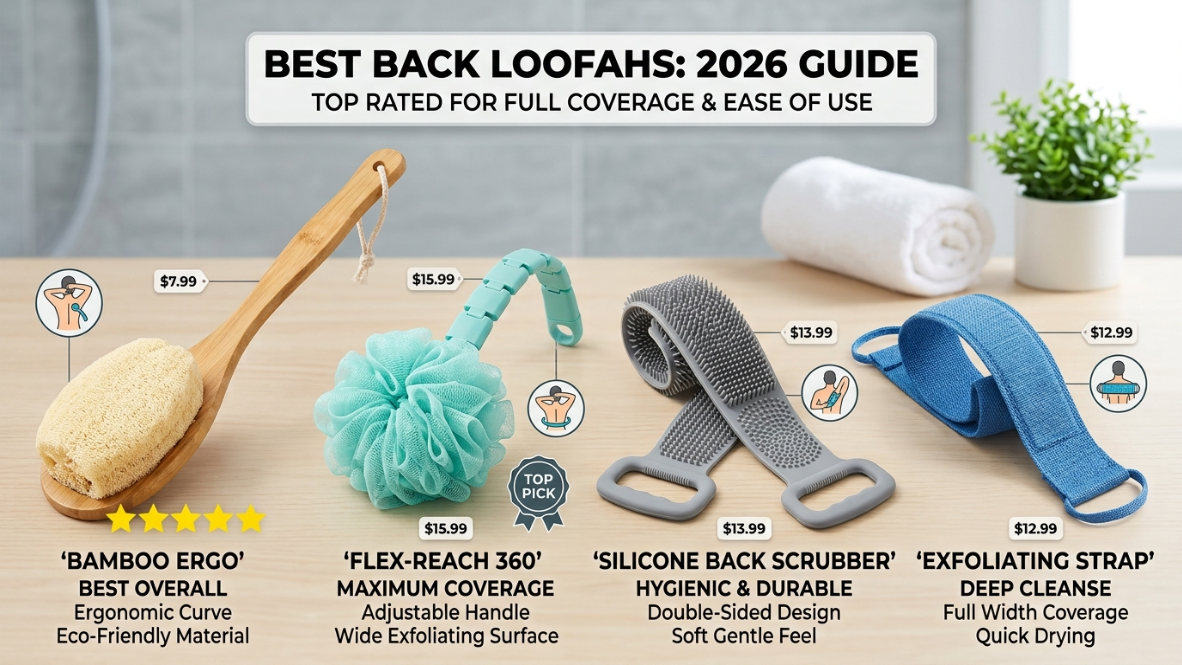
Reaching the center of your upper back during a shower requires frustrating flexibility that most people simply lack. Neglecting these areas leads to clogged pores, dead skin accumulation, and stubborn back acne for over 40 percent of adults.
Standard bath sponges fall short because they lack the necessary reach and structural tension to clean between your shoulder blades properly. Investing in a dedicated back loofah solves this spatial challenge by pairing targeted surface friction with extended handles or dual-grip straps. Choosing the right design transforms your daily hygiene routine, ensuring every inch of skin receives proper exfoliation without strain.
What Is a Back Loofah and How Does It Work?
A back loofah is a specialized bath tool designed to clean and exfoliate the rear torso. Manufacturers design these tools using natural dried gourd fibers, woven fabrics, or synthetic mesh attached to long handles or flexible bands. Understanding what is a loofah helps you evaluate how these coarse materials clear oils and dead surface cells effectively.
Mechanical friction drives the cleansing action of a loofah. When you apply water and body wash, the textured surface lifts dead keratinocytes and unblocks follicular openings. Using a tool with appropriate length gives you leverage, allowing uniform pressure across your upper and lower back without straining your arms or shoulders.
Natural Plant Fibers vs. Synthetic Mesh
Natural back loofahs rely on the fibrous vascular network of the dried Luffa aegyptiaca plant. These fibrous networks provide firm texture that softens when wet, making them highly effective for manual exfoliation. If you want to know more about the botanical origin of these sponges, explore is a loofah a plant to learn how natural gourd fibers are harvested.
Synthetic mesh scrubbers rely on extruded polyethylene loops gathered into a dense cluster. While synthetic options generate rich lather quickly, they lack the structural firmness needed to lift deep-seated impurities. Natural plant fibers provide superior pore cleansing, though they require drier storage conditions to prevent mold growth.
What Are the Key Types of Back Loofahs?
Choosing the right back loofah depends on your mobility, skin sensitivity, and storage space. Bathing tool designs fall into three primary functional categories, each offering distinct advantages for daily use.
-
Long-Handled Wooden Loofahs: Feature a rigid wood or bamboo wand measuring 15 to 18 inches, tipped with a natural loofah pad.
-
Dual-Handle Fabric Bands: Flexible woven straps equipped with rope handles at both ends, allowing a back-and-forth sawing motion across the back.
-
Ergonomic Curved Silicone Wand Scrubbers: Molded rubber or silicone shafts featuring fine bristles that offer gentler exfoliation and simple sanitization.
Fixed-Handle Models vs. Flexible Strap Designs
Fixed-handle scrubbers give you precise control over specific spots, like the area between your shoulder blades. The rigid frame lets you apply direct forward pressure to scrub stubborn areas without twisting your body. However, stiff handles can be awkward to pack when traveling and may slip out of soapy hands if they lack textured grips.
Flexible straps offer broader coverage per stroke, wrapping around the curves of your torso. Grasping both handles lets you scrub your lower and upper back quickly using smooth, bi-directional pulls. While strap designs store easily in small showers, they require functional mobility in both arms to use effectively.
How to Choose the Best Back Loofah for Your Needs
Selecting the ideal back loofah requires balancing handle length, material firmness, and resistance to moisture. Evaluating these factors beforehand ensures your chosen scrubber performs reliably without irritating your skin.
       [Determine Primary Skin & Reach Need]
                         |
      +------------------+------------------+
      |                                     |
[Limited Reach / Spot Cleaning]   [Full Torso / Sensitive Skin]
      |                                     |
(Long-Handled Wand)                   (Flexible Strap or Silicone)
      |                                     |
  Check for:                            Check for:
  - 15-17 inch length                   - 30+ inch strap length
  - Non-slip handle grip                - Dual side textures
  - Replaceable heads                   - Fast-drying material
Measuring Handle Length and Ergonomic Reach
Standard shower handles measure between 12 and 18 inches long. Individuals with restricted shoulder flexibility should choose handles at least 16 inches long to reach the mid-back without straining.
Look for curved wands rather than straight sticks. A subtle 15-degree curve aligns naturally with the spinal column, preventing shoulder fatigue during use. Rubberized grips or textured wood carvings also prevent the tool from slipping when covered in soap.
Material Firmness and Skin Sensitivity
Exfoliating power depends on fiber density and weave tightness. Coarse natural loofah suits thick, oily skin prone to back acne, while softer woven cotton or silicone works best for sensitive skin.
If you have sensitive or dry skin, choose a dual-textured model. These feature a firmer scrubbing surface on one side for weekly deep cleaning, alongside a softer cotton panel for daily washing.
Top Features to Compare Before Buying
Comparing technical features helps you select a back loofah that lasts longer and stays hygienic. Standardizing these key specifications prevents premature wear and mold buildup.
Mold Resistance and Storage Loops
High humidity in bathrooms creates an ideal environment for bacterial growth within dense bath fibers. Choose back loofahs designed with hanging loops made from durable nylon or woven cord rather than cotton string, which rots quickly.
Models made from natural loofah should feature a detachable head mechanism. This lets you unsnap the natural sponge to dry thoroughly near a window while leaving the wooden handle in the shower stall.
Sustainability and Environmental Impact
Eco-conscious shoppers often avoid synthetic mesh loofahs, which shed microplastics into wastewater systems with every shower. Choosing a biodegradable natural back loofah reduces plastic waste without sacrificing performance.
To learn more about natural loofahs, review details on the loofah plant to see how raw gourds are transformed into eco-friendly bath tools. Pure dried gourd fibers compost completely within weeks, making them an ideal choice for zero-waste households. According to botanical data on Wikipedia’s Luffa overview, Luffa species are widely cultivated as natural sponges, offering a renewable alternative to synthetic plastic scrubbers.
How to Properly Use and Maintain a Back Loofah
Correct technique prevents over-exfoliation while keeping your bath tool sanitary. Following structured maintenance habits extends the product’s life and protects your skin barrier.
-
Soak the fibers: Hold the natural loofah under warm water for 2 minutes before use to soften the natural gourd strands.
-
Apply body wash: Pour a quarter-sized amount of cleanser directly onto the center of the damp pad.
-
Scrub gently: Work the loofah across your back in circular motions, applying light, even pressure without pressing hard against the skin.
-
Rinse thoroughly: Wash out all residual soap suds under running water until the stream runs completely clear.
-
Hang to dry: Shake off excess water and suspend the tool in a dry, ventilated area outside the shower enclosure.
To maintain your tool, sanitize your natural back loofah once a week. Submerge the fibrous head in a solution of 10 percent bleach and 90 percent warm water for 5 minutes, then rinse it thoroughly and let it dry completely in direct sunlight.
Replace natural loofah attachments every 6 to 8 weeks, as organic fibers break down over time with exposure to water. If you notice discoloration, persistent odor, or softening that reduces scrubbing power, discard the head immediately.
Frequently Asked Questions
How often should I replace a back loofah?
Replace natural gourd loofahs every 6 to 8 weeks to prevent bacterial growth and maintain effective exfoliation. Synthetic mesh and silicone models can last 4 to 6 months if cleaned and sanitized weekly.
Can using a back loofah help clear back acne?
Yes, regular use removes dead skin cells and unblocks hair follicles that trap excess sebum and bacteria. Use light pressure with a gentle cleanser to avoid irritating active breakouts.
How do I stop my wooden loofah handle from molding?
Hang the loofah to dry outside the humid shower stall in a well-ventilated room after every use. Apply a thin layer of mineral oil to the wooden handle monthly to repel moisture.
Are natural loofahs better than plastic shower poofs?
Natural loofahs provide firmer exfoliation, compost completely after use, and will not shed microplastics into public waterways. Synthetic poofs create lather faster, but they trap bacteria easily and end up in landfills.
Upgrading Your Bath Routine with Full Coverage
Adding a dedicated back loofah to your bath routine solves reach issues and keeps your skin smooth and clear. Choosing an ergonomic wand with a natural gourd head gives you the leverage and firm texture needed to clean hard-to-reach areas comfortably.
Prioritize models made from sustainably harvested materials featuring reinforced hanging cords and quick-drying designs. For further reading on natural options, check out scienceinsights.org to learn how natural gourd sponges are grown and prepared for bath use.
Proper maintenance—such as weekly sanitizing, adequate drying between uses, and timely replacement—ensures your back loofah delivers clean, healthy skin every time you shower.
For More information visit us loofah with handle