

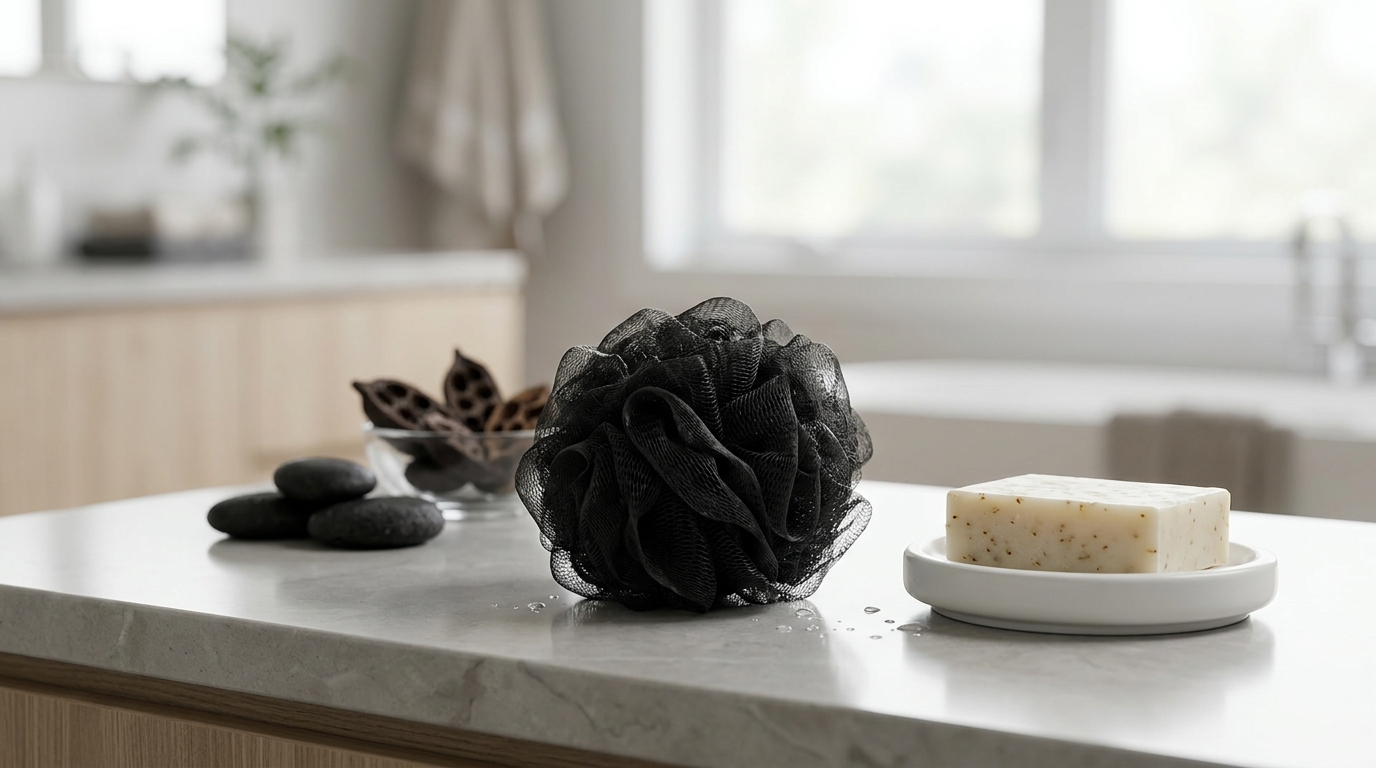
Curious about what hanging a shower sponge outside your home or golf cart really means? Over 80% of people who research shower accessories online get confused by conflicting reports of hidden lifestyle signals versus household mold warnings. You want clarity without wading through sensationalized internet rumor mills or confusing material science.
The full black loofah meaning spans two distinct worlds: popular urban legends surrounding lifestyle signaling and practical hygienic realities of bath accessories. Synthetic mesh poufs and natural dried gourds behave differently, but color changes or intentional color choices carry specific visual signals. Understanding these distinctions helps you maintain a clean bath routine while navigating modern pop culture trends accurately.
What Is the Black Loofah Meaning in Pop Culture?
Urban legends regarding shower accessories gained massive viral traction across social media platforms like TikTok and Reddit. These stories originate from retirement villages, most notably The Villages in Florida, where residents supposedly use color-coded loofahs on vehicle antennas or door handles to communicate relationship status and personal preferences.
In these lifestyle signaling systems, specific colors represent distinct relationship dynamics or recreational interests. A white loofah indicates a beginner or novice, a blue loofah suggests single status, and a purple loofah signals an open relationship. The black loofah meaning within this viral code specifically represents a preference for adventurous, alternative, or unrestricted lifestyle activities without traditional boundaries.
Community leaders and local journalists have repeatedly clarified that most color-coded bath sponges on vehicles actually serve a far simpler purpose. Drivers attach bright bath poufs to golf carts and cars to locate their vehicles easily in massive, identical parking lots. What started as an easy visual parking marker transformed into a widely shared internet rumor that spread across global social channels.
Why Do People Choice Charcoal or Black Loofahs for Bathing?
Moving past urban legends, consumer demand for dark-colored bath accessories has surged among modern household shoppers. Manufacturing trends shift rapidly as consumers prioritize minimalist aesthetic choices alongside functional materials. Charcoal-infused bath tools represent a growing segment in personal care markets.
Bamboo Charcoal Infusion Benefits
Black mesh poufs and dark natural scrubbers frequently contain bamboo charcoal powder woven into the synthetic fibers or plant filaments. Manufacturers ground activated charcoal into microparticles to integrate into the loofah material during production. Charcoal acts as a natural porous agent, absorbing excess sebum, trapping surface pollutants, and neutralizing residual body odors during exfoliation.
Aesthetic Integration in Modern Bathrooms
Dark bath accessories fit neatly into minimalist, industrial, and modern interior bathroom designs. Traditional pastel mesh poufs often clash with modern tile work, matte black fixtures, and natural stone finishes. Modern consumers deliberately choose dark bath sponges to maintain a cohesive visual layout in their home personal care spaces.
Concealing Normal Discoloration
Synthetic and natural bath tools inevitably show wear, soap residue, and water staining over time. Light-colored poufs show discolored spots quickly, appearing dirty even after thorough rinsing. Choosing a black or dark grey loofah keeps your accessories looking visually clean between scheduled replacements, provided you maintain proper drying habits.
What Does It Mean When a Natural Loofah Turns Black?
If you use a natural dried plant scrubber rather than a synthetic mesh pouf, a black appearance carries a serious hygiene warning. Natural scrubbers originate from the fibrous skeleton of the dried gourd plant
       NATURAL LOOFAH DISCOLORATION MATRIX

  Fresh / Off-White   ---> Healthy, ready for daily use
            |
  Yellowish Brown     ---> Normal aging / mineral buildup
            |
  Dark Grey Specks    ---> Early fungal growth (Dry immediately)
            |
  Black Patching      ---> Severe mold/mildew infestation (DISCARD)
Dark discoloration on an organic plant sponge means moisture has remained trapped within the inner matrix for too long. Warm, humid shower environments accelerate fungal growth within porous plant fibers. When dark spots spread across your natural loofah, fungal spores like Aspergillus or Cladosporium have rooted deep inside the core structure, making the tool unsafe for delicate skin.
Standard municipal tap water contains dissolved minerals like iron, manganese, and magnesium. Over weeks of daily use, these minerals interact with residual soap scum and accumulate inside organic plant fibers. This mineral oxidation process darkens natural plant fibers over time, creating a dark grey or blackish film that reduces the scrubber’s flexibility and cleansing efficiency.
How to Prevent Mold and Extend Your Loofah’s Lifespan
Proper care prevents dark mold buildup and ensures your bath accessories remain hygienic throughout their useful life. Simple adjustments to your daily routine protect your skin while maximizing the longevity of your bath tools.
-
Rinse thoroughly after every use: Wash out all residual body wash, bar soap, and dead skin cells under running hot water until the water runs completely clear.
-
Shake out excess water immediately: Squeeze out trapped moisture aggressively after every shower to prevent standing water from pooling inside the inner core.
-
Hang in a well-ventilated location: Move your loofah out of the enclosed shower stall and hang it near an open window, ceiling fan, or exhaust duct to promote rapid air drying.
-
Sanitize weekly: Submerge your natural scrubber in a 10% bleach solution or boiled hot water for 3 to 5 minutes once per week to neutralize latent fungal spores.
-
Replace on a strict schedule: Discard synthetic mesh poufs every 30 to 60 days, and swap out natural organic scrubbers every 3 to 4 weeks without exception.
Synthetic vs Natural Black Loofahs: Key Differences
Understanding the differences between factory-dyed synthetic tools and natural plant-based sponges helps you make informed purchases for your home care routine.
| Feature / Aspect | Synthetic Black Pouf | Natural Charcoal Loofah | Discolored Organic Loofah |
|---|---|---|---|
| Base Material | Polyethylene mesh | Organic |
Dried gourd plant skeleton |
| Color Origin | Factory plastic dye | Infused charcoal powder | Fungal growth / mold mold spores |
| Primary Purpose | High-foam exfoliation | Deep pore cleansing | Compromised shower tool |
| Hygiene Risk | Low (if dried properly) | Low (antimicrobial properties) | High (skin infection risk) |
| Average Lifespan | 60 days max | 30 days max | Discard immediately |
Choosing between synthetic materials and natural plant options comes down to personal environmental values and skin sensitivity needs. To learn more about how natural sponges are grown and harvested, read our detailed guide on
Is a Black Loofah Safe to Use on Your Skin?
Safety depends entirely on whether the black color is an intentional manufacturing design or a symptom of environmental contamination. Factory-made charcoal poufs are completely safe for daily skin cleansing, offering mild physical exfoliation alongside oil-absorbing properties.
Using a natural organic loofah that turned black from moisture trapped inside the bath stall poses real health risks. Scrubbing your skin with a mold-infested natural sponge creates micro-abrasions that allow bacteria and fungal spores to enter pores. This contamination leads to folliculitis, localized skin irritation, fungal rashes, or severe acne breakouts across sensitive skin areas.
Inspect your shower tools weekly under direct light. If a naturally tan plant sponge develops dark patches, soft spots, or a sour, musty odor, discard it immediately. Protecting skin health requires replacing worn bath tools before harmful bacteria spread across your body.
Frequently Asked Questions
What does a black loofah mean on a car or golf cart?
In urban legends, a black loofah attached to a vehicle signals specific alternative lifestyle choices within adult communities. In reality, most residents use colorful shower poufs as simple visual markers to locate their cars easily in crowded parking lots.
Why is my natural loofah turning black?
A natural loofah turns black due to mold, mildew, or mineral oxidation from trapped moisture and soap residue. Warm, humid shower conditions encourage fungal growth within organic plant fibers, signaling that the loofah must be discarded.
Can you clean mold out of a natural loofah?
Soaking a discolored loofah in diluted bleach or boiling water kills surface bacteria, but deep-set black mold within dense plant fibers cannot be completely sanitized. Replacing the contaminated sponge is the safest choice for skin health.
How often should you replace a black charcoal loofah?
Synthetic charcoal mesh poufs should be replaced every 60 days, while natural charcoal-infused plant scrubbers should be swapped every 3 to 4 weeks. Regular replacement prevents unseen bacterial buildup regardless of charcoal’s natural properties.
Conclusion
Understanding the black loofah meaning allows you to separate viral lifestyle myths from practical bathroom hygiene standards. Whether you choose a charcoal-infused tool for modern bathroom aesthetics or use a plant-based scrubber for sustainable exfoliation, proactive maintenance remains essential. Inspect your shower tools regularly, ensure adequate airflow after every wash, and replace discolored organic sponges immediately to maintain healthy, clear skin daily.