

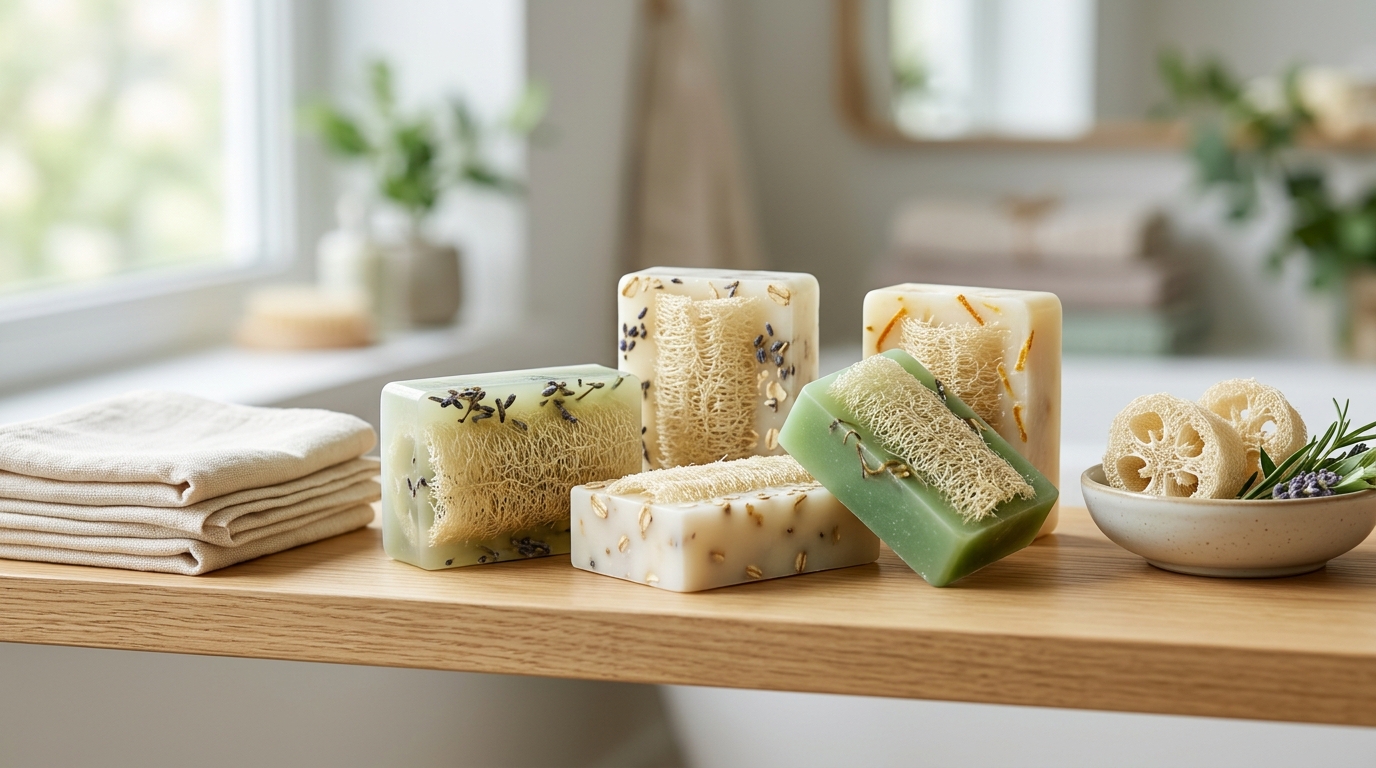
Dry skin, rough elbows, and cluttered shower shelves affect over 70% of households daily. Balancing manual exfoliation with adequate skin hydration usually means juggling plastic bath poufs, messy body scrubs, and dripping soap dishes. Replacing these separate products with a single loofah soap bar streamlines your personal care regimen, cuts down on bathroom plastic waste, and delivers immediate skin-smoothing benefits.
The unique mechanics of embedded plant-fiber soaps explain their rising popularity in sustainable personal care. By encasing a slice of natural gourd sponge inside a nourishing cold-process or melt-and-pour soap base, these bars allow you to wash and scrub simultaneously. As you lather up under warm water, the outer soap layer gently melts away to reveal the fibrous network of the natural sponge, creating a continuous, self-dispensing exfoliation method that adapts to your skin’s friction needs.
What Is a Loofah Soap Bar and How Does It Work?
A natural loofah soap bar combines two distinct bath essentials into one solid format: a physical skin exfoliant and an oil-rich cleansing bar. To understand how these bars function, it helps to know
During manufacturing, producers pour warm liquid soap over pre-cut slices of cured plant fiber. As the soap cools and hardens around the porous matrix, it creates a unified bar that exposes fresh fibrous texture with every wash.
The physical structure of the dried plant mesh features interconnected cellulose fibers. When soaked in warm water during a shower, these natural fibers soften slightly while retaining enough structural rigidity to lift dead epidermal cells. At the same time, the surrounding soap dissolves into a rich lather, lubricating the skin surface to prevent irritation during scrubbing.
Unlike traditional bar soap that slides smoothly over the skin, loofah soap provides targeted friction. As you massage the bar over rough areas like knees, heels, and elbows, the plant matrix sweeps away flaking skin while distributing moisturizing coconut oil, shea butter, or glycerin directly into fresh skin layers.
Why Choose Embedded Loofah Soap Over Plastic Poufs?
Swapping synthetic bath sponges for a loofah soap bar offers immediate ecological and hygiene advantages. Standard plastic poufs are manufactured from polyethylene mesh, which sheds microplastics directly into municipal water systems during every shower. These plastic fibers never biodegrade and eventually contaminate aquatic ecosystems.
Hygiene concerns also make plastic mesh a poor long-term choice for skin health. According to dermatological research published by the
Natural fibrous gourd matrix embedded inside a solid soap matrix avoids this issue. The antimicrobial nature of soapy environments reduces bacterial buildup, and the open vascular channels of the natural plant material allow the bar to dry out much faster between uses when placed on a slatted soap dish.
+------------------------+-------------------------------+-------------------------------+
| Feature                | Natural Loofah Soap Bar       | Synthetic Plastic Mesh Pouf   |
+------------------------+-------------------------------+-------------------------------+
| Material Source        | Dried *Luffa* Gourd Fiber     | Polyethylene Plastic Mesh     |
| Biodegradability       | 100% Home Compostable         | Non-biodegradable Landfill    |
| Bacterial Risk         | Low (Dries quickly in soap)   | High (Traps moisture in core) |
| Microplastic Shedding  | Zero Microplastics            | High Microplastic Release     |
| Average Lifespan       | 4–6 Weeks (Self-consuming)    | Requires Replacement biweekly |
+------------------------+-------------------------------+-------------------------------+
The dual-action structure also eliminates shower clutter. Instead of purchasing body wash bottles, plastic exfoliators, and separate moisturizers, a single plant-based soap bar handles skin prep, washing, and softening.
What Are the Main Benefits of Using Loofah Soap?
Regular use of loofah soap transforms dull, uneven skin texture by combining mechanical exfoliation with surface conditioning. The gentle friction of natural fibers removes stratum corneum build-up, allowing fresh epidermal layers to reflect light evenly and absorb post-shower moisturizers more effectively.
Increased microcirculation represents another primary benefit. Massaging the limbs in circular motions toward the heart stimulates capillary blood flow near the skin surface, promoting temporary flushing and improved nutrient delivery to cutaneous tissue. You can read more about how plant fibers support skin health through
Natural plant fiber soap also targets specific skin concerns:
-
Prevents ingrown hairs by removing dead skin cap layers prior to shaving or waxing.
-
Smooths rough keratosis pilaris bumps on the backs of upper arms and thighs.
-
Preps the body for even application of sunless tanners without streakiness.
-
Softens thick callus formation on soles, heels, and palms.
Because the plant matrix sits directly inside the soap core, the exfoliation intensity remains consistent throughout the entire lifespan of the bar.
How Is Natural Loofah Plant Fiber Harvested and Processed?
The fibrous interior of loofah soap starts in agricultural fields rather than ocean beds. The source is the mature fruit of Luffa aegyptiaca (smooth loofah) or Luffa acutangula (angled loofah), tropical and subtropical vining plants related to cucumbers and pumpkins. Learn more about the taxonomy and botany of the genus on
As the gourds mature on the vine over 120 to 150 days, the green outer skin turns brown, dry, and papery while the internal moisture evaporates. Workers harvest the fully dried gourds, peel away the brittle outer rind, and shake out the internal seeds.
[Matured Brown Gourd] ➔ [Peel Outer Skin] ➔ [Deseed Interior] ➔ [Washing & Sun Drying] ➔ [Slice & Soap Casting]
The revealed fibrous skeleton is thoroughly washed with clean water to clear away remaining sap and plant residue before undergoing sun-drying. These tough vascular bundles are primarily composed of cellulose, hemicellulose, and lignin, creating a resilient structure capable of enduring high humidity without immediate degradation.
Once fully dried, manufacturers cut the fibrous cylinders into cross-sectional rings or length-wise strips. These natural plant rings are set inside molds where molten liquid soap is poured over them, locking the plant geometry inside each individual bar.
What Ingredients Should You Look For in Quality Soap Bars?
Not all soap bases provide equal skin benefits when combined with physical plant exfoliators. Because physical scrubbing opens pores and removes surface oils, pairing natural fibers with harsh synthetic detergents like sodium lauryl sulfate (SLS) can cause inflammation and dryness.
Look for cold-process or melt-and-pour bases rich in natural humectants and emollients:
-
Vegetable Glycerin: Draws ambient moisture directly into newly exfoliated skin.
-
Shea and Cocoa Butters: Replenish fatty acids and rebuild the lipid barrier after scrubbing.
-
Coconut Oil: Creates a rich, creamy lather while providing mild antimicrobial properties.
-
Essential Oils: Lavender, eucalyptus, peppermint, or tea tree oil offer natural fragrance without synthetic phthalates.
Avoid bars listing parabens, artificial dyes, or petroleum-based mineral oils. High-grade artisan bars keep ingredients minimal, allowing the natural plant fiber and cold-pressed oils to perform without skin irritation.
How Do You Proper Use and Maintain a Loofah Soap Bar?
Maximizing the lifespan of your soap bar requires a simple lather technique and appropriate post-shower storage. Using too much pressure or leaving the bar directly under running water dissolves the soap core prematurely.
Follow these simple steps for effective daily use:
-
Wet your skin thoroughly with warm water to soften the outer skin layers.
-
Wet the soap bar under running water for 5 seconds to soften the exposed outer plant fibers.
-
Apply the bar directly to your skin using gentle, circular motions, focusing on rough zones like knees and feet.
-
Reduce pressure when moving over delicate areas like the chest or inner arms.
-
Rinse your body completely with warm water to remove sloughed skin cells and soap residue.
-
Pat skin dry with a clean towel and apply a lightweight body cream while skin remains damp.
Proper storage between uses is essential. Store your loofah soap on a self-draining wooden or silicone soap dish outside the direct splash stream of your shower head. Keeping the bar elevated allows air to circulate underneath, preventing the base from melting into a soft paste and letting the plant matrix dry completely.
Can You Make DIY Loofah Soap Bars at Home?
Crafting custom plant fiber soap at home is a straightforward project that allows you to control all ingredients, fragrances, and exfoliation shapes. Using a clear glycerin melt-and-pour soap base offers the easiest starting point for beginners.
To make a batch of six custom bars, assemble the following materials:
-
1 lb (450g) clear or white melt-and-pour glycerin soap base
-
1 natural dried loofah gourd (cut into 1-inch thick slices)
-
15–20 drops of skin-safe essential oil (such as sweet orange or peppermint)
-
1 tablespoon of moisturizing carrier oil (jojoba, sweet almond, or rosehip oil)
-
Silicone cylindrical or round soap molds
-
70% isopropyl alcohol in a spray bottle
1. Cut gourd into 1-inch slices ➔ 2. Melt soap base at low heat (135°F)
│
4. Pour liquid soap over slices 3. Stir in essential & carrier oils
│
5. Spray top with isopropyl alcohol ➔ 6. Cool for 2 hours & unmold
Place one dried plant slice flat inside each silicone mold cavity. Melt the glycerin soap base in a heat-safe glass bowl using 30-second microwave intervals or a double boiler until fully liquid (around 135°F / 57°C). Stir in your chosen carrier oils and essential oils gently to avoid creating excess air bubbles.
Pour the warm liquid soap slowly over the center of each slice, allowing the fluid to completely fill the open mesh spaces. Lightly mist the freshly poured surface with isopropyl alcohol to pop any surface air bubbles. Allow the bars to cool undisturbed at room temperature for 2 hours before popping them out of the silicone molds for immediate use.
How Does Plant Fiber Technology Impact Future Sustainable Materials?
The unique micro-architecture of dried plant gourds extends far beyond bathroom exfoliation. Environmental researchers and materials scientists actively study the structural properties of loofah sponge fibers for industrial and ecological applications.
According to a 2026 study reported by
+------------------------------------+----------------------------------------------------+
| Application Area                   | Industrial Mechanism                               |
+------------------------------------+----------------------------------------------------+
| Atmospheric Water Harvesting       | Capillary condensation within porous micro-tubes   |
| Eco-Friendly Packaging             | Shock-absorbing lignin cellular lattice            |
| Wastewater Heavy Metal Filtration  | High surface-area cellulose binding sites          |
| Biomedical Tissue Engineering      | Biocompatible 3D scaffolds for cellular growth     |
+------------------------------------+----------------------------------------------------+
This high natural absorption and open-cell structure make the loofah plant an ideal candidate for biodegradable packaging, oil-water separation filters, and eco-friendly soundproofing panels. By choosing plant-based bathroom products, consumers support expanded agricultural cultivation of renewable plant materials that displace petroleum-based synthetic foams.
Frequently Asked Questions
Can you use a loofah soap bar on your face?
You should avoid using a loofah soap bar on facial skin. The facial epidermis is significantly thinner and more sensitive than body skin, making the coarse plant fibers too abrasive. Stick to using these exfoliating bars from the neck down, particularly on arms, legs, back, and feet.
How long does a loofah soap bar typically last?
An average 4-ounce loofah soap bar lasts between 3 to 5 weeks with daily shower use. The exact lifespan depends on shower water temperature, pressure applied during scrubbing, and whether the bar is kept on a proper self-draining soap dish between uses.
Is loofah soap safe for daily exfoliation?
Daily use depends on your skin type. Those with normal to oily skin can use loofah soap daily on rougher areas like feet and elbows. However, individuals with sensitive, dry, or eczema-prone skin should limit physical exfoliation to 2 or 3 times per week to avoid disrupting the cutaneous moisture barrier.
Will the loofah fiber decompose after the soap melts away?
Yes, the natural gourd fiber matrix is 100% organic plant matter. Once the surrounding soap dissolves completely, any remaining fibrous stub can be tossed directly into your home compost bin or buried in garden soil, where it breaks down naturally within a few weeks.
How do you keep loofah soap from getting soggy?
To prevent your bar from dissolving prematurely, store it on a slatted wooden, bamboo, or wire soap holder elevated away from standing water. Ensure the soap dish sits outside the direct stream of the shower head so the open fibers dry out thoroughly between shower sessions.
Finding the Best Loofah Soap for Your Daily Routine
Adding a loofah soap bar to your body care setup simplifies shower steps while eliminating plastic waste and synthetic bath tools. By selecting a bar crafted with moisturizing glycerin or vegetable butter bases, you ensure every scrub leaves your skin clean, smooth, and well-hydrated.
Start by introducing an exfoliating bar into your shower routine 2 to 3 times a week, focusing on dry zones like knees, heels, and elbows. Pair your new bar with an elevated, self-draining soap dish to preserve its integrity and maximize usage. Making this simple switch delivers better skin texture while moving your daily home habits toward a zero-waste, plant-based lifestyle.