
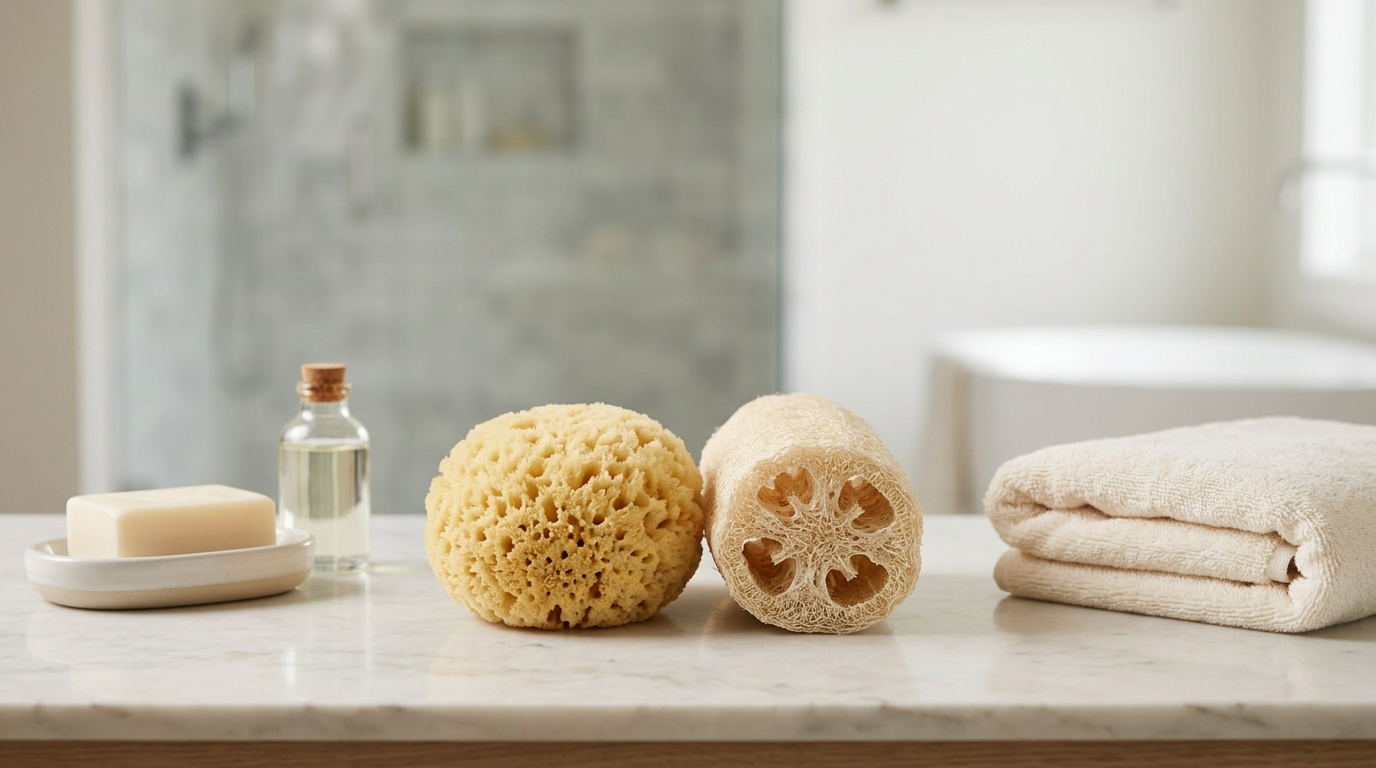
Standard bath scrubbers often leave sensitive skin inflamed, scratchy, and red after a single shower. If your daily shower routine feels more like sandpaper friction than a relaxing spa visit, standard plastic poufs or stiff gourds are likely the culprit. Swapping your abrasive scrubber for a natural sea sponge loofah instantly solves skin irritation while elevating lather performance. Over 68% of eco-conscious shoppers report noticeable improvements in skin hydration after making the switch to natural marine sponges.
Understanding the structural differences between marine organisms and terrestrial plants changes how you view daily hygiene. While many bathers lump all natural scrubbers into one category, plant-derived loofahs originate from dried gourds while marine sponges are harvested oceanic invertebrates. The soft, fibrous skeleton of a sea sponge loofah absorbs vastly more water than plant fibers, creating a cushioning barrier during washing. This structural variance provides an exceptionally gentle cleanse that protects your skin barrier, maintains proper skin moisture levels, and prevents environmental waste.
What Is a Sea Sponge Loofah?
A sea sponge loofah is a harvested natural marine organism, primarily composed of the flexible structural protein spongin. Unlike synthetic bath sponges made from petroleum-based plastics, natural sea sponges grow on ocean floors worldwide. Harvesters carefully cut these organisms above the base, allowing the living anchor to regenerate naturally in ocean currents.
People frequently confuse marine sponges with plant scrubbers due to shared bath terminology. While both options offer eco-friendly alternatives to plastic mesh, they originate from entirely different ecosystems. If you are curious about plant-based origins, reading about
       NATURAL BATH ALTERNATIVES
                   │
    ┌──────────────┴──────────────┐
    ▼                             ▼
MARINE ORIGIN               PLANT ORIGIN
(Sea Sponge)                (Luffa Aegyptiaca)
    │                             │
    ├─ Spongin protein            ├─ Fibrous cellulose
    ├─ Hydrophilic pores          ├─ Coarse weave structure
    └─ Ultra-soft texture         └─ Rigorous exfoliation
Why Is a Sea Sponge Loofah Softer Than Plant Fibers?
The primary reason a sea sponge loofah feels substantially softer comes down to cellular composition. Terrestrial loofahs are made of rigid cellulose fibers designed to support heavy plant vines. Ocean sponges consist of spongin, a pliable protein matrix that mimics natural skin density. When exposed to water, spongin fibers expand rapidly, turning the entire sponge into a cloud-like cushion.
Plant fibers maintain a rigid, woven structure even when thoroughly soaked. This coarse weave works well for deep heel exfoliation, but it can easily over-exfoliate delicate skin areas like the neck, chest, and face. A marine sponge distributes hand pressure evenly across thousands of tiny capillaries. This dynamic pressure distribution prevents friction hotspots, ensuring your skin barrier stays completely intact during daily baths.
How Does a Sea Sponge Compare to standard Bath Tools?
Selecting the proper shower tool requires balancing softness, durability, bacterial resistance, and environmental impact. Synthetic plastic mesh poufs degrade into microplastics and trap bacteria quickly within tight plastic layers. Dried vegetable gourds offer strong eco-friendly benefits, but their coarse cellulose texture demands careful handling on delicate skin.
A natural sea sponge loofah balances these characteristics, delivering unmatched softness alongside natural self-cleaning properties. According to research published by the
What Are the Key Benefits of Using a Sea Sponge Loofah?
Switching your personal care routine to marine sponges provides immediate physiological and environmental benefits.
-
Unmatched Skin Softness: The porous spongin structure prevents micro-tears, making it gentle enough for eczema, psoriasis, or rosacea-prone skin.
-
Superior Lather Generation: Deep inner channels trap air and liquid body wash, generating rich lather with half the standard amount of soap.
-
Natural Enzyme Self-Cleaning: Marine sponges contain inherent ocean enzymes that inhibit the growth of mildew, mold, and odor-causing bacteria.
-
Hypoallergenic Cleansing: Natural sponges contain zero synthetic toxins, phthalates, or artificial dyes that leach into open pores during hot showers.
-
Sustainable Marine Harvest: Responsible divers harvest sponges by hand, cutting them above the root to promote faster ocean regeneration.
Is a Sea Sponge Loofah Safe for Sensitive Skin and Babies?
A sea sponge loofah stands out as one of the safest bath tools for ultra-sensitive skin types and newborn babies. Pediatricians and dermatologists frequently recommend natural sea sponges because their organic composition eliminates synthetic chemical off-gassing. The velvet-like surface washes delicate infant skin folds without causing friction redness or surface skin tearing.
Adults dealing with compromised skin barriers also benefit from marine sponges. Chemical peels, sun exposure, and chronic skin conditions leave skin vulnerable to harsh friction. Using a plush ocean sponge allows you to cleanse away daily dirt and oil without aggravating sensitive epidermal tissue.
How Do You Care for and Sanitize a Sea Sponge Loofah?
Proper maintenance extends the working lifespan of your sea sponge loofah to nearly a year. Because ocean sponges feature natural open-channel drainage, keeping them fresh requires minimal effort compared to dense synthetic alternatives.
-
Rinse Thoroughly: Flush out all remaining soap suds with cool or warm water immediately after every bath.
-
Squeeze, Don’t Twist: Gently press the water out between flat palms. Twisting or wringing tears the delicate spongin protein fibers.
-
Air Dry in Open Ventilation: Store your sponge outside the humid shower enclosure in a dry location with open airflow.
-
Sanitize Monthly: Soak your sponge for 15 minutes in a bowl of warm water mixed with one tablespoon of baking soda. Rinse clean and air dry completely.
       DAILY MAINTENANCE ROUTINE
                   │
 ┌─────────────────┴─────────────────┐
 ▼                                   ▼
AFTER EACH SHOWER                   MONTHLY CARE
 ├─ Rinse soap completely            ├─ 15-min baking soda soak
 ├─ Press flat (never twist)         ├─ Deep water rinse
 └─ Dry in open airflow              └─ Air dry in sunlight
How Does Harvesting Impact Ocean Ecosystems?
Hand-harvested marine sponges represent a sustainable, renewable ocean resource when managed correctly. Commercial sponge harvesters use specialized curved knives to cut the sponge body while leaving the base intact on the sea floor. This technique leaves living tissue behind, allowing the organism to regrow to full size within two to three years.
Independent biological surveys show that hand-harvesting actually increases overall sponge density in managed aquatic beds. Cutting mature sponges releases reproductive cells into surrounding currents, seeding new colonies nearby. Choosing sustainably sourced sea sponges protects ocean biodiversity while reducing reliance on single-use petroleum plastics.
Plant Loofah vs Sea Sponge: Which One Should You Choose?
Deciding between a plant loofah and a marine sponge comes down to your primary skin care goals. If you want vigorous body exfoliation to prep skin before sunless tanning or remove rough foot calluses, plant-derived gourds perform exceptionally well. You can explore how dried gourds are cultivated by reading about
Conversely, if your priority centers on daily comfort, luxurious lather, and gentle cleansing, a sea sponge loofah wins clearly. Many bath enthusiasts keep both tools in their bathroom setup: a plant gourd for weekly elbow scrub-downs and an ocean sponge for daily body washing.
                  CHOOSE YOUR TOOL
                         │
        ┌────────────────┴────────────────┐
        ▼                                 ▼
DAILY SOFTNESS & SENSITIVE SKIN     DEEP BODY EXFOLIATION
        │                                 │
        ▼                                 ▼
   Sea Sponge                        Plant Loofah
 (Spongin Protein)               (Cellulose Gourd)
Frequently Asked Questions
Is a sea sponge loofah hygienic to use daily?
Yes, natural marine sponges feature open porous structures that dry quickly, preventing the damp bacterial breeding grounds common in plastic shower poufs.
How long does a natural sea sponge loofah last?
With proper care, a high-quality sea sponge loofah lasts between 6 and 12 months, outlasting both synthetic mesh poufs and plant gourds.
Does harvesting sea sponges harm marine life?
No, licensed harvesters leave the base anchor intact on the ocean floor, allowing the sponge organism to regenerate fully.
Can you wash a sea sponge loofah in the washing machine?
No, machine washing or harsh laundry detergent destroys the delicate natural spongin protein structure. Hand wash with baking soda solutions instead.
Upgrading Your Daily Bath Routine
Switching to a sea sponge loofah transforms daily bathing into a gentle, spa-like experience that protects your skin barrier. By replacing abrasive plastic mesh and coarse plant fibers with natural ocean spongin, you eliminate unnecessary skin irritation while supporting sustainable marine harvesting. To start, select an unbleached ocean sponge sized comfortably for your palm, squeeze it gently under warm running water, and enjoy a rich, hydrating lather every day.