

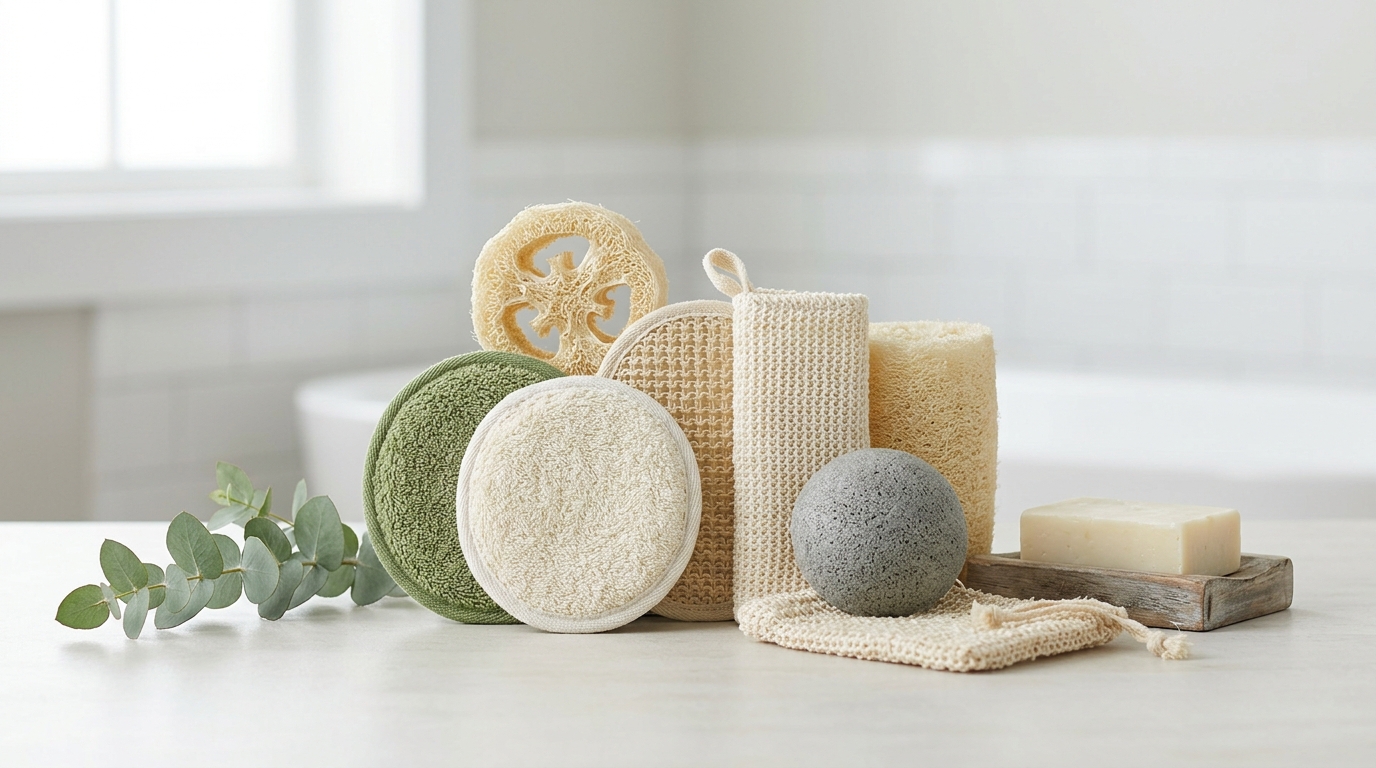
Standard plastic shower poufs trap moisture, harbor dead skin cells, and break down into microplastic waste after 30 days of daily use. You end up purchasing replacement after replacement while worrying about bacteria growth in your humid bathroom. Choosing the right body scrubber transforms your bath routine, protecting your skin barrier while reducing household plastic consumption.
Finding the best loofah option that balances effective exfoliation with proper shower hygiene requires understanding how different materials interact with your skin barrier and bathroom humidity. Natural luffa gourds originate from the fibrous interior of dried Luffa aegyptiaca vines, providing a textured surface that removes dead skin cells and boosts local circulation. In contrast, modern food-grade silicone scrubbers feature non-porous bristles that resist fungal spores, while recycled polyethylene mesh poufs generate rich foam from minimal liquid soap. Research published by the
What Is the Best Loofah Type for Your Skin Care Needs?
Determining the best loofah material for your daily shower requires comparing physical texture, drying speed, and maintenance requirements across four main categories. Each material interacts differently with liquid body washes and solid bar soaps.
Natural Plant Luffa
Derived from dried gourd fibrous skeletons, natural luffa sponges deliver firm exfoliation that opens clogged pores and smoothes rough patches on elbows, knees, and feet. When dry, the fibrous matrix feels rigid, but soaking the gourd in warm shower water softens the fibers into a flexible scrubber. Because plant luffas are completely organic, you can compost them at the end of their usable life.
Food-Grade Silicone Scrubbers
Silicone shower scrubbers feature hundreds of soft, flexible bristles built from non-porous materials that refuse to harbor bacterial colonies. They dry almost instantly when hung by their hanging loops, making them the most hygienic option for humid bathrooms. While silicone does not create as dense a lather as synthetic mesh, it provides a gentle daily massage suitable for sensitive skin types.
Recycled Polyethylene Mesh Poufs
Plastic mesh poufs, often constructed from recycled post-consumer polyethylene, excel at generating thick lather from a tiny drop of shower gel. The gathered mesh folds trap air and soap, producing rich foam instantly. However, the tight inner folds trap moisture and shed microplastics during water rinsing, requiring replacement every four weeks.
Natural Sea Sponges
Harvested from ocean floors, natural sea sponges contain inherent antibacterial enzymes and offer high water retention. Their irregular porous structure yields a soft, velvety texture that cleanses delicate skin without mechanical irritation. Sea sponges require gentle rinsing and careful air drying to preserve their delicate collagen structures over time.
How Do Natural Plant Loofahs Compare to Synthetic Shower Poufs?
When searching for the best loofah for sustainable home care, comparing natural plant fibers against synthetic plastic mesh helps clarify performance differences. Natural gourds offer distinct ecological and physiological advantages over petroleum-derived shower accessories.
Botanically speaking, the natural luffa stems from tropical climbing vines within the Cucurbitaceae family, as explained in the
Synthetic mesh poufs rely on extruded polyethylene strands tied together with a center cord. Over time, friction against skin causes microplastic shedding that enters wastewater streams. In contrast, natural luffa fibers break down completely in home compost bins, returning nutrients to the soil without leaving chemical residues behind.
From an exfoliation standpoint, natural luffa fibers feature an intricate lattice structure that physically lifts dead keratinized cells without dragging across healthy tissue. Synthetic mesh relies on plastic edges that can create microscopic skin abrasions if pressed too hard against delicate areas. Switching to plant fibers protects your skin natural lipid mantle while maintaining proper surface cell turnover.
Top 7 Best Loofah Choices for Daily Shower Exfoliation
Selecting the best loofah product requires examining structural build, handle comfort, lather production, and ease of drying. The following seven options represent top-performing choices across distinct shower preference categories.
1. Whole Organic Egyptian Luffa Segment
Whole Egyptian luffa segments represent the gold standard for natural body exfoliation. The dense, thick fibers swell rapidly upon contact with warm water, turning into a bouncy, contoured sponge that hugs body angles.
These unprocessed gourds offer excellent durability compared to Asian varieties, retaining structural springiness through dozens of showers. Users seeking plastic-free bathroom swaps find whole Egyptian luffa segments easy to slice into smaller handheld pads for targeted scrubbing.
2. Dual-Sided Silicone Body Scrubber
Dual-sided silicone scrubbers combine long, flexible bristles on one side with short massage nodes on the reverse face. The fine bristles lather liquid body soap efficiently while massaging underlying muscles.
Because silicone is non-porous, water rolls off the surface instantly after rinsing. This rapid drying capability stops mold growth completely, allowing a single silicone scrubber to last up to a full year with minimal maintenance.
3. Flat Natural Luffa Pad with Terry Cloth Backing
Flat luffa pads attach an oval slice of natural luffa fiber to an organic terry cloth backing with an elastic hand strap. This design solves the common problem of slippery sponges escaping wet hands during showers.
The flat surface delivers consistent, even pressure across broad areas like arms, legs, and shoulders. The soft terry cloth side provides a gentle washing surface for sensitive chest and neck areas.
4. Recycled Mesh Shower Pouf
Constructed from post-consumer recycled plastic netting, recycled mesh poufs deliver luxury lather using minimal soap. The tight knot construction prevents unraveling under daily use.
These poufs feature extra-wide hanging ribbons that promote airflow through the core. While still requiring replacement every month, choosing recycled mesh reduces virgin plastic demand.
5. Long-Handled Natural Luffa Back Scrubber
Long-handled back scrubbers attach a firm luffa pad to an ergonomic wooden or bamboo wand. This extension allows you to cleanse hard-to-reach areas between your shoulder blades without straining.
The luffa head typically features a detachable Velcro or loop fitting, making it simple to remove the sponge pad for deep sanitization or replacement while keeping the wooden handle intact.
6. Unbleached Natural Sea Sponge
Unbleached natural sea sponges provide a luxurious, silky lather for individuals with sensitive skin, eczema, or dry patches. These organic sponges absorb large volumes of water and release fine bubbles when squeezed.
Their natural enzymatic composition resists odor development better than synthetic foam sponges. Proper rinsing after each bath keeps sea sponges soft and flexible for several months.
7. West African Net Sponge
West African net sponges consist of a long, open-weave nylon mesh sheet that stretches up to 40 inches. This flexible shape makes back scrubbing fast and thorough.
The open weave prevents soap scum accumulation and allows airflow to dry the netting within minutes. These net sponges last up to two years without degrading or losing their gentle scrubbing power.
How Often Should You Replace Your Shower Loofah?
Determining how frequently to swap out your best loofah depends directly on the structural material, usage frequency, and bathroom ventilation. Continuing to use an outdated sponge compromises skin health by reintroducing trapped bacteria to freshly opened pores.
Natural plant gourds require replacement every three to four weeks. Because luffa fibers are organic plant tissue, constant exposure to warm moisture breaks down cell walls, causing fibers to soften and retain moisture longer. When a plant luffa changes color, feels slimy, or develops a musty scent, compost it immediately.
Synthetic mesh poufs should be replaced every four weeks. Although plastic does not biodegrade, the dense interior core traps dead skin flakes, soap residue, and water droplets that create ideal breeding conditions for mold. Silicone scrubbers represent the most durable option, lasting six to twelve months before bristling wear requires replacement.
How Can You Keep Your Bath Loofah Free from Bacteria?
Maintaining hygiene for your best loofah choice requires a consistent cleaning routine that stops microbial colonization before it starts. Bathrooms maintain high humidity levels that encourage fungal and bacterial growth inside moist sponge pockets.
Start by rinsing your scrubber thoroughly under hot running water after every shower. Squeeze out all excess moisture completely; never wring natural plant luffas forcefully, as twisting tears the internal cellulose structural strands. Shake silicone or mesh scrubbers vigorously to dislodge lingering water droplets.
Hang your scrubber in a dry, ventilated area outside the shower enclosure. Bath curtains and damp tiled stalls trap steam, preventing sponges from drying between uses. Hooking your loofah near an open window or an exhaust fan drastically reduces bacterial reproduction rates.
Perform a weekly deep cleaning soak to sanitize internal fibers. Submerge natural plant luffas or sea sponges in a solution of 10% white vinegar and 90% warm water for ten minutes, then rinse thoroughly. Alternatively, a brief thirty-second soak in diluted hydrogen peroxide kills trapped spores without damaging natural plant matrices, as demonstrated in
What Are the Best Loofah Alternatives for Sensitive Skin?
If standard exfoliation causes redness, discomfort, or irritation, finding the best loofah alternative ensures gentle cleansing without damaging your skin’s protective barrier. Individuals with eczema, rosacea, or active acne require non-abrasive options.
Organic cotton washcloths provide an ultra-soft alternative that offers full washing control. You can toss cotton washcloths directly into the laundry after a single use, eliminating bacterial accumulation risks entirely. Soft muslin weave cloths gently lift surface oils without disrupting delicate facial or body skin.
Konjac body sponges, made from the root of the Amorphophallus konjac plant, offer another outstanding gentle alternative. When soaked in water, konjac sponges swell into a cushiony, jelly-like texture that balances skin pH while removing impurities. These sponges suit sensitive skin types requiring soothing daily hygiene.
Ultra-soft silicone massagers featuring rounded nubs provide thorough cleansing without mechanical friction. The smooth silicone nodes glide over inflamed skin without scratching, making them an ideal pick for post-sun exposure or reactive skin conditions.
Essential Buyer Checklist for Choosing a Quality Body Scrubber
When selecting the best loofah product for your household, reviewing key construction details prevents purchasing low-quality scrubbers that unravel or harbor mold quickly. Use this five-point evaluation checklist before finalizing your choice.
-
Verify Material Sourcing: Look for 100% natural Egyptian or Asian luffa gourds without chemical bleaches or artificial dyes. Unbleached fibers maintain natural tan tones and superior structural integrity.
-
Inspect Stitching and Straps: Check that hanging loops and elastic hand straps feature reinforced double-stitching. Weak attachment cords break quickly under wet weight.
-
Assess Pore Density: Select natural luffas with dense, uniform fiber grids. Loose, airy fibers collapse rapidly when wet, shortening overall usable lifespan.
-
Evaluate Drying Mechanism: Ensure the product includes a durable hanging loop or suction hook attachment. Fast air drying remains the single most important factor in preventing mold growth.
-
Consider End-of-Life Disposal: Choose fully compostable plant fibers or long-lasting silicone to minimize household landfill contributions.
To clarify questions before purchasing, check our guide on
Frequently Asked Questions
How long does a natural plant loofah last before replacement?
A natural plant loofah lasts between three and four weeks under daily shower conditions. Replacing the gourd regularly prevents trapped moisture from encouraging bacterial growth within the organic fiber channels.
Can you wash a loofah in the washing machine?
You can clean natural plant luffas and West African net sponges in a washing machine on a gentle, cool water cycle. Place the loofah inside a mesh laundry bag and air dry thoroughly afterward without using high heat in a tumble dryer.
Is a natural loofah safe for facial skin?
Natural plant loofahs are generally too coarse for delicate facial skin, where aggressive friction can cause micro-tears. Reserve plant luffas for body exfoliation on arms, legs, and feet, using soft konjac sponges or cotton cloths for your face.
What is the difference between loofah and luffa?
Loofah and luffa refer to the exact same tropical gourd plant and bath accessory. Luffa represents the botanical Latin genus spelling, while loofah is the common everyday spelling used in consumer products.
Final Verdict on Selecting Your Body Scrubber
Selecting the best loofah for your daily bathing routine comes down to balancing skin exfoliation needs with hygienic maintenance habits. Natural plant luffas supply unbeatable, eco-friendly exfoliation that leaves skin smooth while composting cleanly at the end of its month-long lifespan. If maximum sanitation and zero maintenance top your priority list, food-grade silicone scrubbers offer a long-lasting alternative that resists mold growth indefinitely. Recycled mesh poufs remain a budget-friendly option for creating rich lather, provided you replace them every four weeks to maintain hygiene standards. Start by assessing your skin sensitivity, pick the material that aligns with your shower routine, and establish a consistent drying habit to enjoy healthier, glowing skin every day.