

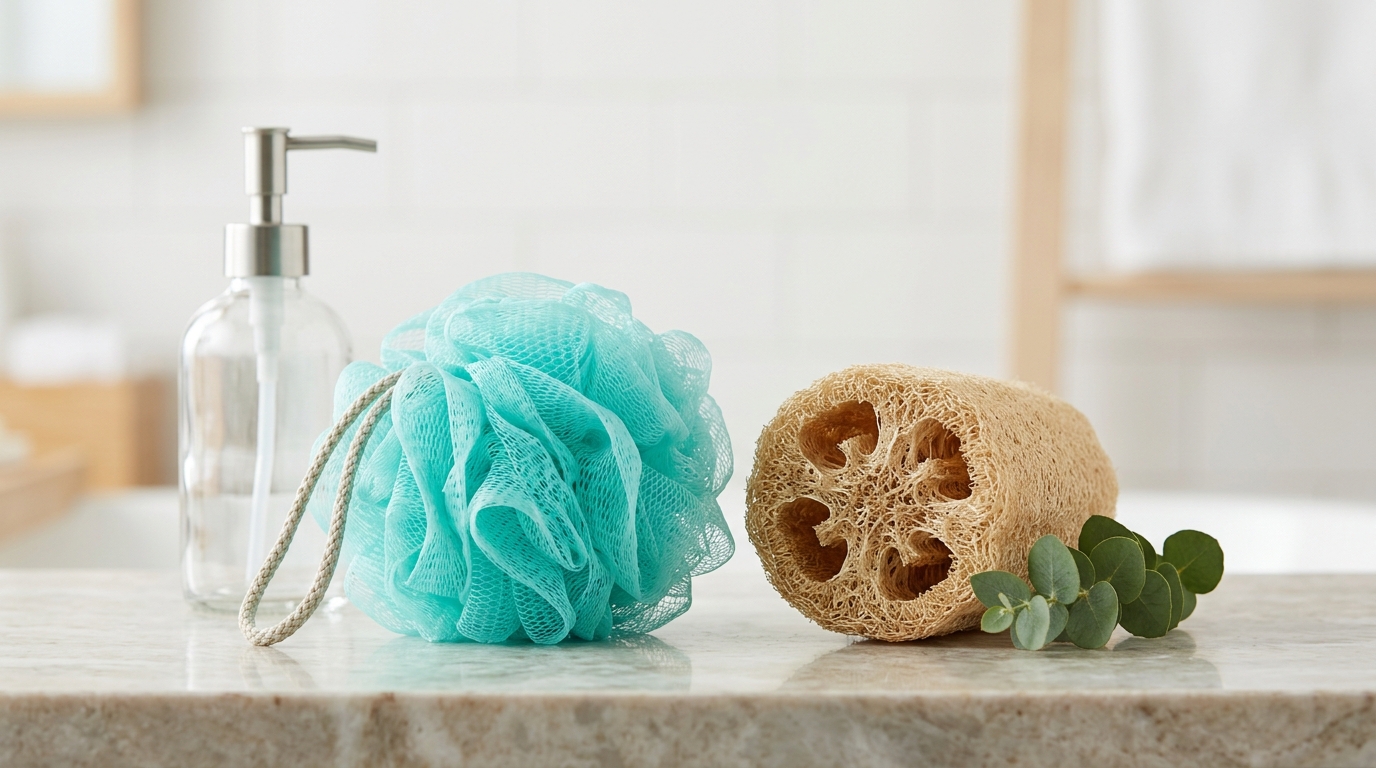
Your daily shower ritual should leave you feeling refreshed and clean, yet using a synthetic plastic loofah might be doing the exact opposite. Swapping out a damp mesh pouf for an organic alternative can feel confusing when every store aisle stocks cheap synthetic options.
Synthetic mesh shower poufs account for millions of pounds of non-recyclable bathroom waste each year while harboring trapped skin cells in their dense netting. Understanding how a synthetic mesh sponge compares to an organic dried gourd option helps you protect your skin barrier and reduce plastic waste.
What Is a Plastic Loofah Made Of?
A standard plastic loofah consists of extruded polyethylene or polypropylene strands gathered tightly into a dense mesh ball. Manufacturers heat petroleum-based polymers, pull them into thin plastic threads, and ruffle them into a clustered pouf designed to generate quick soap lather.
Because these synthetic materials do not absorb water, they hold soap on their surface, creating a immediate foaming action with minimal liquid body wash. However, polyethylene netting degrades over time, fraying into tiny fragments that wash directly down your bathroom drain.
Unlike natural plant materials, synthetic plastic mesh never breaks down in municipal water systems or municipal landfills. When you toss an old mesh bath pouf into the trash, that petroleum product remains intact for hundreds of years.
How Does a Natural Sponge Compare to Synthetic Mesh?
Natural sponges come from dried fibrous fruit, while synthetic versions rely on petroleum-derived polymers. Understanding what a
The natural luffa belongs to the Cucurbitaceae family, growing as a tropical gourd that forms an intricate network of cellulose fibers once harvested and dried. These plant fibers soften upon contact with warm water, creating an abrasive yet gentle texture that manually lifts dead skin cells without scraping healthy tissue.
Synthetic poufs rely on smooth, non-porous plastic edges that scrub skin purely through mechanical friction. While a plastic mesh bath tool lathers quickly, it lacks the porous structural matrix that allows plant fibers to gently lift debris while rinsing clean.
Is Your Plastic Loofah Harboring Bacteria?
The dense, moist layers of a synthetic mesh pouf create an ideal breeding ground for household bacteria, fungal spores, and mold. Every time you scrub, dead skin cells become trapped inside the inner core of the plastic netting, providing nutrients for microbial colonies.
According to research published by the
When you use a contaminated mesh sponge over recently shaved skin or minor cuts, you risk transferring trapped bacteria back into open pores. Dermatologists frequently treat folliculitis and localized skin infections caused by old bath accessories.
To minimize bacterial risks with any shower accessory, follow these sanitation habits:
-
Rinse all soap suds out thoroughly after every shower session.
-
Shake off excess water and hang the loofah outside the humid shower enclosure.
-
Wash natural sponges weekly in a mild bleach solution or boil them for two minutes.
-
Replace synthetic mesh poufs every month and natural sponges every 3 to 4 weeks.
How Do Microplastics from Bath Poufs Impact the Environment?
Every time you rub a synthetic plastic loofah across your body, mechanical friction tears off tiny plastic fragments measuring less than 5 millimeters in length. These microplastics wash straight down your bathroom drain and enter local municipal wastewater streams.
Standard wastewater filtration facilities cannot capture fine synthetic fibers, allowing microplastics to enter rivers, lakes, and oceans. Marine organisms mistake these microscopic particles for food, leading to bioaccumulation throughout the aquatic food chain.
Recent research highlighted by
Which Option Costs Less Over Time?
A synthetic plastic loofah appears cheaper at the store register, usually selling for $1 to $3 per pouf. However, evaluating long-term costs requires examining replacement frequency, health impacts, and environmental disposal costs.
Because synthetic poufs accumulate bacteria rapidly, dermatologists recommend replacing them every 4 weeks. Buying 12 synthetic poufs annually costs approximately $12 to $36 per person, creating a steady stream of plastic trash.
Organic gourds often cost $4 to $8 each, though buying in bulk or growing your own reduces costs significantly. If you want to eliminate recurring costs entirely, learning about
How to Transition to a Natural Plant-Based Loofah?
Switching from a synthetic pouf to an organic plant sponge requires a small adjustment in your daily hygiene routine. Raw luffa fibers feel firm when completely dry, but they soften instantly when soaked in warm water.
Follow these practical steps to get the best results from a natural plant sponge:
-
Submerge the dry plant gourd in warm shower water for 60 seconds to allow the natural cellulose fibers to swell and soften.
-
Apply a small quantity of liquid soap or rub a bar of soap directly across the textured plant surface.
-
Massage your skin in gentle circular motions, avoiding sensitive facial skin or open wounds.
-
Rinse the gourd thoroughly under running water to clear away all soap residue and trapped skin debris.
-
Hang the sponge in a dry, well-ventilated room outside the shower stall to ensure it air-dries completely.
Understanding
Frequently Asked Questions
Why do dermatologists recommend replacing plastic loofahs so often?
Dermatologists advise replacing synthetic mesh poufs every 3 to 4 weeks because the tight inner netting traps dead skin cells, moisture, and soap residue. This warm environment breeds harmful bacteria that cause skin irritation, acne, and hair follicle infections.
Can you wash a plastic loofah in the laundry machine?
Washing a synthetic mesh pouf in a washing machine often melts or shreds the delicate polyethylene netting. The agitation tears the plastic fibers, releasing large amounts of microplastics into wastewater while weakening the structure of the pouf.
Are natural plant loofahs completely compostable?
Yes, genuine organic gourds consist entirely of plant cellulose without synthetic binders or chemical dyes. Once your natural sponge wears out after several weeks of use, you can bury it in your garden or toss it into a home compost bin.
How can you tell if a loofah is real or synthetic?
A natural plant sponge exhibits irregular fibrous patterns, varying tan shades, and visible seed cavities throughout its structure. A synthetic pouf consists of uniform, brightly colored plastic mesh tied together at the center with a nylon cord.
Choosing the Best Option for Your Skin and Home
Choosing between a synthetic plastic loofah and a natural plant sponge comes down to balancing skin health, convenience, and environmental responsibility. While synthetic mesh poufs offer cheap upfront pricing and instant soap lather, they introduce microplastics into waterways and create ideal conditions for bacterial growth in your bathroom. Transitioning to a natural luffa gourd provides superior exfoliation while keeping non-recyclable petroleum products out of local landfills. Start by replacing your current synthetic pouf with an organic plant sponge during your next bathroom refresh, and establish a consistent habit of hanging your sponge in a dry area to keep your daily routine clean and sustainable.