
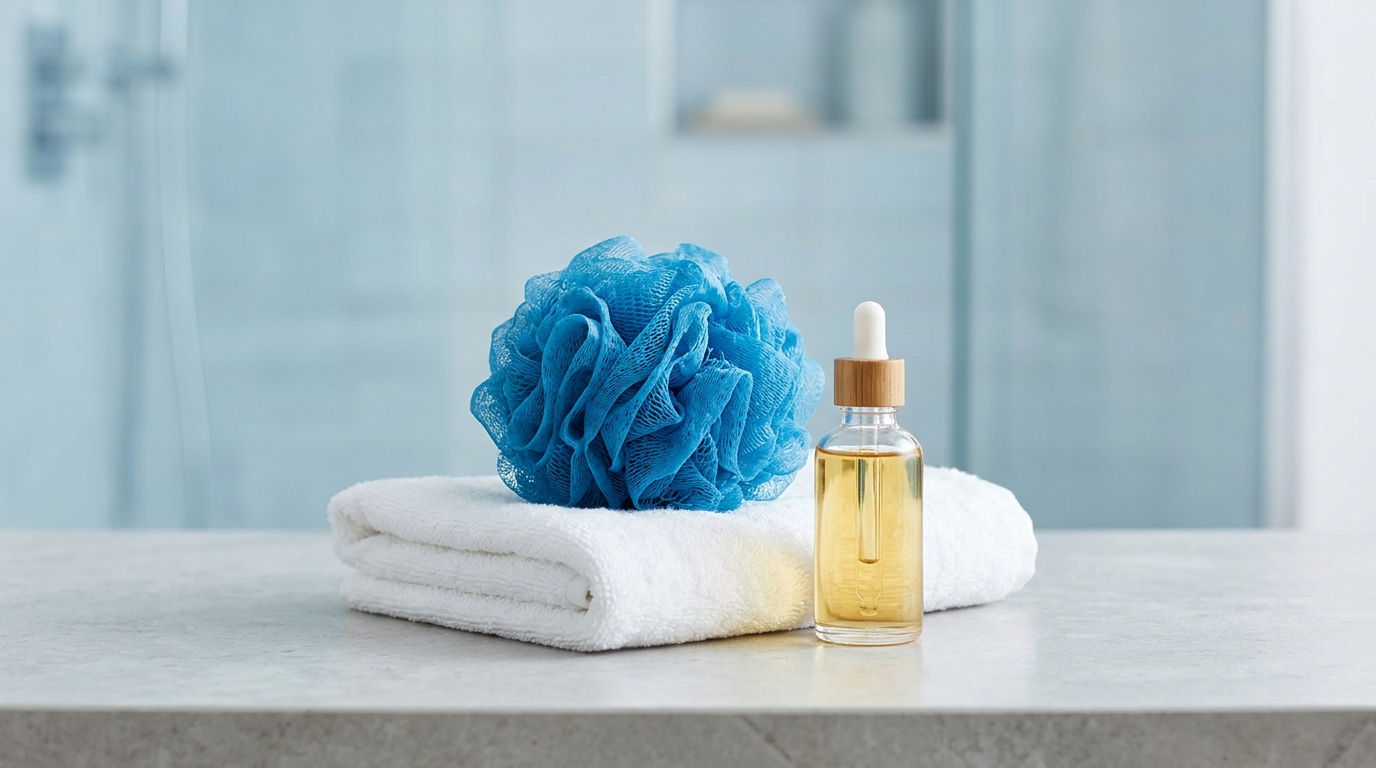
Sharing a bathroom with multiple family members often leads to mixed-up bath accessories and hygiene mishaps. Replacing worn-out shower accessories every 30 days is essential for maintaining skin health, yet confusion over color-coding systems persists. Understanding the true blue loofah meaning helps you organize your bath routine, separate internet myths from daily facts, and select the best exfoliating tools for your skin type.
The choice to use a blue shower pouf comes down to functional organization, aesthetic preference, and product material distinctions. While natural gourds provide traditional exfoliation, synthetic mesh pouphs dominate the retail bath aisle in vibrant shades like ocean blue, teal, and navy. Beyond simple household color-coding to prevent bacterial cross-contamination, rumors circulating across social media platforms have assigned alternative urban legend meanings to different loofah shades. Inspecting the actual origins of color coding reveals practical benefits for skincare, distinct material variations, and clear signals for when your bath tool needs replacement.
What Does a Blue Loofah Mean in Everyday Bath Routines?
In most households, the blue loofah meaning represents a straightforward system for personal organization and hygiene management. Bathrooms shared by partners, siblings, or roommates require distinct markers so individuals do not share intimate bath items. Choosing a specific hue like blue allows one person to claim their designated mesh pouf immediately.
Preventing the spread of skin bacteria remains the primary functional reason families assign distinct colors to each person. According to the
Color selection also plays a therapeutic role in daily self-care routines. Color psychology studies suggest that shades of blue evoke feelings of calmness, serenity, and cleanliness. Consumers frequently choose blue bath accessories because the color aligns naturally with water, aquatic environments, and refreshing morning showers.
What Is the Villages Loofah Color Code Myth?
Internet rumors surrounding loofah colors originated in sprawling retirement communities, most notably The Villages in Florida. Viral social media posts claimed that residents place colorful mesh poufs on their golf cart antennas or car roofs to signal relationship status and private lifestyle preferences.
According to these urban legends, distinct shades correspond to specific social availability tiers. In these viral lists, a dark blue loofah allegedly signals a specific relationship preference or lifestyle interest within the neighborhood. Other shades like yellow, pink, white, and purple were assigned alternative social meanings by online commentators seeking viral engagement.
Local residents and community representatives have repeatedly clarified that these claims are largely exaggerated internet folklore. Most seniors who attach colorful mesh poufs to their golf carts do so for visual identification in massive parking lots. Spotting a bright blue mesh ball on a high antenna makes locating a vehicle among thousands of identical golf carts simple and fast.
What Are the Differences Between Synthetic Mesh and Natural Loofahs?
Understanding the blue loofah meaning requires distinguishing between manufactured plastic poufs and genuine plant-based sponges. Bright blue bathing tools are almost universally synthetic, crafted from woven polyethylene mesh designed to lather liquid body wash efficiently.
Natural loofahs originate from dried fibrous gourds rather than synthetic factories. If you have ever wondered
+------------------------+-----------------------------------+-----------------------------------+
| Feature                | Synthetic Blue Loofah Pouf        | Natural Luffa Gourd Sponge        |
+------------------------+-----------------------------------+-----------------------------------+
| Material Composition   | Polyethylene plastic mesh         | Dried fibrous *Luffa* fruit       |
| Primary Color Source   | Artificial synthetic dyes         | Natural off-white/tan (undyed)    |
| Exfoliation Intensity  | Soft to medium surface scrub      | Firm, deep physical exfoliation   |
| Environmental Impact   | Non-biodegradable microplastics   | 100% compostable and organic      |
| Typical Replacement    | Every 30 to 40 days               | Every 3 to 4 weeks                |
+------------------------+-----------------------------------+-----------------------------------+
Synthetic blue poufs excel at creating rich foam from small amounts of liquid soap, making them popular for quick daily rinses. However, synthetic mesh sheds microplastics into wastewater over time. Choosing between synthetic blue poufs and natural botanical gourds depends on whether your priority is lather generation or eco-friendly exfoliation.
How Do You Choose the Right Loofah Color and Material?
Selecting the ideal bath tool involves balancing skin sensitivity, environmental values, and household organization needs. When shopping for shower accessories, evaluate material performance rather than focusing solely on surface appearance.
Evaluating your physical exfoliation requirements ensures you do not damage your skin barrier. Gentle daily cleanses benefit from soft synthetic mesh, whereas rough areas like elbows and feet require firm plant fibers. If you want to understand the botanical background of plant-based options, reading about
Household Color-Coding Decision Matrix
-
Count the number of individuals sharing the main shower facility.
-
Assign bright primary colors like blue, red, and green to primary household members.
-
Select pastel shades or natural tan gourds for guest bathrooms to prevent mix-ups.
-
Replace all personal poufs on the first day of every month to maintain hygiene standards.
If environmental sustainability is your main priority, opt for unbleached, plant-based sponges. You can research
Why Do Bath Accessories Use Specific Color Coding?
Manufacturers dye bath accessories in vibrant shades to appeal to consumer psychology and support commercial merchandising strategies. Retailers organize bath aisles by color palettes to create visually appealing displays that encourage multiple purchases per household.
Color coding bath tools serves clear practical functions in commercial settings like spas, gyms, and dermatology clinics. Facilities use distinct colored sponges to separate general body cleansing tools from specialized facial exfoliation pads. Assigning blue tools exclusively for body scrubbing prevents misapplication on sensitive skin zones.
Color variations also help consumers distinguish between different product features within the same brand lineup. A light blue pouf might indicate extra-soft mesh designed for sensitive skin, whereas a dark navy version might contain infused charcoal or coarse fibers for deep exfoliation. Reading product packaging clarifies whether shade differences represent functional variations or pure aesthetics.
How Should You Clean and Maintain a Blue Loofah?
Maintaining proper hygiene for bath tools prevents mold, mildew, and bacterial accumulation inside moist mesh folds. Warm, humid shower environments accelerate microbial growth, turning your daily wash accessory into a potential skin hazard.
Proper care requires thorough rinsing and strategic storage after every single use. Squeeze out excess water and hang your blue loofah in a well-ventilated space outside the enclosed shower stall. Allowing air to circulate freely through the mesh reduces moisture buildup and inhibits fungal reproduction.
Essential Weekly Cleaning Sequence
-
Rinse the blue mesh pouf thoroughly with warm running water to remove residual soap scum.
-
Soak the pouf in a diluted solution of one part household hydrogen peroxide and nine parts water for ten minutes.
-
Rinse completely with cold water to remove cleaning residues.
-
Hang the pouf near an open window or fan to dry completely within two hours.
Discard synthetic blue poufs every four weeks without exception. If the mesh unspools, develops a persistent sour odor, or shows visible discoloration, replace it immediately. Continuing to use an aged bathing tool transfers trapped bacteria back onto your clean skin barrier.
What Are the Environmental Alternatives to Plastic Blue Poufs?
Rising awareness regarding marine plastic pollution has led conscious consumers away from synthetic polyethylene poufs. Traditional blue loofahs are non-biodegradable, remaining in landfills for centuries or degrading into microplastics that enter ocean food chains.
Eco-conscious bathers choose natural plant sponges derived from cultivated gourd species. According to the
For bathers who prefer blue aesthetics, sustainable manufacturers now produce plant-based sponges colored with non-toxic vegetable dyes. Blue-dyed agave fiber pads, organic cotton washcloths, and sea sponges offer visual appeal while maintaining low environmental impact. Choosing natural materials ensures your bath routine remains eco-friendly from production to disposal.
Frequently Asked Questions
What does a dark blue loofah mean compared to a light blue one?
A dark blue loofah usually signifies a personal color preference or a specific product line feature like firm mesh or charcoal infusion. Darker shades are also used in shared households to distinguish adult bathing accessories from lighter pastel poufs used by children.
Is the Villages loofah color code real?
The Villages loofah color code is primarily an urban legend amplified by viral social media videos. While some residents use colorful loofahs on golf carts for easy parking lot identification, claims about complex social lifestyle signaling are largely exaggerated internet myths.
How often should you replace a blue loofah?
You should replace a synthetic blue loofah every 30 to 40 days. Plant-based natural loofahs need replacement every three to four weeks because organic fibers harbor bacteria faster when kept in humid shower environments.
Can you dye a natural loofah blue safely?
You can dye a natural loofah blue using non-toxic food coloring or organic plant-based dyes. Avoid commercial chemical dyes that can leach harmful compounds onto your skin during hot, steamy showers.
Why do loofahs grow mold so quickly?
Loofahs grow mold quickly because their dense mesh or fibrous pockets trap moisture, dead skin cells, and soap residue. Stored in warm, damp shower enclosures without airflow, these trapped elements create an ideal breeding ground for fungi and bacteria.
Taking Action for Better Shower Hygiene and Sustainability
Understanding the blue loofah meaning empowers you to separate viral social media rumors from actual daily hygiene benefits. Whether you use a blue mesh pouf to organize a shared family bathroom or rely on its soft texture for daily lathering, keeping bath tools clean remains critical. Check your current shower accessories today for signs of wear, unravelling mesh, or trapped moisture odors.
Transitioning from synthetic plastic mesh to sustainable alternatives protects both your skin barrier and local ecosystems. Explore natural options by learning about optimal