
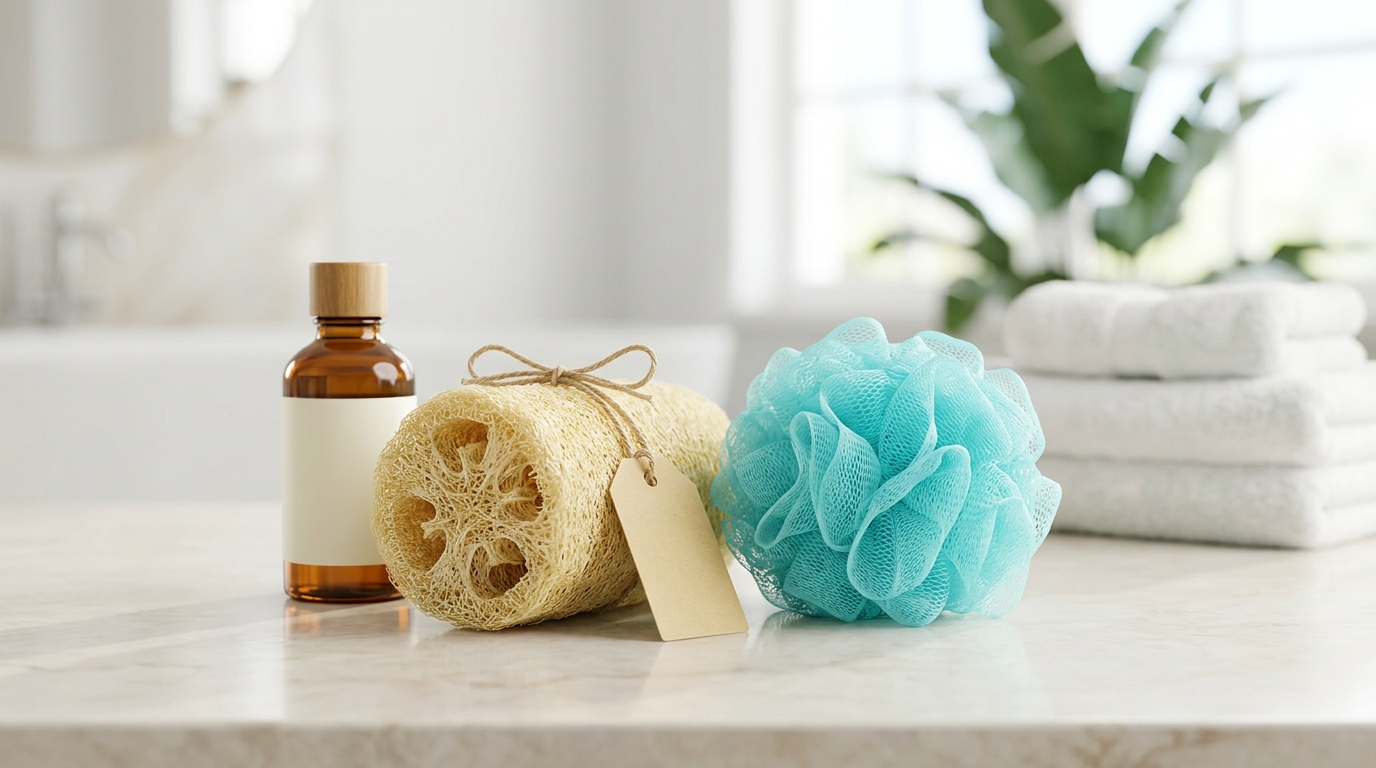
Standard plastic bath mesh poufs degrade within weeks, unraveling into trash while trapping moisture and bacterial buildup in your shower. Upgrading your daily routine to a real loofah requires an initial spend that is slightly higher, but the long-term functional advantages make it a smart investment for eco-conscious households.
Switching to plant-based shower tools transforms your daily hygiene while keeping non-recyclable petroleum plastics out of municipal landfills. Natural loofahs originate from the fibrous vascular system of mature gourds, yielding a semi-rigid structure that softens in warm water to scrub away dead skin cells without stripping natural lipid barriers. While synthetic poufs cost under $2 at big-box retailers, their short lifespan requires frequent replacements that rack up stealth annual expenses. Investing in authentic plant fibers gives you a durable, fully compostable tool that delivers superior dermatological performance and zero plastic waste over its entire lifecycle.
What is a Real Loofah and How Is It Made?
A real loofah is not a sea sponge grown in the ocean. It is the dried fibrous interior of
Harvesting a real loofah involves letting the fruit mature on the vine until the outer rind turns tan and lightweight. Farmers peel away the brittle skin, wash out the internal seeds and juice, and dry the fibrous core in the sun. The resulting material is a matrix of natural cellulose fibers that creates a flexible, durable scrubbing tool.
Understanding
Upfront Price vs. Long-Term Value of Real Loofahs
A synthetic plastic pouf costs between $1.50 and $3.00, while a real loofah ranges from $4.00 to $9.00 depending on size and origin. Looking strictly at the initial price tag makes plastic seem like the cheaper choice.
Evaluating overall value requires analyzing product longevity and replacement frequency over 12 months. Synthetic mesh poufs stretch, unravel, and collect mildew within 3 to 4 weeks, forcing you to buy 12 to 15 plastic poufs per year. A natural loofah lasts 6 to 8 weeks with basic care, cutting your annual purchases down to 6 to 8 units.
The total annual cost difference between synthetic and natural choices is minimal, often coming out to less than $10 a year. Paying a slightly higher upfront fee for a real loofah buys higher structural integrity, natural exfoliation, and complete freedom from petroleum plastics.
Why Synthetic Poufs Cost You More Than You Think
Synthetic mesh poufs carry hidden environmental and health costs that never appear on a store receipt. Every time you scrub with a synthetic pouf, tiny plastic fibers break off and flow down your bathroom drain. Municipal wastewater treatment facilities are rarely equipped to capture these microscopic fragments, allowing them to enter aquatic ecosystems.
Microplastics degrade marine habitats and absorb toxic persistent organic pollutants, which then bioaccumulate up the marine food chain. Emerging environmental research demonstrates how natural plant materials can absorb moisture and pollutants from ambient environments without relying on synthetic polymers, as detailed in recent studies on
Plastic bath tools also harbor bacterial colonies quickly. The tight, bunched layers of extruded polyethylene create shaded pockets that retain trapped moisture, body oil, and sloughed skin cells. These dark, damp folds foster rapid growth of Pseudomonas aeruginosa and fungi like Candida species, turning your synthetic bath tool into a vector for bacterial skin irritation within a month.
Key Skin Benefits of Using a Real Loofah
Using a real loofah provides mechanical exfoliation that synthetic plastic mesh cannot replicate. The natural cellulose strands feature microscopic variations in texture that gently dislodge dead epidermal cells, smoothing rough patches on elbows, knees, and feet.
Regular physical exfoliation with plant fibers stimulates surface blood flow across your dermis, supporting natural cell turnover and circulation. This gentle friction opens clogged pores, removing trapped sebum and dirt before they turn into stubborn ingrown hairs or keratosis pilaris breakouts.
Unlike synthetic mesh that glides slickly over skin using chemical body wash surfactants, a real loofah creates a rich lather while working directly into skin contours. The open fibrous network releases soap evenly, allowing you to use less body wash per shower while achieving a deeper clean.
How to Clean and Care for Your Natural Loofah
Maintaining a real loofah takes very little effort and extends its usable lifespan significantly. Because it is an organic plant fiber, proper drying between uses is essential to prevent mold growth and maintain structural elasticity.
-
Rinse the loofah thoroughly with warm water after every shower to remove all residual soap lather and sloughed skin particles.
-
Squeeze out excess water firmly between your palms. Avoid wringing or twisting the fibers tightly, which breaks the internal plant cell walls.
-
Hang the loofah in a well-ventilated space outside the humid shower stall so air circulates freely through the center core.
-
Sanitize the fiber matrix once a week by soaking it in a solution of 10% white vinegar or 5% hydrogen peroxide for 10 minutes, then rinse clean.
-
Microwave your damp loofah on high for 20 seconds or boil it in plain water for 2 minutes to eliminate bacteria.
-
Compost the loofah immediately if the fibers become permanently soft, dark, or retain a musty odor that sanitizing does not fix.
Following these maintenance steps keeps your real loofah fresh, safe, and structural for up to two full months of daily use.
Are Natural Loofahs Eco-Friendly and Fully Compostable?
A primary benefit of choosing a real loofah is its minimal lifecycle impact. Synthetic bath tools take hundreds of years to fragment in landfills, leaching plastic additives into surrounding soils. A plant loofah is entirely renewable and leaves zero synthetic residue behind.
When your natural loofah wears out, you can toss it into your backyard compost bin, worm bin, or municipal green waste container. The dried cellulose breaks down naturally within 30 to 60 days, returning carbon and organic matter directly into the soil.
Understanding
Is a Real Loofah Worth the Extra Money for You?
Determining whether a real loofah is worth the investment comes down to evaluating your personal priorities around skincare, home sustainability, and long-term product value.
Is a Real Loofah Worth It?
-
Choose a Real Loofah if: You want superior physical exfoliation, aim to eliminate single-use household plastics, prefer fully compostable personal care products, and want a natural tool that resists unraveling.
-
Stick with Alternatives if: You prefer ultra-soft zero-friction washing tools (like organic cotton cloths), are unwilling to hang your bath tools to dry outside the shower, or have active facial eczema or severe psoriasis.
For most households, the tiny price difference of a few extra dollars per year yields substantial returns in exfoliation quality, plastic reduction, and shower hygiene.
Frequently Asked Questions
How long does a real loofah last compared to a plastic one?
A real loofah lasts 6 to 8 weeks with proper drying and weekly sanitizing, whereas a synthetic plastic pouf typically unravels or traps mildew within 3 to 4 weeks.
Can you wash a real loofah in the washing machine?
You can clean a real loofah on a gentle cycle using cool water and mild detergent, but air drying is required because high dryer heat shrinks natural cellulose fibers.
Is a real loofah safe for sensitive skin?
A real loofah is safe for sensitive skin when used gently with warm water, which softens the plant fibers before contact. Avoid pressing hard or using it on irritated, broken skin.
How do you dispose of an old natural loofah?
Cut the worn-out loofah into small pieces and place them in your garden compost bin, soil bed, or municipal green waste bin, where it biodegrades fully within weeks.
Why does a new real loofah feel stiff?
A brand-new loofah feels stiff because the dried plant cellulose matrix is completely dehydrated. Soaking it in warm shower water for 1 to 2 minutes expands and softens the fibers for skin use.
Making the Switch to Plant-Based Bath Care
Investing in a real loofah is a small daily swap that yields measurable rewards for your skin health and the environment. While synthetic plastic poufs seem slightly cheaper on store shelves, their brief lifespan and microplastic footprint make them a poor choice over time. Switching to pure, cultivated luffa gourd fibers gives you a high-performing exfoliation tool that keeps plastic out of our oceans and landfills.
To get the best return on your investment, buy unbleached natural gourds from suppliers that prioritize chemical-free processing. Hang your loofah to air-dry between uses, sanitize it weekly, and toss it into your compost pile once it wears out. If you are curious about expanding your sustainable home garden, you can even explore