

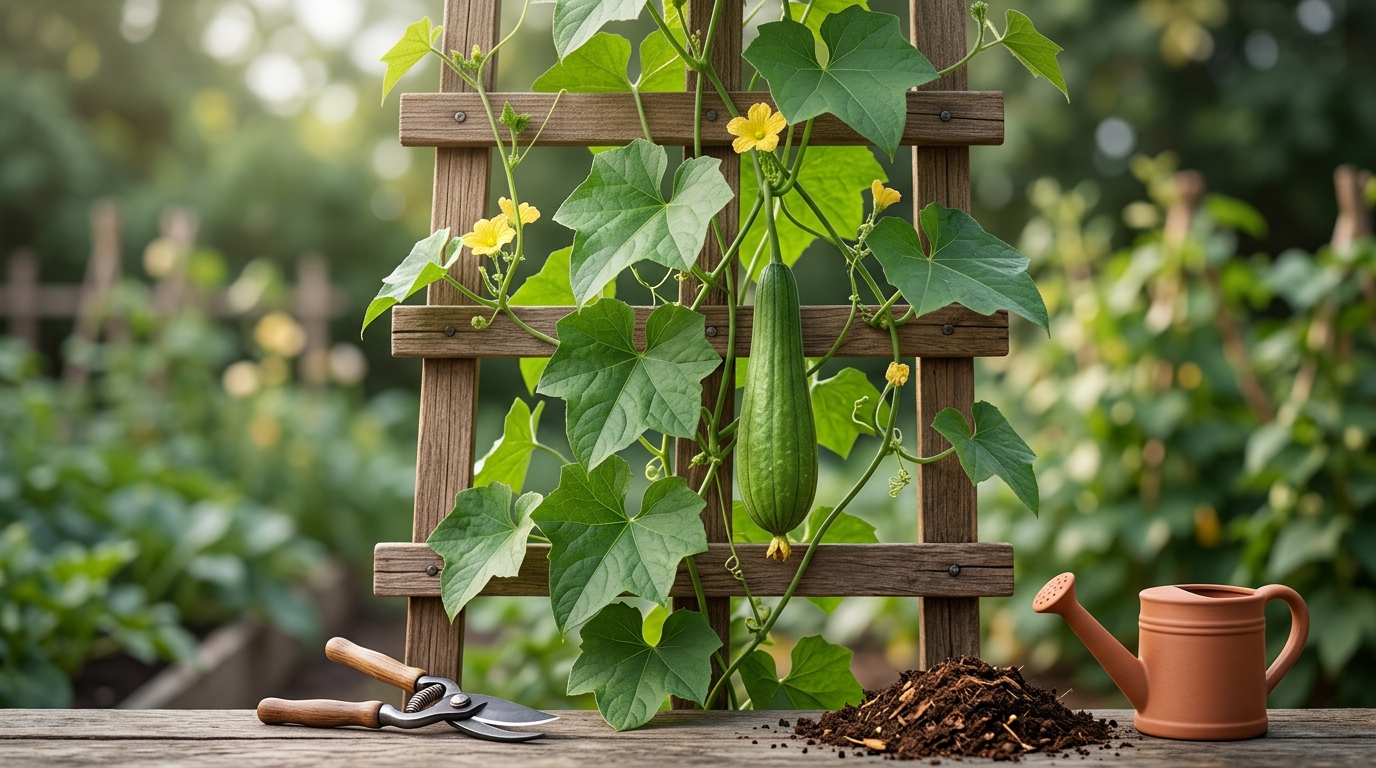
Growing a heavy crop of natural bath sponges requires patience and specific garden maintenance. Home gardeners often struggle with aggressive vine growth, weak fruit set, or unexpected early autumn frosts that ruin mature gourds. A single misstep during the 180-day growing period can reduce your harvest to soft, unusable gourds.
Cultivating the Luffa aegyptiaca or Luffa acutangula plant is simple when you establish consistent care routines early. By balancing heat, water, soil nutrition, and vine support, your garden yields durable sponges that replace synthetic plastics for years.
How to Provide Optimal Growing Conditions for a Loofah Vine?
Proper care for a loofah vine begins with recreating its native tropical habitat. The vine requires maximum sunlight, warm air temperatures, and rich, well-draining soil to set fruit.
According to research indexed by
Before moving young plants outdoors, verify your regional frost dates. Understanding your local season length is essential for success, as explained in our guide on
Soil Preparation and Planting
Mix generous amounts of aged compost into the top 8 inches of your garden bed. Rich organic matter retains soil moisture while allowing excess water to drain freely away from delicate feeder roots.
Plant seeds indoors 4 to 6 weeks before your last expected spring frost date. Use biodegradable paper pots to protect sensitive taproots during final outdoor transplanting.
Why Is a Heavy-Duty Trellis Vital for Loofah Vine Care?
Supporting your loofah vine off the wet ground is mandatory for producing clean, symmetrical sponges. A single mature, water-heavy gourd weighs several pounds, putting immense stress on the main stem.
Without structural support, trailing vines lie on bare earth where soil fungi infect growing fruit. Vines allowed to scramble along the ground produce misshapen, discolored sponges prone to rot. Learn more about vine structure in our breakdown of
-
Build or install a sturdy support structure standing at least 6 to 8 feet high.
-
Select thick wooden posts, cattle panels, or chain-link fencing that withstand heavy wind loads.
-
Train young tendrils upward by loosely tying them to the support frame with soft garden twine.
-
Prune low-hanging side branches to improve airflow near the base of the stem.
Vertical trellising maximizes sunlight coverage across all leaves. It also makes manual pest inspections much easier throughout the summer months.
How Much Water Does a Growing Loofah Vine Need?
Consistent irrigation keeps the loofah vine growing rapidly during peak summer heat. Drought stress causes dropping flower buds, poor pollination, and small, brittle gourds.
Provide 1 to 2 inches of water per week through deep, morning soakings. Apply water directly to the soil surface using drip hoses or watering cans to keep the leaves completely dry. Wet foliage encourages fungal diseases like powdery mildew and downy mildew.
Mulch the surrounding soil with a 3-inch layer of clean straw or shredded bark. Mulching suppresses competing weeds, stabilizes root temperatures, and conserves valuable moisture during hot spells.
Reduce watering frequency late in the season when mature gourds turn yellow and begin drying out. Drier soil signals to the plant that it is time to mature its internal fibrous skeleton.
What Are the Best Fertilization Strategies for Loofah Vines?
Feeding your loofah vine the right nutrients at key growth stages ensures abundant sponge production. Heavy feeders require a balanced approach to prevent lush green leafy foliage at the expense of fruit.
Early Growth (Weeks 1-6)    --> High Nitrogen (5-10-5 or Compost)
Flowering Stage (Weeks 7-12) --> High Phosphorus & Potassium (5-10-10)
Maturation (Weeks 13+)       --> Minimal Fertilizer, Reduced Water
Apply a balanced organic fertilizer rich in nitrogen during early vegetative development. Once yellow blossoms appear, switch to a high-phosphorus formula to encourage flower production and strong fruit attachment.
Avoid over-applying synthetic nitrogen fertilizers throughout mid-summer. Excessive nitrogen causes rapid leaf expansion while delaying the formation of female blossoms, shortening your harvest window.
How to Manage Pests and Diseases on Loofah Vines?
Protecting your loofah vine from common garden pests keeps the foliage efficient and healthy. According to the botanical entry on
Common Pests and Natural Controls
Cucumber beetles and squash bugs are the primary insect threats to young plants. Inspect the undersides of leaves weekly for small orange egg clusters and scrape them off immediately.
Hand-pick adult beetles early in the morning when cooler temperatures slow their movement. Protect young transplants using floating row covers until male and female flowers open for natural pollinators.
Disease Prevention Techniques
Powdery mildew appears as a white, dusty coating on aging leaves during humid summer weather. Maintain wide plant spacing and prune excess interior foliage to ensure steady airflow through the canopy.
Apply copper fungicide or neem oil sprays at the first sign of leaf spots. Remove infected foliage and destroy it to prevent fungal spores from spreading across your garden bed.
How Do You Prune Loofah Vines to Maximize Fruit Yield?
Pruning your loofah vine redirects crucial energy away from unnecessary stem growth into developing gourds. Unpruned vines spread wide, producing dozens of small gourds that fail to mature before autumn frost.
Limit each main vine to 3 or 4 primary side branches once the plant reaches 8 feet tall. Pinch out the growing tips of secondary lateral shoots after two or three leaves form beyond a set fruit.
Remove all late-emerging flowers and tiny gourds 6 weeks before your first expected fall frost date. This practice forces the vine to dump its final energy reserves into ripening existing sponges.
Trim away damaged, yellowing lower leaves near the soil line late in the season. Improved sunlight exposure speeds up fruit drying and hardens the outer gourd skin.
When and How Should You Harvest Loofah Gourds?
Harvesting at the right moment determines the strength and color of your final sponge harvest. Green gourds contain high moisture content and soft fibers that decompose quickly if picked too early.
Wait until the heavy outer skin turns brown, dry, and lightweight. The internal seeds rattle freely inside when you gently shake a mature gourd. Insights on harvesting time can be found on
Use sharp hand pruners to cut mature gourds from the vine, leaving a 2-inch stem attached. Never pull or twist the fruit, as this tears the delicate fibrous mesh inside the base.
If an unexpected early frost threatens your region, cut all partially yellowed gourds immediately. Dry them indoors in a warm, well-ventilated room to complete the skin hardening process.
How Do You Process and Clean Natural Loofah Sponges?
Transforming harvested gourds into clean, usable sponges requires simple processing steps. Work outside or over a large tub to catch falling seeds and dry shell fragments.
Follow these practical steps to prepare your natural bath sponges for home use:
-
Gently squeeze the dry, brittle outer skin until it cracks along the ridges.
-
Peel away the skin fragments using your thumbs to reveal the dense fibrous skeleton underneath.
-
Shake out loose black seeds from the open internal channels into a bowl for future planting seasons.
-
Wash the fibrous sponge thoroughly under warm running water to remove sap and sticky plant pulp.
-
Soak dark or stained sponges in a mild solution of warm water and oxygen bleach for 20 minutes.
-
Hang clean sponges by a string in bright sunlight to dry completely before storing them indoors.
Store completely dry loofah sponges in a cool, dark cabinet free from humidity. Properly dried natural sponges stay fresh and usable for several years without losing their texture.
How to Overcome Common Loofah Vine Growing Challenges?
Troubleshooting problems quickly keeps your vine productive during challenging weather conditions. Many growing issues stem from simple environmental factors that are easy to correct.
Why Are Flowers Dropping Without Setting Fruit?
Loofah plants produce separate male and female flowers on the same vine. Early blossoms are almost exclusively male, which naturally drop from the stem without forming gourds.
If female flowers (identifiable by the miniature gourd behind the yellow petals) fall off unpollinated, perform hand pollination. Use a soft paintbrush to transfer yellow pollen from male blossoms directly into open female blossoms during the morning hours.
Why Are My Loofah Gourds Turning Black or Soft?
Blackening fruit points to blossom end rot or fungal decay caused by uneven soil moisture. Maintain consistent watering habits and avoid letting the root zone dry out completely between soakings.
Gourds touching wet ground soft-rot rapidly. Elevate low-hanging fruit using soft cloth slings attached securely to your main trellis frame.
What Should You Do If Your Season Is Too Short?
Gardeners in cold northern climates must start seeds indoors under grow lights 6 to 8 weeks early. Select early-maturing varieties like smooth loofah (Luffa aegyptiaca) which mature faster than angled types.
Use black plastic mulch over garden beds two weeks before planting to warm cold spring soil manually. Container gardening in large 15-gallon fabric pots allows you to move vines into warm greenhouses during unseasonable cold snaps.
For details on how these plants differ from synthetic household alternatives, read our guide explaining
Frequently Asked Questions
Can you grow a loofah vine in containers or pots?
Yes, you can grow a loofah vine in a container that holds at least 10 to 15 gallons of potting mix per plant. Container-grown vines require daily watering, frequent organic liquid fertilization, and a sturdy vertical trellis secured nearby.
How long does it take for a loofah vine to produce sponges?
Loofah vines require 150 to 200 frost-free days from initial seed germination to final fruit harvest. The plant grows vegetatively for two to three months before flowering, with gourds taking an additional 60 to 90 days to dry on the vine.
Why are my loofah vine leaves turning yellow?
Yellowing leaves usually signal overwatering, nitrogen deficiency, or poor soil drainage near the root zone. Check soil moisture levels, ensure proper drainage, and apply a balanced organic liquid fertilizer to restore green foliage.
Do loofah vines come back every year?
Loofah vines grow as tender annuals in most temperate garden zones, dying off completely with the first hard autumn frost. In tropical regions (USDA zones 10 and above), vines occasionally act as short-lived perennials if frost is absent.
Mastering loofah vine care requires full outdoor sun, stable vertical support, and patient season-long maintenance. By planting in warm soil, keeping leaves dry with drip irrigation, and harvesting dried gourds before winter frosts, you ensure a bumper crop of natural sponges. Set up your heavy-duty trellis today, source high-quality seeds, and transform your garden bed into a sustainable household resource for years to come.