

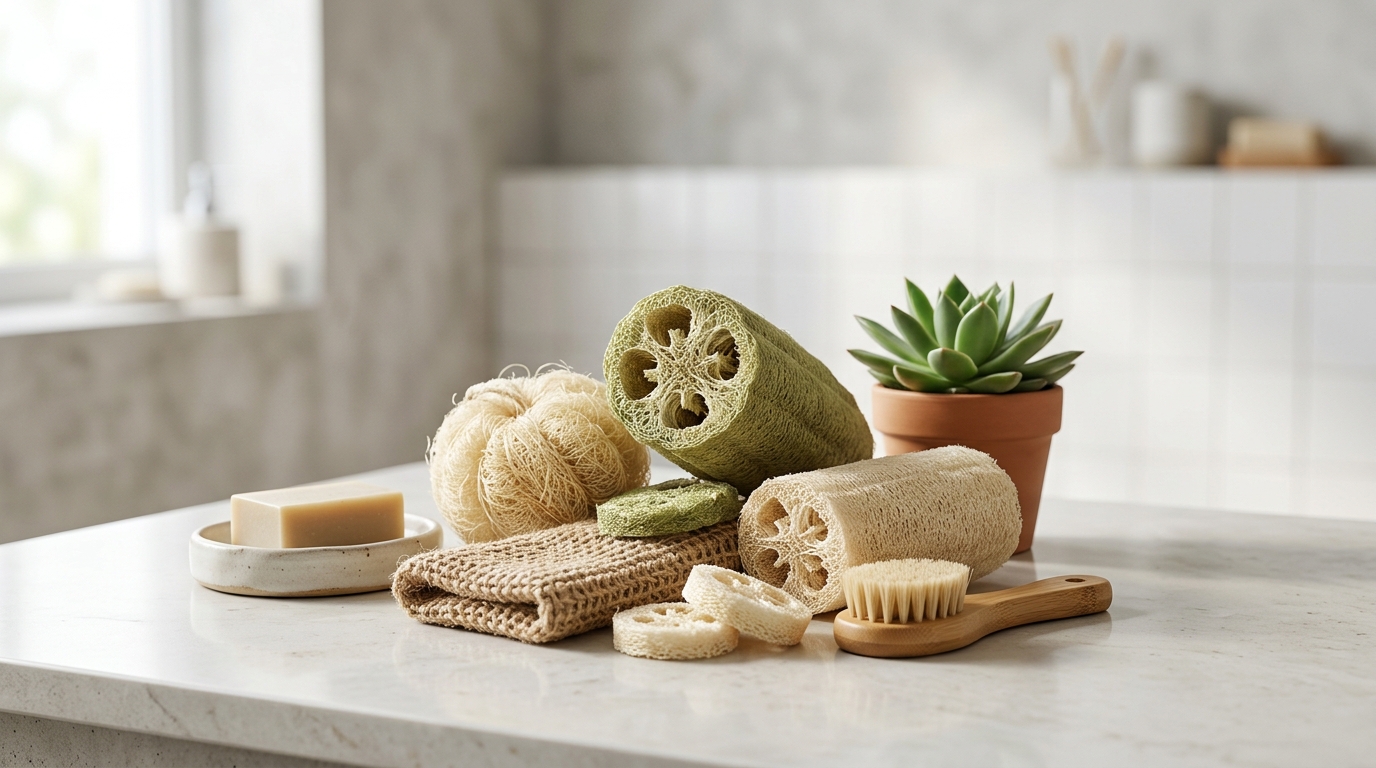
Conventional plastic shower loofahs account for millions of pounds of non-recyclable waste entering landfills every single year. These synthetic mesh poufs unravel within months, harbor persistent bacteria in their dense folds, and shed microscopic plastic fragments directly down your shower drain during every single use. Switching to a natural, plant-based alternative resolves these environmental and hygienic issues instantly.
Transitioning your daily bath routine toward sustainability starts with understanding what makes a shower tool truly earth-friendly. A natural
Why Should You Ditch Synthetic Plastic Mesh Poufs?
Synthetic bath poufs are manufactured from low-grade polyethylene or polypropylene plastics engineered for short lifespans. Every time you scrub with a synthetic plastic pouf, friction breaks off thousands of microplastic fibers that wash into municipal wastewater treatment facilities. Most city infrastructure cannot filter these fine particles, allowing them to discharge directly into rivers, lakes, and oceans.
Plastic poufs also create a breeding ground for harmful microbes like Pseudomonas aeruginosa and Staphylococcus. The tightly bundled mesh pockets retain moisture for hours after your shower, trapping dead skin cells, body oil, and lingering soap residue. Because plastic cannot breathe or dry efficiently, these synthetic sponges harbor fungal spores and bacterial colonies that you reintroduce to your skin during your next wash.
Swapping out plastic poufs yields immediate benefits for both your personal health and local watersheds:
-
Eliminates domestic microplastic runoff into local water supply systems
-
Provides a fully compostable bath tool that breaks down into rich organic matter
-
Reduces synthetic chemical off-gassing caused by warm water hitting cheap dyes and plastics
-
Improves skin clarity through natural, non-microbe-harboring plant fibers
What Makes a Loofah Eco-Friendly?
A genuine natural loofah comes directly from the dried fibrous skeleton of the Luffa aegyptiaca or Luffa acutangula vine. Instead of being chemically synthesized in an industrial factory, these gourds grow on agricultural trellises, absorbing carbon dioxide from the atmosphere throughout their growing cycle. Once ripe, the outer skin peels away to reveal an intricate network of cellulose fibers that soften when submerged in warm water.
True sustainability requires evaluating the entire lifecycle of your bath products, from farm cultivation to final disposal. To qualify as an authentic
Beyond raw gourd fibers, manufacturers create eco-friendly bath accessories by combining natural gourds with unbleached organic cotton threads, FSC-certified wooden handles, and natural hemp cords. Research highlighted by
Which Eco Friendly Loofah Options Work Best for Your Body?
Finding the right plastic-free bath tool depends on your skin sensitivity, bath preferences, and daily routine. Different natural materials offer distinct texture levels, handles, and ergonomic shapes.
1. Whole Unbleached Natural Loofah Gourds
Whole dried loofah gourds represent the purest, zero-waste bathing option available. Harvested, peeled, and dried naturally in the sun, these gourds retain their natural beige color and distinct tubular structure. You can easily slice a whole gourd into smaller circular pucks to customize your sponge size for facial cleansing or body scrubbing.
Whole gourds feature coarse interior fibers that soften comfortably upon contact with warm water. They hold liquid soap exceptionally well while offering deep exfoliation for rough areas like elbows, knees, and heels. Because they consist of pure cellulose without synthetic dyes or chemical bleaches, you can toss worn-out pieces directly into your garden compost pile.
2. Flat Egyptian Loofah Pads with Organic Cotton Backing
Flat loofah pads pair a dense layer of natural Egyptian loofah on one side with a soft, organic cotton fabric lining on the back. A flexible cotton hand strap on the reverse side gives you an ergonomic grip, preventing the pad from slipping while you wash in the shower.
These pads prove ideal for daily body washing because they lay flat against the skin, distributing pressure evenly. The dual-sided design lets you scrub vigorous areas with the fibrous front, then flip the pad over to clean delicate skin using the gentle cotton backing.
3. Long Wooden Handle Loofah Brushes
Reaching the middle of your back can prove challenging with a small handheld sponge. A wooden handle loofah brush solves this mobility issue by mounting a natural fibrous loofah head onto an ergonomic, sustainably harvested bamboo or beechwood wand.
The natural wood handle stays sturdy when wet, giving you optimal leverage without slipping. Most designs allow you to untie and replace the worn loofah head while keeping the durable wooden handle intact for years, minimizing unnecessary material waste.
4. Woven Sisal and Jute Exfoliating Poufs
Sisal fibers come from the leaves of the Agave sisalana plant, while jute is harvested from the bark of the Corchorus plant. When artisans weave these tough plant fibers into dense loops, they form an effective exfoliating sponge that rivals the scrub power of traditional loofahs.
Sisal and jute poufs offer a firmer texture that stimulates circulation and lifts away stubborn dead skin cells. These tightly woven poufs hold up remarkably well over months of repeated use without fraying or shedding fibers down the shower drain.
5. Konjac Facial and Body Sponges
Made from the porous root of the Amorphophallus konjac plant native to Asia, konjac sponges provide the gentlest form of natural exfoliation. Their unique jelly-like texture when wet makes them perfectly suited for sensitive skin, eczema, rosacea, or daily facial cleansing.
Konjac sponges feature an alkaline structure that naturally balances skin pH while removing oil and impurities without requiring heavy soap application. While milder than traditional loofah fibers, konjac sponges offer a completely compostable alternative for individuals who find standard gourds too coarse.
6. Natural Loofah Soap Saver Pouches
Loofah soap saver bags serve a dual purpose in a sustainable bathroom. Woven from natural flax or sisal threads with a built-in loofah fiber panel, these small pouches hold leftover soap slivers that usually melt away unused on shower ledges.
Slipping small soap scraps inside the pouch creates a lather-generating scrubber that eliminates soap waste entirely. The abrasive pouch texture massages your skin while generating a rich foam directly from discarded soap ends.
7. Organic Raw Linen and Hemp Washcloths
Woven linen made from flax plants and heavy-gauge hemp fabric form durable, quick-drying washcloths that replace synthetic loofahs entirely. These plant-based textiles offer a milder texture suitable for daily use across every skin type.
Linen and hemp possess natural antibacterial properties and dry significantly faster than thick terrycloth cotton towels. Their flat weave prevents trapped moisture, making them an excellent choice for poorly ventilated bathrooms where mold growth poses a persistent problem.
How Do You Care for a Natural Loofah to Prevent Mold?
Proper maintenance extends the usable life of an
Follow this simple cleaning routine after every shower to maintain hygiene:
-
Rinse thoroughly: Flush all soap residue, body washes, and loosened skin cells out of the internal fibers using warm running water.
-
Squeeze out excess water: Shake the loofah vigorously and press it tightly between your palms to remove trapped water. Never twist or wring the gourd violently, as this can tear the structural cellulose walls.
-
Hang in a dry environment: Store your loofah outside the damp shower enclosure. Hang it near an open window or an active ventilation fan using a breathable cotton loop.
-
Deep clean weekly: Soak your loofah for five minutes in a solution of warm water mixed with 5% diluted vinegar or a few drops of tea tree oil to eliminate latent bacteria and fungal spores.
-
Sanatize via heat: Boil your wet loofah in plain water for two minutes, or microwave a damp loofah on high power for 30 seconds to kill any residual microbes.
Scientific investigations published in the
Can You Grow Your Own Eco-Friendly Loofah at Home?
Growing your own loofah sponges provides a rewarding zero-waste project that supplies your home with free, organic bath scrubbers year after year. The loofah plant is a warm-weather annual vine that requires a long, sunny growing season lasting between 150 to 200 frost-free days.
You can plant heirloom Luffa aegyptiaca seeds indoors in early spring or sow them directly into rich garden soil once soil temperatures consistently exceed 70°F (21°C). Understanding proper
To successfully grow bath gourds in your home garden:
-
Install a heavy-duty trellis or chain-link fence support, as the climbing vines can reach lengths of 15 to 30 feet and carry heavy fruit.
-
Place plants in full sun where they receive at least 6 to 8 hours of direct, unfiltered sunlight daily.
-
Water deeply at the root base to maintain consistent soil moisture without wetting the broad leaves, preventing powdery mildew.
-
Allow the gourds to mature fully on the vine until their outer green skin turns brown, lightens in weight, and sounds hollow when tapped.
-
Peel off the dried outer skin, shake out the internal black seeds, and soak the fibrous skeleton in clean water to wash away residual sap.
Learning
How Do You Dispose of a Used Natural Loofah Responsibly?
Knowing when to retire your natural loofah ensures you maintain optimal skin hygiene. Even with diligent weekly care, you should replace your plant loofah every 4 to 8 weeks, or immediately if you notice dark mold spots, fiber breakdown, or a persistent sour odor.
Disposing of a genuine plant-based loofah requires no landfill trash bins. Because the gourd consists purely of organic cellulose, you can process used sponges through standard zero-waste disposal methods:
-
Backyard Composting: Cut the worn loofah into small one-inch strips using kitchen shears to speed up decomposition. Toss the pieces into your outdoor compost bin, where soil microbes will break the fibers down into nutrient-rich humus within 30 to 60 days.
-
Garden Mulch Layer: Place flattened loofah pieces directly under garden mulch or around plant bases. The porous fibers absorb soil moisture, release it slowly to nearby roots, and eventually decompose into the soil.
-
Vermicomposting: Add small, unbleached loofah scraps into worm bins. Red wigglers easily digest the softened cellulose fibers once fungi begin breaking down the material.
-
Municipal Green Waste: If you lack home composting systems, toss your clean, dye-free loofah into municipal yard waste or green organics bins provided by your city infrastructure.
Advanced bio-material research indexed in the
Frequently Asked Questions
Is a natural loofah actually made from a plant or a sea animal?
A natural loofah grows on land as a gourd-producing vine belonging to the Cucurbitaceae plant family, which includes cucumbers, squashes, and pumpkins. While sea sponges are marine animals harvested from ocean floors, bath loofahs come entirely from dried terrestrial plants cultivated on farms.
How often should I replace an eco-friendly loofah?
You should replace a natural plant loofah every 4 to 8 weeks depending on usage frequency and drying conditions. If you notice structural fiber degradation, visible dark mold spots, or an unusual sour odor, replace the sponge immediately regardless of how long you have used it.
Are natural loofahs suitable for sensitive skin?
Natural loofahs work well for most skin types when properly softened in warm water prior to use. If you have extremely sensitive skin, eczema, or active rosacea, choose softer plant-based alternatives like konjac root sponges or organic raw linen washcloths to avoid over-exfoliation.
How do I soften a stiff new loofah gourd?
Soak a brand-new, stiff loofah in a bowl of warm water for 10 to 15 minutes before its first use. The tough plant fibers will absorb water, expand, and soften into a flexible, comfortable scrubbing texture suitable for direct skin application.
Can I compost a loofah that contains cotton thread or wooden handles?
You can compost the loofah fibers and 100% natural organic cotton threads directly in your home bin. Before composting, untie or separate any metal staples, plastic tags, or synthetic cord attachments, and set aside reusable wooden handles for future loofah head replacements.
Replace your synthetic shower pouf with a natural