

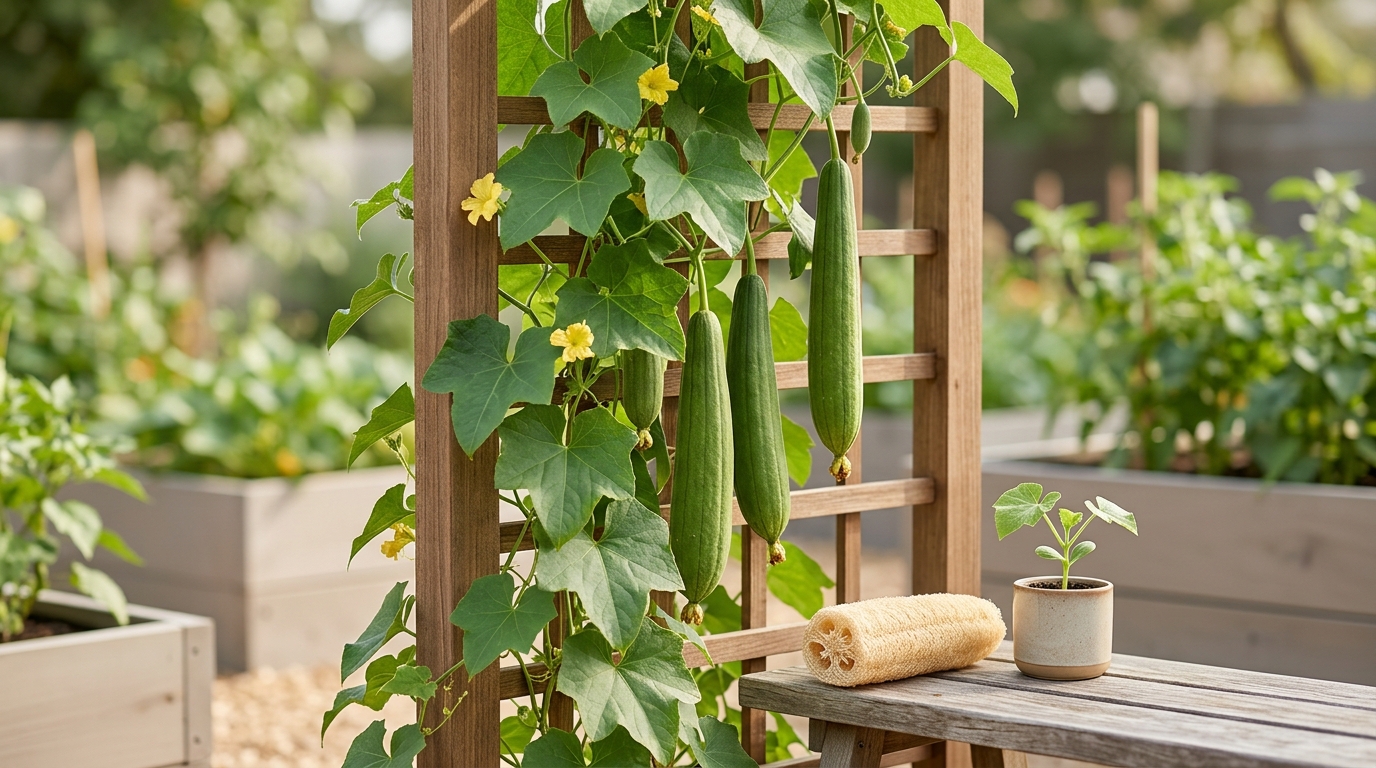
Growing your own sustainable bathroom sponges sounds like a novelty until you realize a single healthy vine yields 5 to 10 durable sponges. Most home gardeners fail because they plant seeds late or harvest green gourds prematurely. By making three simple adjustments to your early-season setup, you transform a tricky tropical vine into a heavy-yielding garden staple.
Understanding how to grow a loofah successfully requires treating this tropical gourd like a long-season winter squash rather than a standard cucumber. The vine demands 150 to 200 frost-free days with warm temperatures to transition from a yellow-flowered runner into fibrous bath sponges. By starting seeds early indoors, building robust vertical supports, and leaving fruit on the vine until the outer shell turns brown and light, home gardeners can easily grow a lifetime supply of natural shower loofahs.
What Is the Ideal Climate and Season to Grow a Loofah?
When learning how to grow a loofah, timing your planting calendar to your local heat units determines success. Loofah vines (Luffa aegyptiaca) originate in tropical regions, requiring long periods of uninterrupted heat and full sun. Understanding
To mature a full crop of sponges, vines require a minimum of 150 frost-free days, with peak growth occurring when ambient air temperatures consistently exceed 75°F. In USDA Hardiness Zones 7 and warmer, seeds can be sown directly outdoors once ambient spring temperatures stabilize. In colder Northern climates (Zones 6 and lower), you must start seeds indoors under grow lights 6 to 8 weeks before your spring frost date.
Target these primary environmental thresholds for outdoor planting:
How Do You Start Loofah Seeds for High Germination?
Starting seeds indoors represents the most critical hurdle when mastering how to grow a loofah in short-season locations. Loofah seeds possess an exceptionally thick black seed coat that acts as a natural barrier to water absorption. Unprepared seeds often take up to three weeks to germinate or rot in cool soil.
Accelerate germination by scarifying the seed coat before planting. Gently nick the dark outer edge of each seed using a small nail file or sandpaper, taking care not to puncture the inner kernel. After nicking, soak the seeds in warm water for 12 to 24 hours to soften the shell.
-
Plant scarified seeds 1/2 inch deep in individual 4-inch biodegradable peat pots filled with light seed-starting mix.
-
Place pots over a propagation heat mat set to 80°F–85°F to speed up emergence.
-
Maintain continuous moisture under clear humidity domes, checking daily for green shoots.
-
Provide 14 hours of direct light using bright LED grow lights as soon as seedlings break the surface.
Gardeners who want to know
How Do You Prepare Soil and Plant Loofah Seedlings?
Knowing how to grow a loofah requires setting up rich soil that provides steady moisture without waterlogging root systems. Select a planting location that receives full sun for at least 8 hours each day. Amend native soil deeply with rich organic compost, well-rotted manure, and balanced slow-release fertilizer before moving plants outdoors.
Hardening off your tender indoor seedlings prevents transplant shock when moving plants into the garden. Expose young vines to outdoor breezes and partial shade for 1 hour on the first day, increasing daily exposure over two weeks. Plant out only when nighttime temperatures stay above 55°F and soil temperatures reach 70°F.
Space individual loofah plants 12 to 18 inches apart along the base of your support frame. Dig a hole twice as wide as the nursery container, mix in a handful of worm castings, and set the root ball flush with the surrounding soil level. Water deeply immediately after planting to settle air pockets around fragile feeder roots.
Why Is Trellising Essential for Growing a Loofah Plant?
If you try to discover how to grow a loofah on the ground, you risk losing your entire harvest to ground rot, pest infestations, and misshapen gourds. Loofah vines grow extraordinarily fast, reaching lengths between 12 and 30 feet long. They demand heavy-duty support to elevate hanging gourds off the damp earth.
Building strong support structures ensures clean, straight sponges that dry uniformly late in the season. A weak trellis collapses under the heavy load of mature gourds and wet foliage during summer rainstorms.
Construct your vine support system using heavy material combinations:
-
Cattle panel arches secured with strong steel T-posts
-
Heavy wooden chain-link fencing or arbor structures
-
High-tensile wire line systems stretched between thick posts
According to guidelines from the
How to Care for Loofah Vines: Water, Fertilizer, and Pruning
Learning how to grow a loofah effectively involves active seasonal management once vines establish vertical momentum. Loofah plants consume large volumes of water during vegetative growth, requiring 1 to 2 inches of deep water per week. Apply drip irrigation directly at ground level to keep foliage dry and prevent powdery mildew.
Feed vines every three weeks with balanced organic fertilizers until late summer. Early in the season, use high-nitrogen liquid kelp or fish emulsion to push structural vine growth. Switch to high-phosphorus and potassium fertilizers when bright yellow blossoms appear to promote heavy fruit set.
Pruning vines improves overall sponge size and speeds up maturity in short-season regions. Pinching off main growing tips when stems reach 10 feet forces early lateral branching, which yields higher counts of female flowers. Remove late-emerging flowers and tiny gourds during early autumn so the plant directs all energy toward maturing existing sponges.
How Do You Harvest and Peel Homegrown Loofah Sponges?
The final phase of learning how to grow a loofah involves knowing precisely when to pick gourds. Do not harvest green loofahs if you want coarse, durable bath sponges. Green gourds contain soft, sap-heavy fibers that rot quickly during processing.
Leave gourds hanging on the trellis as long as possible in late summer and autumn. As gourds mature, their outer skin transitions from deep green to light tan or brown. The gourd loses up to 80 percent of its weight, feeling surprisingly light, while the skin becomes brittle and papery.
When you shake a fully mature gourd, you should hear loose seeds rattling inside the hollow interior. Cut the fruit stem using sharp pruners before the first killing frost.
Follow this systematic step-by-step method to clean harvested gourds efficiently:
-
Crack the dry, brittle outer skin near the stem end using light thumb pressure.
-
Peel away outer shell fragments to expose the dense fibrous skeleton inside.
-
Shake the open sponge over a bucket to release black seeds for next season.
-
Wash the fibrous sponge thoroughly under warm running water to remove sap and debris.
-
Soaking stubborn skins in warm water for 15 minutes loosens the outer shell.
-
Dry washed sponges completely in bright sunlight for 48 hours to prevent mold growth.
Common Loofah Pests, Diseases, and Troubleshooting
Even when you follow proper rules for how to grow a loofah, seasonal pests and diseases can attack your garden. Cucumber beetles represent the primary threat to young loofah seedlings early in spring. These small striped or spotted beetles chew leaves and spread bacterial wilt disease. Protect young plants with floating row covers until flowering begins.
Powdery mildew frequently affects dense loofah foliage during humid late-summer periods. Prevent white fungal patches on leaf surfaces by spacing plants properly, watering roots directly, and spraying neem oil at early signs of infection.
If your plant flowers heavily but fails to yield gourds, poor pollination is likely the cause. Loofah vines bear separate male and female yellow flowers on the same plant. Female blossoms display a small miniature gourd at the base of their petals. If natural pollinators are scarce, use a clean paintbrush to transfer yellow pollen manually from male stamens directly to central female stigmas.
Evaluating Loofah Variety Performance for Home Gardens
Selecting proper cultivars impacts your final harvest yields when discovering how to grow a loofah. Understanding the physical differences between cultivars helps you plan garden space and sponge production accurately.
                    ┌─────────────────────────┐
                    │  Select Loofah Seed     │
                    └────────────┬────────────┘
                                 │
                 ┌───────────────┴───────────────┐
                 ▼                               ▼
       ┌───────────────────┐           ┌───────────────────┐
       │ Smooth Loofah     │           │ Angled Loofah     │
       │ (L. aegyptiaca)   │           │ (L. acutangula)   │
       └─────────┬─────────┘           └─────────┬─────────┘
                 │                               │
                 ▼                               ▼
       ┌───────────────────┐           ┌───────────────────┐
       │ Coarse Sponges    │           │ Edible Young Pods │
       │ Long Season       │           │ Distinct Ridges   │
       └───────────────────┘           └───────────────────┘
The standard smooth loofah (Luffa aegyptiaca) produces dense, coarse sponges perfect for scrubbers and household cleaning. The angled loofah (Luffa acutangula) features prominent ridge lines along its length; gardeners harvest it young as a culinary vegetable, though it yields softer, less durable sponges when allowed to dry. Gardeners researching
Both major varieties need heat and sunshine, but smooth loofah provides the structural durability needed for bath accessories. According to educational resource guides on
Frequently Asked Questions
Can you grow a loofah in a container or pot?
Yes, you can grow a loofah in a large container with a minimum capacity of 10 to 15 gallons per plant. Ensure the container features bottom drainage holes, fill it with rich potting soil, and position a strong trellis directly behind the pot to support heavy hanging gourds.
How many loofah sponges do you get per plant?
A healthy loofah vine grown in full sun produces between 5 and 10 fully developed gourds per season. In warmer southern climates with long growing seasons, vigorous plants can yield over 12 mature sponges per vine under consistent care.
Can you eat home-grown loofah gourds?
You can eat loofah gourds only when harvested young, measuring under 6 inches in length while skin remains tender. At this immature stage, prepare them like zucchini or summer squash; mature gourds become tough, fibrous, bitter, and inedible.
What should I do if my loofahs don’t dry before the first frost?
If an unexpected frost threatens your area, cut remaining green gourds with several inches of stem attached and hang them indoors in a warm, dry area. While prematurely picked gourds yield softer sponges, hanging them inside allows skin to brown without rotting outdoors.
Is loofah the same as luffa?
Yes, “loofah” and “luffa” refer to the exact same plant species belonging to the Cucurbitaceae family. You can read more about spelling variations and historical naming in our guide on
By securing seeds early, building sturdy vertical support structures, and allowing gourds to dry on the vine, learning how to grow a loofah transforms your seasonal garden into a self-sustaining eco-friendly supply center. Map out your warm-season footprint, start seeds under grow lights, and prepare to harvest durable, chemical-free sponges right from your backyard trellis.