

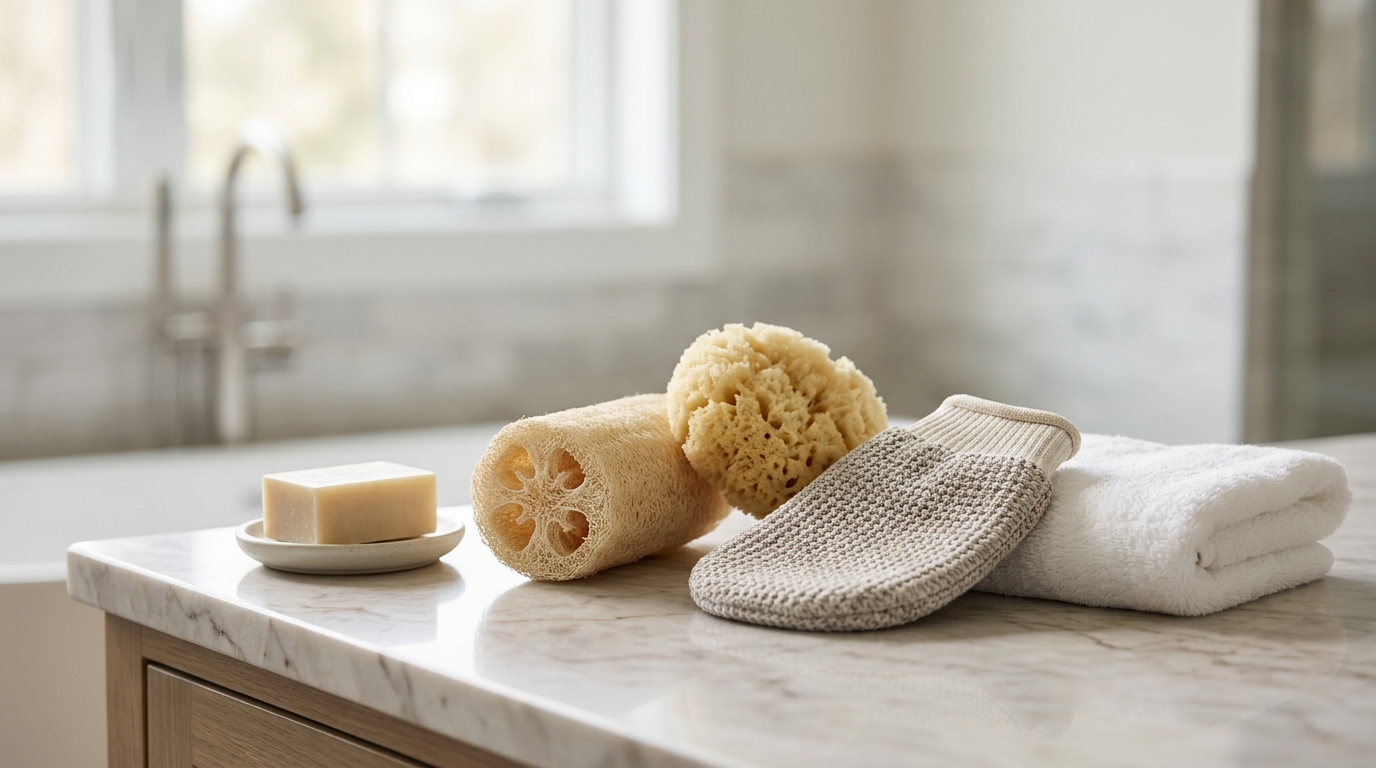
Rough skin texture and dullness often stem from ineffective daily exfoliation, leaving skin feeling tired instead of refreshed. Over 70% of households use standard plastic bath sponges that trap moisture and harbor unwanted bacteria within weeks of daily use. Upgrading your daily shower routine with an intentional exfoliation strategy resolves these skin concerns without triggering irritation.
Choosing the right body loofah changes how your skin looks, feels, and retains moisture throughout the week. While many people assume all bath sponges function identically, subtle differences in fiber structure, material origins, and weave density alter their performance significantly. Understanding how natural gourds differ from synthetic alternatives helps you pick a tool that cleanses deeply without damaging your delicate skin barrier.
What Is a Body Loofah and How Does It Work?
A body loofah serves as an exfoliating bath accessory designed to remove dead skin cells and build up a rich lather during your daily shower. While modern shoppers use the term for various bath poufs, true traditional loofahs derive from dried gourds. You can learn more about this fascinating origin by reviewing
The mechanical action of scrubbing with natural or synthetic fibers clears away trapped debris, sweat, and excess sebum from the surface of your skin. This physical friction stimulates surface circulation while smoothing out rough areas on your elbows, knees, and feet. Incorporating a dedicated shower tool ensures your body washes distribute evenly, using less product per shower while maximizing clean coverage.
Natural Plant Loofah vs. Synthetic Mesh Pouf: Key Differences
Selecting between organic plant fibers and manufactured polyethylene mesh comes down to sustainability, friction intensity, and maintenance requirements. Both options offer unique benefits depending on your personal skincare goals and environmental priorities.
Natural plant options stem directly from the dried fibrous vascular system of the luffa vine. If you have ever wondered
Synthetic mesh poufs rely on layered plastic netting gathered into a tight ball. These tools produce voluminous bubbles with minimal body wash, making them a popular choice for quick showers. However, synthetic fibers do not break down over time, ending up in landfills once discarded.
How to Choose the Best Body Loofah for Your Skin Type
Matching your shower tool to your specific skin needs prevents over-exfoliation and preserves your cutaneous moisture barrier. Different skin conditions react uniquely to texture, fiber stiffness, and pressure during application.
Sensitive or Dry Skin
Sensitive skin types demand minimal physical friction to avoid redness, micro-tears, and inflammation. A soft mesh pouf or an ultra-softened plant pad works best for delicate skin. Always thoroughly soak a natural loofah in warm water for several minutes before sweeping it across your body.
Avoid scrub sponges with rigid bristles or coarse weaves if you suffer from eczema, psoriasis, or chronic dry patches. Stick to broad, light strokes and limit physical exfoliation to twice per week to avoid triggering flare-ups.
Oily or Acne-Prone Skin
Oily skin benefits from regular mechanical exfoliation to prevent clogged pores and body acne across the back and chest. A firm body loofah constructed from natural luffa gourds effectively clears away trapped oils, sweat, and dead keratin build-up.
Ensure you wash your exfoliation tool thoroughly after every use on acne-prone areas. Storing a damp sponge inside a humid shower stall encourages bacterial growth that can worsen breakouts when reused.
Normal or Combination Skin
Normal skin handles daily to semi-daily physical exfoliation without adverse reactions. You can alternate between a synthetic mesh ball for daily lathering and a firm natural luffa pad for targeted exfoliation on weekends.
Pay special attention to high-friction areas like ankles, heels, and elbows. Adjust your pressure based on how your skin responds, reducing frequency if any tightness or redness occurs.
Are Natural Loofahs More Hygienic Than Synthetic Poufs?
Hygiene depends heavily on how you handle, dry, and replace your bath tools rather than the raw material alone. However, physical structure dictates how easily moisture escapes the core of the sponge after use.
According to micro-analysis detailed in research highlighted by the
Natural fibers feature intricate internal tubes that trap dead skin scales and moisture deep inside the matrix. Synthetic mesh poufs feature dense center knots that retain water long after the outer layers feel dry. Consequently, both types require strict drying protocols and frequent replacements to maintain hygienic shower conditions.
How Often Should You Replace Your Shower Loofah?
Replacing your bathing tools on a strict schedule prevents skin infections, folliculitis, and persistent skin irritation caused by bacterial overgrowth.
-
Natural Plant Loofahs: Replace every 3 to 4 weeks. Because plant matter degrades organically when exposed to constant moisture, natural luffa fibers break down and trap organic debris faster.
-
Synthetic Mesh Poufs: Replace every 4 to 6 weeks. Although plastic mesh does not rot, the center knot collects soap scum, skin scales, and mildew that standard rinsing cannot clear.
If your bathing accessory develops a sour odor, displays visible discoloration, or feels slippery even after thorough rinsing, discard it immediately regardless of how long you have owned it.
How to Proper Clean and Store Your Body Loofah
Extending the usable life of your body loofah while keeping micro-organisms at bay requires simple post-shower habits. Taking two minutes to rinse and hang your tool dramatically improves hygiene performance.
-
Rinse thoroughly: Wash out every trace of soap, body wash, and visible skin debris under running hot water until the water runs clear.
-
Squeeze out excess water: Shake the tool vigorously and press it firmly between dry towels to remove trapped water pockets.
-
Hang in a ventilated area: Move your loofah out of the damp shower enclosure. Hang it near an open window, under a fan, or in a dry room with good air circulation.
-
Sanitize weekly: Soak natural plant sponges in a 10% bleach solution or warm water mixed with white vinegar for 5 minutes once a week, then rinse completely and air dry.
Never leave your bath sponge sitting on a flat shower ledge or hanging directly beneath the showerhead where continuous dripping occurs.
Why Natural Plant Loofahs Are Better for the Environment
Switching from petroleum-based plastic bath poufs to plant-derived alternatives yields immediate environmental benefits for eco-conscious shoppers. Traditional plastic bath balls are manufactured from non-recyclable polymers that end up in municipal landfills or oceans, breaking down into harmful microplastics over centuries.
Organic luffa sponges stem from fast-growing climbing vines belonging to the cucumber family. You can examine detailed cultivation advice in our guide on
Choosing natural plant options reduces household plastic consumption while supporting sustainable agriculture. Once an organic loofah wears out for personal care, you can repurpose it as an eco-friendly household kitchen scrubber or toss it into your garden compost pit without generating synthetic waste.
What Is the Difference Between Luffa and Loofah?
Consumers frequently encounter different spellings when browsing bath products online, leading to confusion about product authenticity and material quality.
The term luffa represents the official botanical genus (Luffa) assigned by taxonomists to the tropical vine species. The term loofah is the common English phonetic spelling used across retail packaging and consumer search engines. For an in-depth breakdown of these linguistic distinctions, read our complete guide comparing
Regardless of which spelling appears on the product label, ensure the ingredient list confirms 100% natural plant cellulose if you want an organic product. Avoid products labeled as “loofah texture” that actually contain synthetic plastic weaves designed to mimic plant patterns.
How to Use a Body Loofah Correctly: Step-by-Step Guide
Using correct scrubbing technique protects your skin from abrasions while maximizing the cleansing power of your body wash.
-
Soak the tool completely: Saturate your plant or mesh sponge under warm running water for at least 60 seconds to soften the fibers.
-
Apply cleanser: Pour a quarter-sized drop of liquid body wash or work a bar of soap directly into the center of the damp tool.
-
Work up a lather: Massage the sponge between your hands until a rich, bubbly lather forms across the entire surface.
-
Scrub with light circular motions: Start at your ankles and work upward toward your heart using gentle, circular sweeps. Avoid pressing hard into the skin.
-
Target rough spots: Spend extra time on elbows, knees, and heels where dead skin thickens naturally.
-
Rinse your skin and tool: Wash away all soap suds from your body with cool or lukewarm water, then clean the sponge thoroughly under hot water.
Limit physical scrubbing to 2 or 3 times per week if you have dry skin, or up to 5 times per week for oilier skin types. Avoid using any physical exfoliant on broken skin, sunburns, or fresh surgical incisions.
Frequently Asked Questions
Can I use a body loofah on my face?
No, you should never use a standard body loofah on your facial skin. Facial skin is significantly thinner and more delicate than body skin, making it highly susceptible to micro-tears, redness, and broken capillaries when exposed to coarse physical exfoliants. Use a dedicated gentle facial cleanser and a soft muslin cloth for facial care instead.
Why does my natural loofah feel hard when dry?
Natural luffa fibers consist of dense, dried plant cellulose that hardens naturally when free of moisture. This dry rigidity protects the structure during storage and shipping. As soon as you submerge the dried plant in warm water for 1 to 2 minutes, the fibers absorb water, expand, and become pliable and soft enough for safe use on your body.
Can I wash my body loofah in the washing machine?
You can clean natural plant loofahs in the washing machine on a gentle cycle using hot water and mild detergent, provided you place them inside a mesh laundry bag. However, synthetic mesh poufs should not be washed in machines because the high heat and agitation unravel the central plastic knot and ruin the shape.
Is a natural loofah safe for kids?
Children generally have softer, more delicate skin than adults and rarely require strong physical exfoliation. A firm natural luffa can feel too abrasive for young skin. If you choose to use a bath tool for children, select an ultra-soft synthetic pouf or a soft cotton washcloth, and apply minimal pressure during bath time.
How do I compost a natural body loofah?
To compost a used natural plant sponge, first cut off any synthetic hanging cords or cotton strings attached to it. Chop the remaining dried plant fiber into small 1-inch pieces to accelerate decomposition. Toss the pieces directly into your outdoor compost bin or indoor vermicomposting setup, where they will break down into rich soil within a few weeks.
Practical Steps to Upgrade Your Shower Routine
Choosing the ideal body loofah transforms a routine daily shower into an effective skin treatment that promotes smooth, radiant skin. If you want a deeper understanding of these natural tools, check out our comprehensive resource on
Select an organic plant sponge if your primary goals include eco-friendly living, deep exfoliation, and plastic-free personal care. Opt for a synthetic mesh pouf if your skin craves extra soft friction and maximum soapy lather with minimal product. Establish a strict replacement calendar on your phone or bathroom mirror to swap out your bath tools every 30 days. Taking control of your bath hygiene ensures your skin stays clean, healthy, and smooth day after day.