

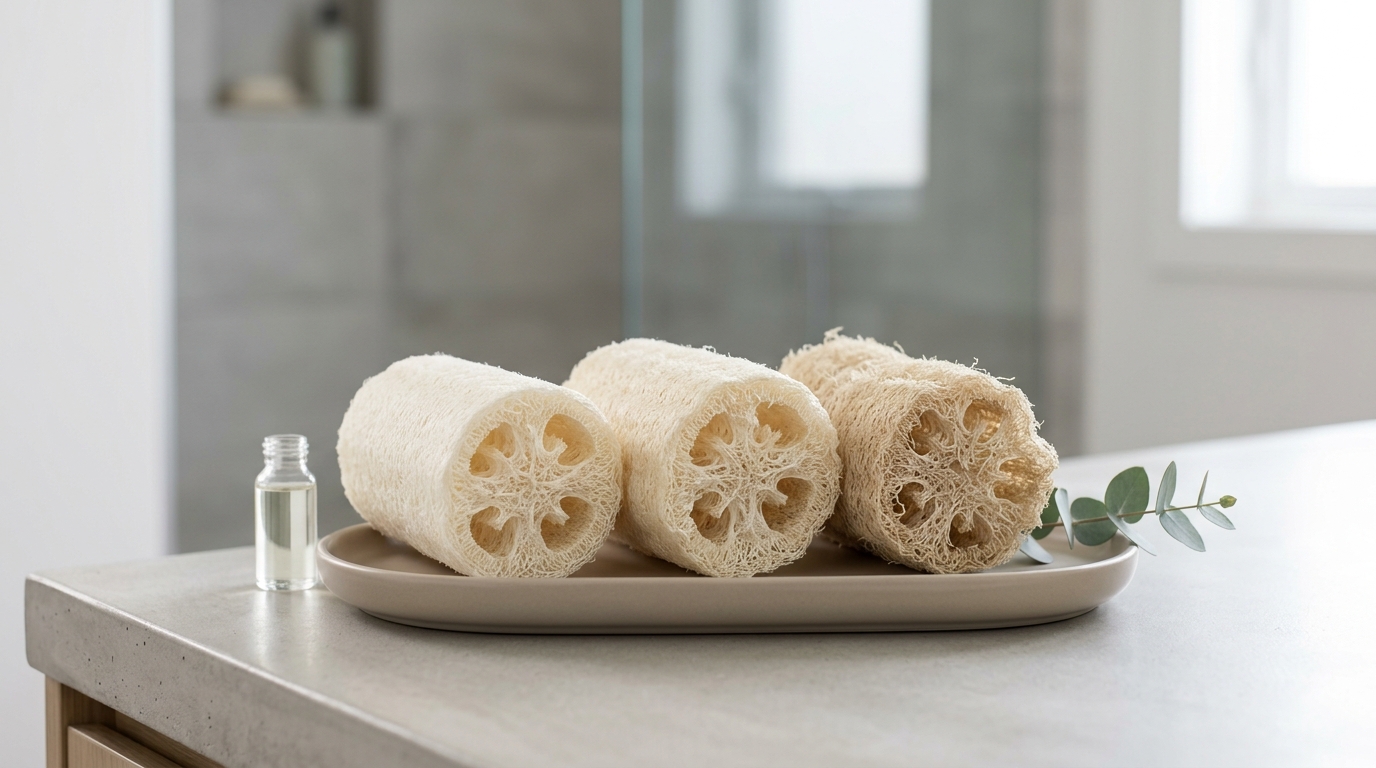
Using a contaminated shower sponge exposes your skin to trapped moisture, dead skin cells, and rapidly multiplying microbes. Many people keep the same bath scrubber hanging in their shower for 6 months or longer, unknowingly washing with harmful fungal spores. Understanding the correct replacement timeline preserves your skin health and prevents unexpected breakouts.
Determining how often to change loofah sponges depends heavily on whether you use a natural plant fiber or a synthetic plastic mesh puff. Warm, humid bathroom environments create an ideal breeding ground for bacteria like Pseudomonas aeruginosa within the porous weave of bath tools. Natural luffa gourds degrade faster under daily moisture exposure, requiring a fresh replacement every 3 to 4 weeks. Synthetic plastic poufs resist structural breakdown longer but still collect residual body oils and skin flakes, necessitating replacement every 4 to 6 weeks. Adhering to these strict schedules eliminates pathogenic buildup and keeps your daily cleansing routine safe.
How Often to Change Loofah Sponges by Material Type
Not all bath scrubbers share the same lifespan or resistance to microbial growth. The material composition of your tool directly dictates how quickly bacteria colonize its interior structures.
Natural plant-based scrubbers originate from the fibrous skeleton of the
Plastic mesh loofahs consist of woven polyethylene strands wrapped tightly around a central cord. While synthetic plastic does not decay like plant material, the dense netting traps trapped hair, sebum, and soap scum. Microbes flourish within the dark interior folds of the mesh puff. You must replace plastic mesh tools every 4 to 6 weeks.
Understanding
Why Do Shower Loofahs Collect Bacteria So Quickly?
Bathrooms present the perfect environment for micro-organisms to thrive. High humidity levels combined with warm ambient temperatures allow residual bacterial colonies to double in population every 20 minutes on wet surfaces.
Every time you scrub your skin, your loofah strips away thousands of microscopic dead skin cells. These skin flakes become trapped deep inside the dense weave of the sponge. Combined with residual soap scum and water trapped in the fibers, this organic debris provides continuous nourishment for microscopic organisms.
Research highlighted by the
Drying your loofah inside a closed, steamy shower stall prevents moisture from evaporating between uses. Without full airflow, the center of the sponge remains permanently damp. This continuous wet environment accelerates mold production, turning an essential self-care tool into a vector for skin infections.
How Often Should You Change Natural Luffa vs Synthetic Loofah?
Knowing how often to change loofah materials depends on how quickly each structure traps moisture and organic matter. Natural plant gourds feature intricate, tubular channels that hold water far longer than synthetic netting.
If you choose organic plant materials, you must monitor structural breakdown closely. Natural luffa fibers begin to soften and tear after three weeks of daily exposure to water and friction. Once these plant walls weaken, they retain excess water and harbor fungal growth deep within the core.
Synthetic loofahs present a different hygiene challenge. The plastic netting does not break down, leading many people to keep them for many months. However, the tight inner core of a synthetic puff rarely dries out completely if left hanging on a shower fixture. Bacterial colonies quickly build up inside the central knot long before the outer plastic mesh shows visible wear.
To maximize hygiene across both material choices, follow these clear replacement milestones:
-
Synthetic mesh loofahs: Replace every 30 to 45 days without exception.
-
Natural plant gourds: Replace every 21 to 30 days, or sooner if the fibers turn soft and dark.
-
Silicone scrubbers: Replace every 60 to 90 days, provided you wash them weekly with hot water.
If you are curious about origin differences when choosing products, reviewing
What Are the Hidden Dangers of Using an Old Loofah?
Using a bath sponge past its recommended lifespan introduces significant health risks to your skin barrier. Microscopic pathogens multiplying inside old sponges transfer directly onto your body during your shower.
Dermatological research published by
Using an old sponge also exacerbates pre-existing skin conditions like eczema, psoriasis, and acne. The combination of abrasive, degraded fibers and trapped bacterial colonies breaks down the protective lipid barrier of your skin. This irritation leads to persistent redness, flaking, and slow-healing skin lesions.
In severe cases, individuals with compromised immune systems or open wounds risk contracting fungal infections like dermatophytosis. Replacing your shower tools on a strict monthly schedule effectively eliminates these preventable dermatological issues.
How to Clean and Sanitize Your Loofah Between Uses
Extending the safety of your bath tools requires deliberate daily care alongside weekly deep cleaning methods. Sanitizing your sponge controls bacterial populations between your scheduled replacement dates.
After every shower, squeeze out all excess water from your loofah thoroughly. Never leave your bath scrubber hanging inside the shower enclosure where humidity remains high. Instead, hang the tool in a dry room with strong airflow, such as near an open window or under a ceiling fan, to speed up evaporation.
For weekly maintenance, sanitize your sponge to eliminate lingering pathogens. You can execute an effective sanitizing routine using standard household items:
-
Dilute 10% household bleach in a bowl of warm water and soak your natural luffa for 5 minutes before rinsing thoroughly.
-
Submerge synthetic mesh puffs in a mixture of 1 cup white vinegar and 4 cups warm water for 30 minutes.
-
Wash natural plant scrubbers in the top rack of your dishwasher through a full heated drying cycle.
Detailed guidelines provided by
If you want to grow your own sustainable bath sponges to replace synthetic options cost-effectively, optimizing your garden’s
How Can You Tell It Is Time to Throw Away Your Loofah Immediately?
You should not always wait for the 30-day mark to discard a bath sponge. Certain physical warning signs indicate that dangerous contamination has already occurred.
Check your bath tools weekly for these clear signs of severe bacterial or fungal growth:
-
Musty or sour odors emanating from the sponge, even when dry.
-
Visible dark green, black, or brown spots on the inner core or natural fibers.
-
Noticeable color shifting or yellowing of white plastic mesh.
-
Loss of structural integrity, such as unraveling mesh knots or crumbling plant fibers.
-
Unexplained skin irritation, breakouts, or rash flare-ups after bathing.
If you notice any of these red flags, toss your loofah in the trash immediately. Using a compromised bath tool negates the benefits of washing, transferring dirty water and bacterial spores back onto your body.
What Are the Best Hygienic Alternatives to Traditional Loofahs?
If keeping up with strict loofah replacement schedules feels inconvenient, several low-maintenance bathing alternatives offer superior hygiene profiles.
Silicone body scrubbers have gained immense popularity as a sanitary replacement for conventional bath sponges. Food-grade silicone features a non-porous surface that prevents water absorption and stops bacterial growth. Silicone scrubbers dry rapidly, resist mold completely, and can be boiled in water for absolute sterilization.
Cotton washcloths present another highly hygienic option for daily body cleansing. Unlike dense sponges, washcloths go straight into the hot water washing machine cycle after every single use. Laundering cotton cloths at high temperatures kills trapped bacteria and removes dead skin cells completely.
Exploring alternative materials like those discussed in
Frequently Asked Questions
Can you wash a plastic loofah in the washing machine?
You can wash a synthetic plastic mesh loofah in a washing machine using a delicate cycle with cool or warm water. Place the loofah inside a mesh laundry bag to prevent the delicate plastic strands from tearing or tangling around the agitator. Always air-dry the plastic loofah completely in a ventilated area, and avoid using heat settings in a tumble dryer which can melt synthetic materials.
Is a silicone scrubber better than a loofah?
Silicone scrubbers are significantly more hygienic than traditional natural or synthetic loofahs. Because silicone is non-porous, it dries almost instantly and does not absorb water, soap residue, or dead skin cells. This surface barrier prevents bacteria, yeast, and mold from colonizing the scrubber, allowing a single silicone tool to last safely for up to one year with regular boiling or sanitizing.
How often should you change a loofah if you live alone?
Living alone does not extend the recommended lifespan of your bath loofah. Microbial growth occurs primarily due to trapped moisture, room humidity, and your own shed skin cells rather than cross-contamination from other people. You must still replace synthetic mesh loofahs every 4 to 6 weeks and natural organic luffas every 3 to 4 weeks to prevent folliculitis and bacterial skin irritations.
How do you dry a loofah properly in a bathroom without windows?
If your bathroom lacks windows or adequate natural ventilation, take your wet loofah out of the bathroom immediately after showering. Shake off all excess water thoroughly and hang the tool in a dry room with active airflow, such as near an air conditioning vent or under a ceiling fan. Using a suction hook in a well-ventilated bedroom ensures the interior core dries completely between uses.
Protecting Your Skin Barrier Through Proper Bath Hygiene
Maintaining healthy skin requires paying close attention to the tools you use in the shower every day. Knowing how often to change loofah scrubbers empowers you to eliminate bacterial buildup, prevent painful follicle infections, and optimize your personal hygiene routine. Swapping out synthetic mesh every 4 to 6 weeks and natural plant gourds every 3 to 4 weeks provides reliable protection against unwanted pathogens. If you want to streamline your routine further, switching to non-porous silicone tools or single-use cotton washcloths offers maximum sanitary benefit with minimal maintenance effort. Take a quick audit of your shower hanging rack today, toss out any worn or discolored sponges, and establish a firm calendar reminder for your next replacement cycle.