

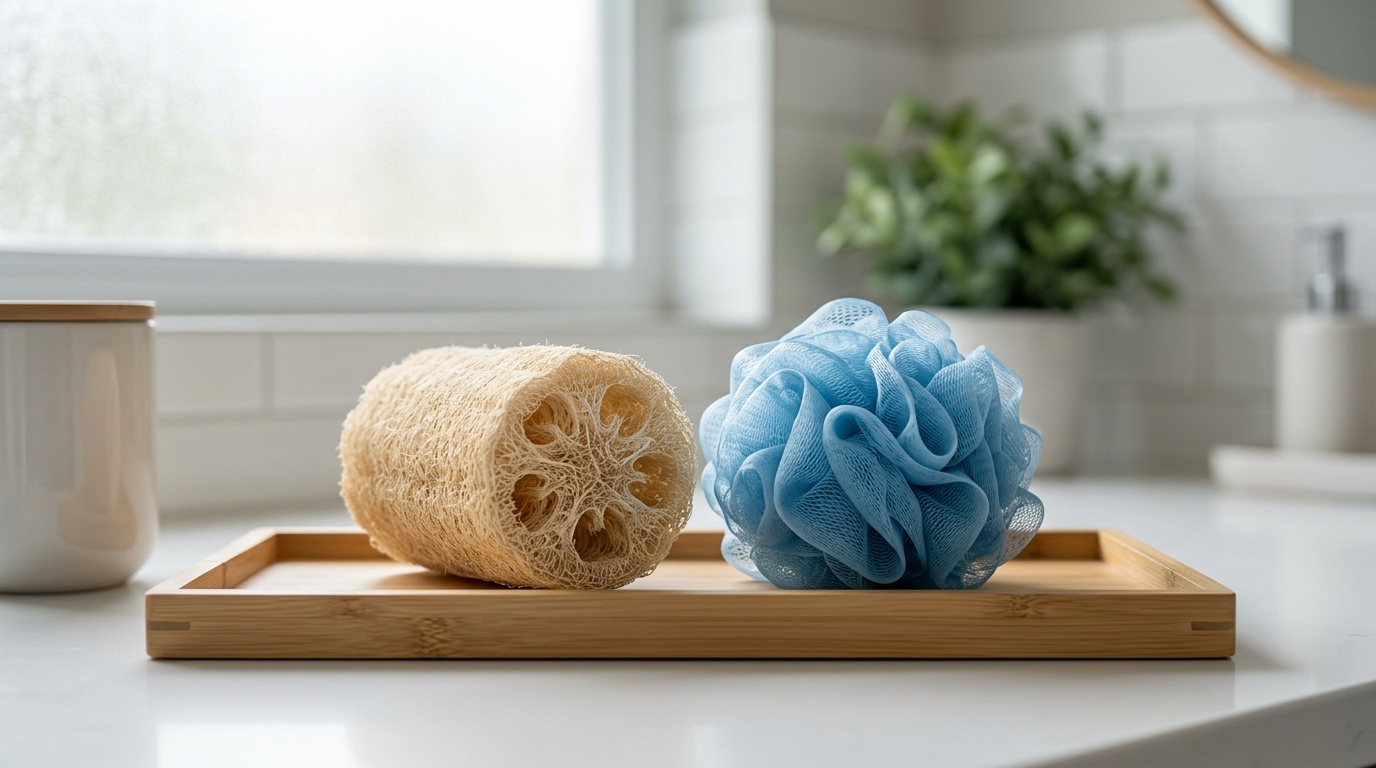
Standard plastic bath poufs shed thousands of microplastic fragments down your drain every month while harboring damp bacteria inside their tightly bunched layers. You rub these synthetic mesh balls against your skin daily, believing they deliver a clean wash, yet they trap moisture and deteriorate rapidly into landfill waste. Swapping your plastic mesh for an organic, plant-based alternative transforms your personal hygiene routine and stops microplastic pollution at the source.
The fundamental distinction between a natural loofah and a synthetic mesh pouf lies in their origin, material structure, and environmental lifecycle. Plant-derived scrubbers come from harvested dried gourds, yielding a durable network of vascular fibers that naturally soften under warm water. Synthetic bath sponges rely on extruded polyethylene mesh tied around a central string node. Understanding how these structural differences impact skin health, hygiene maintenance, and environmental sustainability empowers you to select the safest exfoliator for your household.
What Is a Natural Loofah and How Is It Made?
A natural loofah originates as a vine-grown gourd belonging to the Cucurbitaceae plant family. Gardeners and commercial growers cultivate species like Luffa aegyptiaca and Luffa acutangula until the fruits mature fully on the vine. To understand the origins of this unique vegetable scrubber, explore
During the maturation process, the inner core of the fruit develops a tough, intricate network of cellulose fibers. Once the outer skin turns yellow or brown, growers harvest the gourds, peel off the outer rind, and wash out the internal seeds. The remaining fibrous structural skeleton is then washed and sun-dried to yield a durable, plant-based exfoliating sponge.
Botanically speaking, many consumers wonder
What Are Synthetic Bath Poufs Made Of?
Synthetic bath poufs consist of extruded plastic mesh, primarily manufactured from polyethylene (PE) or polypropylene (PP). Manufacturing plants melt petroleum-based resins and extrude them into fine, flexible mesh tubes. Machines stretch, gather, and heat-seal these tubes into bunched, ruffled spheres bound tightly by a central plastic or cotton cord.
Chemical additives including color dyes, plasticizers, and flame retardants are mixed into the synthetic resin during production. These petroleum derivatives allow the mesh to stretch smoothly and lather liquid body washes efficiently.
Unlike organic fibers, synthetic mesh does not absorb water. Instead, liquid soap coats the surface of the plastic filaments while air gets trapped between the tight folds. This mechanical trapping creates thick suds quickly, but it also creates isolated, dark pockets inside the core that struggle to dry completely between showers.
Skin Health and Exfoliation Performance Compared
Skin physical exfoliation relies on mechanical friction to lift dead stratum corneum cells from the surface of your epidermis. Plant-based and plastic scrubbers achieve this friction through distinct structural mechanics, yielding different results for your skin barrier.
+--------------------------+----------------------------------+----------------------------------+
| Feature                  | Natural Loofah                   | Synthetic Mesh Pouf              |
+--------------------------+----------------------------------+----------------------------------+
| Material Source          | 100% Luffa gourd plant cellulose | Extruded polyethylene plastic    |
| Exfoliation Intensity    | Moderate to Firm (softens in H2O)| Mild to Harsh (abrasive edges)   |
| Microplastic Release     | Zero                             | High (sheds during every use)    |
| Average Shelf Life       | 4 to 6 weeks                     | 3 to 4 weeks                     |
| Biodegradability         | 100% Home Compostable            | Non-biodegradable (Landfill)     |
| Lather Generation        | Moderate (absorbs water/soap)    | High (traps air in plastic folds)|
| Drying Speed             | Rapid (open fibrous weave)       | Slow (dense bunched center node) |
+--------------------------+----------------------------------+----------------------------------+
Plant fibers contain natural lignins and cellulose that soften significantly upon contact with warm water. When wet, a natural loofah expands slightly, pliable enough to follow body contours while providing firm friction. This open vascular architecture removes dead skin cells uniformly without scratching healthy tissue underneath.
Synthetic plastic mesh relies on thin, hard edges formed during the plastic extrusion process. While the mesh feels soft when squeezed, the microscopic plastic edges tear across sensitive skin. Daily use of synthetic poufs often causes micro-abrasions, leading to redness, follicular irritation, and compromised moisture barriers.
Why Do Synthetic Poufs Pose Microplastic Risks?
Every time you rub a synthetic bath pouf across your body, mechanical friction snaps the delicate plastic mesh fibers. Microscopic fragments of polyethylene break off, washing directly down your shower drain. Wastewater treatment systems fail to capture all microplastic particles of this size, discharging millions of tiny synthetic threads into aquatic ecosystems every year.
Beyond environmental contamination, scrubbing with breaking plastic mesh exposes your skin directly to microplastic abrasion. Recent studies on microplastic shedding highlight how synthetic home items degrade rapidly under heat and friction. Warm shower water accelerates the breakdown of aging plastic mesh, causing frayed tips to release micro-fragments into your skin pores.
Using a natural plant alternative removes synthetic polymers entirely from your personal hygiene routine. Because plant fibers consist of natural cellulose, any small fibers that break off during scrubbing biodegrade harmlessly without accumulating in municipal water systems or ocean sediments.
How to Prevent Mold and Bacteria on Your Scrubbers?
Both organic and synthetic body scrubbers trap moisture, soap scum, and shed skin cells during use. These organic residues create a breeding ground for opportunistic bacteria including Pseudomonas aeruginosa and species of Staphylococcus. Managing airflow and moisture levels determines how quickly bacterial colonies proliferate inside your shower tools.
Synthetic poufs feature a dense, tightly knotted center core designed to keep the ruffled mesh in a spherical shape. This central node stays damp for long hours, harboring trapped moisture that encourages bacterial growth deep inside the pouf. Because you cannot unbind the inner core, thoroughly cleaning the inside of a synthetic mesh ball remains nearly impossible.
Organic plant scrubbers possess an open, tubular structure with hollow internal channels. Water drains straight through the coarse matrix when hung in an airy spot. To maintain maximum hygiene, follow this standard care routine:
-
Rinse the scrubber thoroughly under hot water after every shower to flush out residual soap and skin cells.
-
Wring out excess water firmly using a clean towel.
-
Hang the scrubber by its hanging loop in a dry room outside the humid shower enclosure.
-
Soak the plant sponge in a 10% bleach solution or pure white vinegar for 5 minutes once a week.
-
Replace your organic scrubber every 4 to 6 weeks, or immediately if you spot discoloration or a sour odor.
Understanding proper harvesting and processing methods also sheds light on material longevity. For details on how raw gourds turn into durable home sponges, read about how to
Environmental Impact and Disposal Breakdown
Evaluating the lifecycle impact of your bath tools requires examining raw material extraction, manufacturing emissions, and end-of-life disposal options. Synthetic bath tools rely entirely on fossil fuel extraction and industrial refining. Processing crude oil into polyethylene releases greenhouse gases and produces toxic chemical byproducts.
When you discard a synthetic pouf, it enters a landfill where it persists for centuries without breaking down. Incinerating discarded plastic sponges generates toxic emissions, while landfilled mesh slowly sheds microplastics into surrounding soil and groundwater networks.
By contrast, growing natural loofah gourds actively sequester carbon dioxide from the atmosphere through photosynthesis. The farming process requires simple sunlight, soil, and water. Reviewing the proper
RAW MATERIAL EXTRACTION
  ├── Synthetic: Crude oil extraction & chemical refining (High Carbon Footprint)
  └── Natural: Sun-powered cultivation of Luffa gourds (Carbon Negative Growth)

MANUFACTURING PROCESS
  ├── Synthetic: Plastic extrusion, thermal molding, & netting assembly
  └── Natural: Harvesting, peeling, seed removal, & air drying

END-OF-LIFE DISPOSAL
  ├── Synthetic: 400+ years in landfill, sheds microplastics into soil/water
  └── Natural: 100% compostable, degrades into organic soil nutrient in 30 days
At the end of its functional life, an organic gourd scrubber breaks down completely in a standard backyard compost bin within 30 days. It enriches your soil with organic carbon rather than contributing to persistent plastic waste. Consumers interested in reviewing vetted eco-friendly options can check out curated lists of the
Which Option Is Right for Your Skin Type and Budget?
Choosing between a plant-derived sponge and a synthetic pouf comes down to balancing skin sensitivity, environmental priorities, and long-term costs. While synthetic poufs cost less upfront—often sold for a dollar at retail chains—their short lifespan and health drawbacks outweigh the initial savings.
If you have sensitive skin, eczema, or active acne breakouts, an organic plant sponge offers superior gentleness once fully hydrated. You can control the exfoliation intensity by soaking the sponge in warm water for a minute before applying pressure. Those with thick skin or rough areas on elbows and feet benefit from the firm texture of dry plant fibers.
Synthetic mesh poufs may suit individuals who prioritize dense, instant lather above all else. However, the requirement to replace plastic poufs frequently due to bacteria buildup negates their low purchase price. Investing in sustainable plant sponges supports clean skin health and stops synthetic waste from entering municipal landfills.
How to Switch to a Plant-Based Bath Routine?
Making the transition from plastic bath poufs to plant-based scrubbers requires adjusting how you store and use your bath accessories. Follow these steps to optimize your green hygiene routine:
-
Hydrate before use: Never scrub your skin with a dry plant sponge. Soak the fibrous mass under warm shower water for 60 seconds to soften the plant wall structure completely.
-
Apply soap efficiently: Pour your liquid body wash or rub your bar soap directly onto the softened fibers. Squeeze the sponge two or three times to generate a rich lather throughout the natural matrix.
-
Scrub with gentle circular motions: Move the sponge in light circular patterns starting from your limbs and moving toward your chest. Let the natural fiber texture lift dead cells without applying heavy pressure.
-
Flush and wring thoroughly: Hold the sponge directly under the shower stream until water runs clear of soap bubbles. Squeeze out all moisture completely.
-
Store in a dry location: Hang your sponge in a well-ventilated space outside the shower stall to ensure rapid drying between uses.
To explore the agricultural background of these sustainable plants, read about
Frequently Asked Questions
Can you wash a natural loofah in the washing machine?
Yes, you can wash an organic plant sponge in your washing machine using a gentle cycle with warm water. Place the sponge inside a mesh laundry bag and avoid using fabric softeners, which coat the natural fibers and reduce their friction performance. Air-dry the sponge completely after washing.
How often should you replace a natural loofah vs synthetic pouf?
Replace your organic plant sponge every 4 to 6 weeks, or sooner if it develops a musty odor or dark spots. Replace synthetic plastic poufs every 3 to 4 weeks, as their tightly bound center nodes trap moisture and harbor rapid bacterial growth that cannot be washed away.
Are natural loofahs suitable for sensitive skin?
Yes, organic plant sponges suit sensitive skin when properly soaked in warm water before use. Hydrating the cellulose fibers makes the matrix soft and pliable, allowing gentle exfoliation without micro-tearing the skin barrier like sharp plastic mesh edges often do.
Do natural loofahs harbor more bacteria than synthetic ones?
No, organic plant sponges drain water faster than synthetic poufs due to their open, hollow fiber matrix. Synthetic poufs feature a dense, bunched central plastic knot that stays wet for hours, creating a dark, damp environment where bacteria multiply much faster.
How do you compost a natural loofah at the end of its life?
Rinse any remaining soap from the plant sponge, cut it into smaller pieces using kitchen shears to accelerate decomposition, and drop the pieces into your home compost bin or green waste container. The 100% plant cellulose will break down fully into rich soil within 30 to 60 days.
Transitioning away from plastic mesh bath tools protects your skin from harsh micro-abrasions and stops microplastic particles from entering your local watershed. Incorporating a plant-derived natural loofah into your daily routine delivers clean, balanced exfoliation while keeping single-use synthetic polymers out of oceans and landfills. Make the switch today by replacing your synthetic shower pouf with a 100% compostable plant sponge, hanging it in a well-ventilated spot to dry, and enjoying a healthier, plastic-free bath routine.