
Growing natural sponges in your backyard requires a clear understanding of regional warmth, season length, and frost risks. A single unexpected late spring freeze halts vine establishment, while an early autumn frost ruins maturing fibers before harvest. Using a
Understanding how geographical location influences your harvest helps you transition from synthetic bath sponges to sustainable backyard production. Loofah plants require sustained temperatures above 70°F (21°C) to form yellow blossoms and deep green gourds. By matching your region’s microclimate with official Agricultural Research Service data, you ensure your vines receive adequate thermal units to dry completely on the vine before winter arrives.
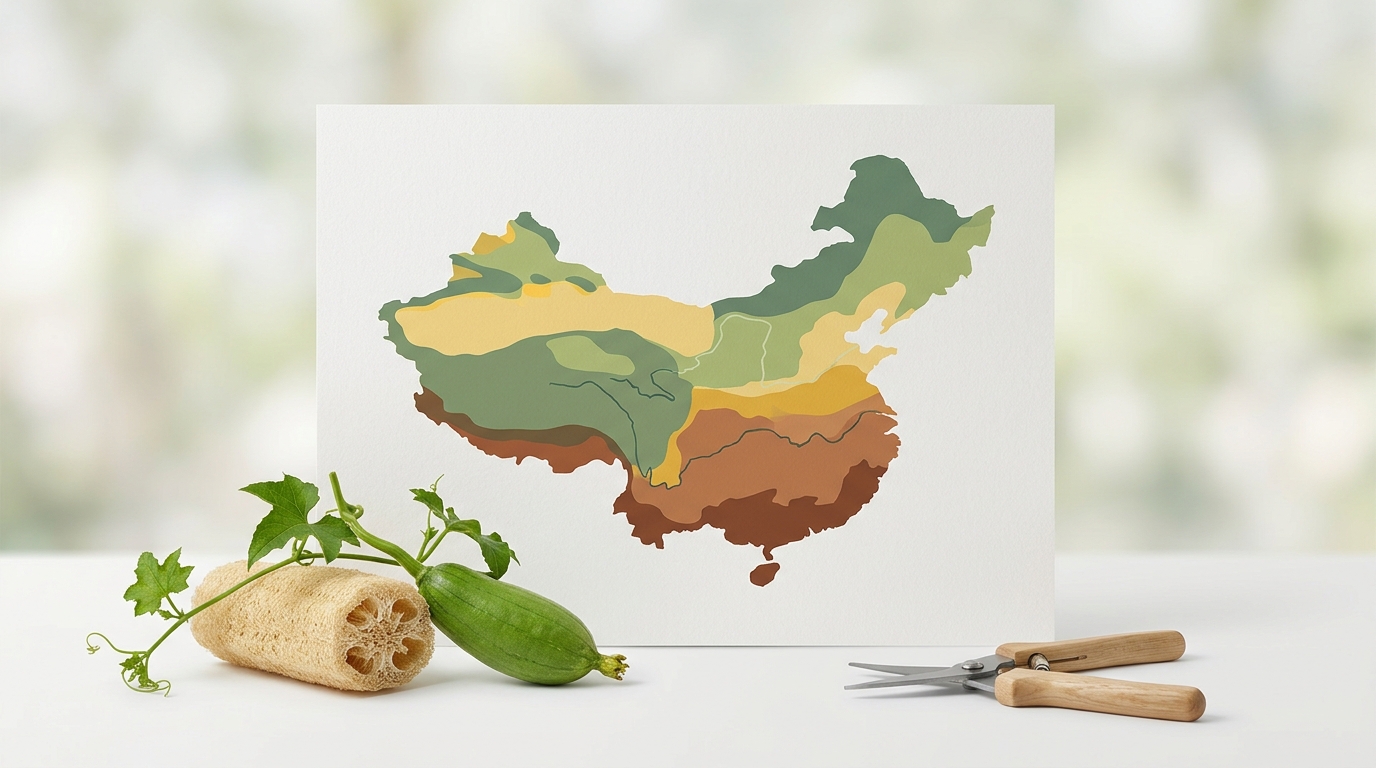
What Is the Ideal Zone on a Loofah Growing Zones Map?
The ideal regions on a loofah growing zones map center on USDA Hardiness Zones 7 through 11. These zones provide the prolonged thermal warmth and extended frost-free windows essential for tropical gourd development. Understanding
In Zones 9, 10, and 11, loofahs thrive as vigorous annuals with minimal intervention. These southern and coastal locations offer over 200 frost-free days, allowing seeds to germinate directly in ambient outdoor soil. Vines in these zones develop massive root networks, climbing heavy trellises and yielding dozens of mature gourds per plant.
Zone 7 and Zone 8 mark the northern boundary for dependable outdoor production. In these regions, growers experience between 150 and 180 frost-free days per year. Successful cultivation in these zones requires starting seeds indoors under grow lights weeks before spring arrives, protecting fragile root systems until night temperatures stabilize.
Zones 3 through 6 present serious seasonal constraints for gourd cultivation. While growing loofahs here remains possible, you must rely on heat-retaining row covers, black plastic mulch, and early indoor starts. Without heat intervention, vines in cold zones produce flowers late in summer but freeze before the fruit matures into fibrous sponge skeletons.
How Do You Read a Loofah Hardiness Map for Planting Times?
Reading a regional climate map for gourd planting requires identifying your exact spring and autumn frost markers. Reviewing updated mapping tools like the
First, locate your county on the national map to pinpoint your hardiness zone designation. Next, look up your average last spring frost date and your average first fall frost date. Subtract the spring date from the fall date to determine your total active growing window. If that number falls below 150 days, you must compensate with indoor seed starting.
Zone Map Identification ➔ Calculate Frost-Free Days ➔ Determine Sowing Strategy
        │
        ├─► Under 150 Days (Zones 3-6): 8-Week Indoor Start + Thermal Wraps
        ├─► 150 - 180 Days (Zones 7-8): 4-Week Indoor Start + Direct Trellising
        └─► Over 180 Days (Zones 9-11): Direct Outdoor Sowing in Early Spring
Timing shifts depending on whether you cultivate Luffa aegyptiaca (angled loofah) or Luffa operculata. Understanding the subtle differences between
What Are the Specific Loofah Growing Rules for Zones 3 to 6?
Growing gourds in Zones 3 through 6 requires aggressive microclimate manipulation to artificialize tropical conditions. Growers in these regions must initiate seeds indoors in late February or early March using heating mats set to 85°F (29°C). Hard outer seed coats must be gently nicked with sandpaper and soaked in warm water for 24 hours to accelerate germination.
Transplanting in cold zones must wait until soil temperatures reach 65°F (18°C) consistently. Nighttime dips below 50°F (10°C) stunt young vine development permanently. Use raised garden beds lined with heat-absorbing black fabric to warm the root zone early in the season.
Protect young transplants with wall-o-water units or floating row covers during late spring cool snaps. Position your trellis against a south-facing brick wall or dark structure that absorbs solar radiation during the day and radiates heat back into the foliage at night.
Harvesting in northern climates often happens before gourds turn yellow and light on the vine. If an early autumn freeze threatens your crop, cut green gourds with two inches of stem attached and hang them in a heated, warm basement to finish drying manually.
How Should You Manage Loofah Vines in Zones 7 and 8?
Zone 7 and Zone 8 provide the classic transition environment for cultivating
Start seeds indoors approximately four weeks before your area’s last expected frost. Use biodegradable peat pots to prevent root shock, as loofah taproots resist root disturbance during transplanting. Move plants into full outdoor sun once nighttime lows remain steadily above 55°F (13°C).
Sustained summer heat in Zones 7 and 8 drives rapid vine growth up to 20 feet. Construct heavy-duty wooden or cattle-panel trellises to support the substantial weight of green gourds. Weak structures collapse under late summer rainstorms when foliage density reaches its peak.
Prune secondary side shoots near the base of the main stem to direct plant energy into primary gourds. Removing late-season blossoms in early September forces the plant to finish maturing existing fruit rather than starting new gourds that will not ripen before frost.
Why Do Zones 9, 10, and 11 Produce the Highest Loofah Yields?
Zones 9, 10, and 11 offer ideal growing environments where loofah vines reach maximum productivity. These regions feature extended warm seasons that match historical growing conditions noted in
Long summer days allow vines to flower continuously from June through October. Beneficial pollinators visit yellow blossoms daily, ensuring high fruit set without manual hand-pollination. Multiple waves of fruit mature sequentially on the vine throughout late summer and early autumn.
Dry autumn air in Mediterranean and desert microclimates accelerates the natural field-drying process. Gourds transition from heavy green sponges to lightweight, brown, brittle shells without developing mold inside the fibrous interior. This natural drying phase yields bright, durable bath sponges.
Growers in humid southern regions within Zones 9 and 10 must watch for downy mildew during wet summer months. Spacing vines 3 to 4 feet apart along open trellising improves airflow around dense foliage, preventing fungal pathogens from ruining late-season harvests.
Which Climate Factors Beyond Hardiness Zones Impact Loofah Success?
While an official climate map guides temperature planning, secondary environmental factors directly govern fruit quality and fibrous density. Sunlight exposure, ambient humidity, and soil composition work together to determine whether vines merely survive or yield harvestable sponges.
-
Full Sun Access: Vines require a minimum of 8 hours of direct, unfiltered sunlight daily. Shaded locations reduce flower production and produce weak, thin fibrous skeletons.
-
Soil Drainage: Sandy loam enriched with organic compost provides the ideal balance of nutrient availability and moisture drainage. Standing water causes root rot within days.
-
Soil pH Levels: Maintain a neutral soil pH between 6.0 and 6.8 for optimal nutrient uptake.
-
Consistent Irrigation: Provide 1 inch of water per week during early growth, then taper irrigation in late autumn to encourage field drying.
Recent agricultural updates published by the
Frequently Asked Questions
Can I grow loofah in Zone 5 if I start seeds early?
Yes, you can grow loofah in Zone 5 by starting seeds indoors 6 to 8 weeks before your last spring frost. Use heat mats, black plastic soil mulch, and protective row covers to maximize warm growing days.
What happens if my loofah gourds do not dry before the first frost?
If frost threatens, harvest green gourds immediately with several inches of stem attached. Hang them in a dry, warm, well-ventilated indoor space to brown and cure artificially.
How many loofahs can I expect per plant in Zone 8?
A healthy loofah plant in Zone 8 typically yields between 5 to 10 fully mature, harvestable sponges when grown on a sturdy trellis in full sun.
Do loofah vines require a trellis in warm growing zones?
Yes, a sturdy trellis is necessary in all growing zones. Growing loofahs on the ground causes gourds to rot, curve awkwardly, and succumb to soil-borne fungal diseases.
Optimizing Your Regional Loofah Harvest
To turn your regional location into a productive sponge garden, map your seasonal frost windows and secure high-quality seeds early. Select a garden site that receives maximum solar exposure and build a rigid support trellis before setting out young plants. If you live in an upper zone with a shorter warm season, invest in black row covers and indoor heat mats today to guarantee your vines get the 150-day warm running start they require.